

Wat Chotikaram
วัดโชติการาม
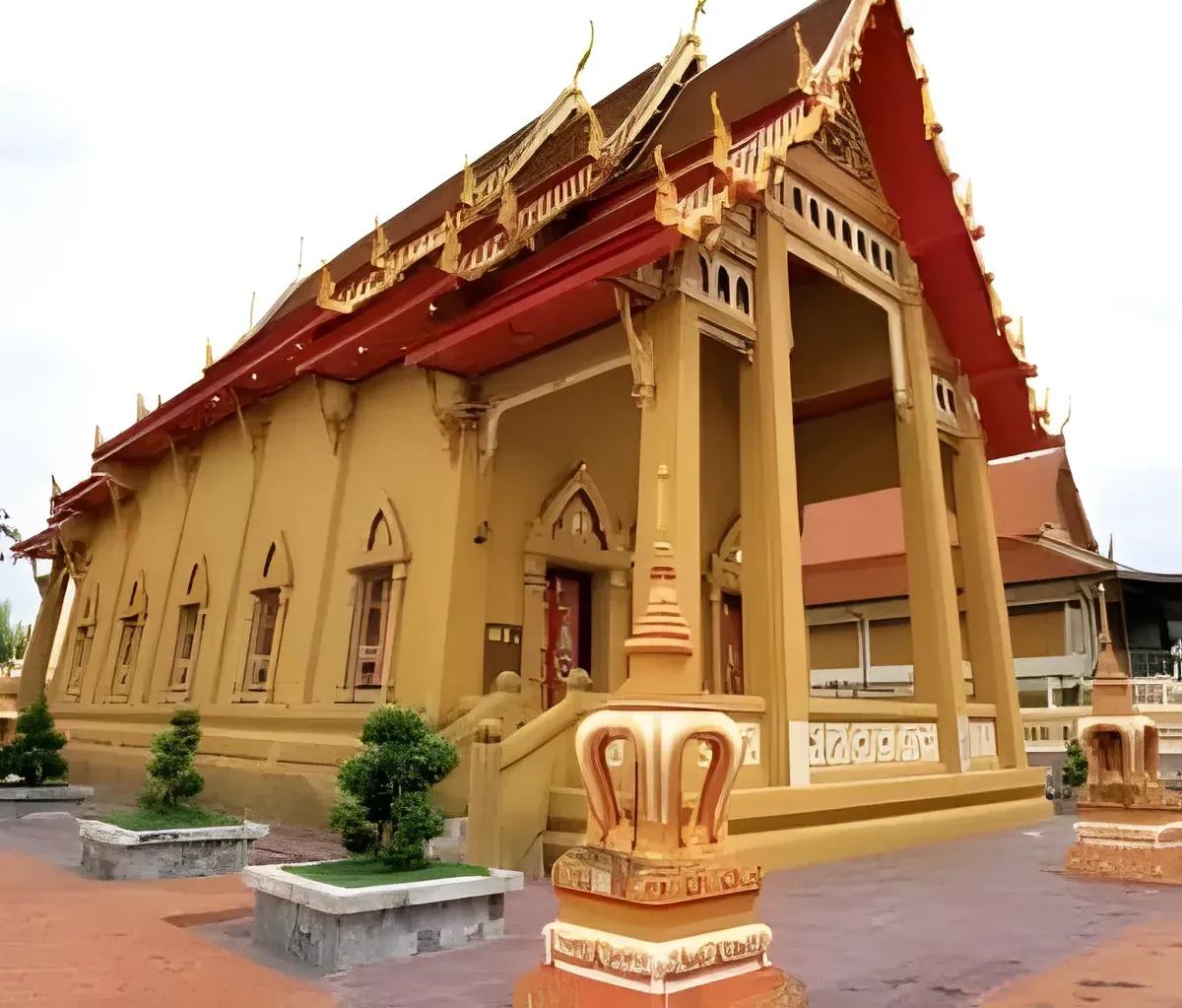
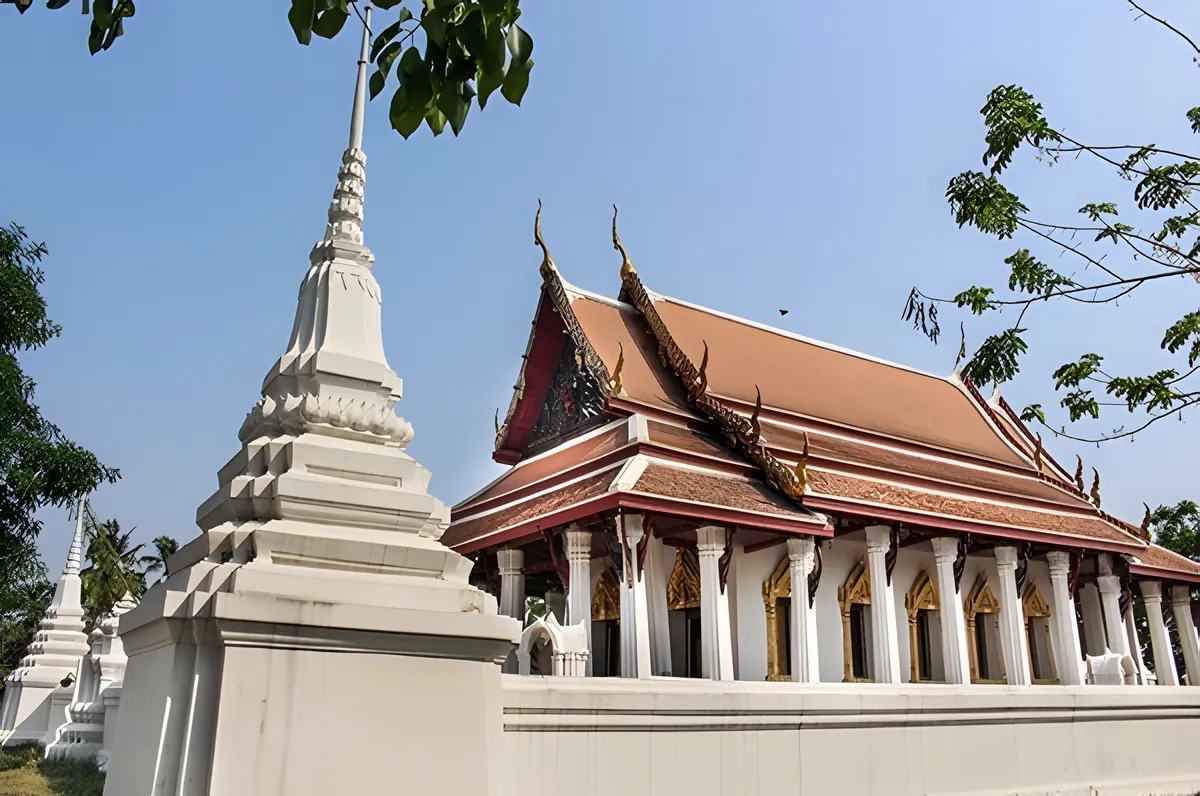
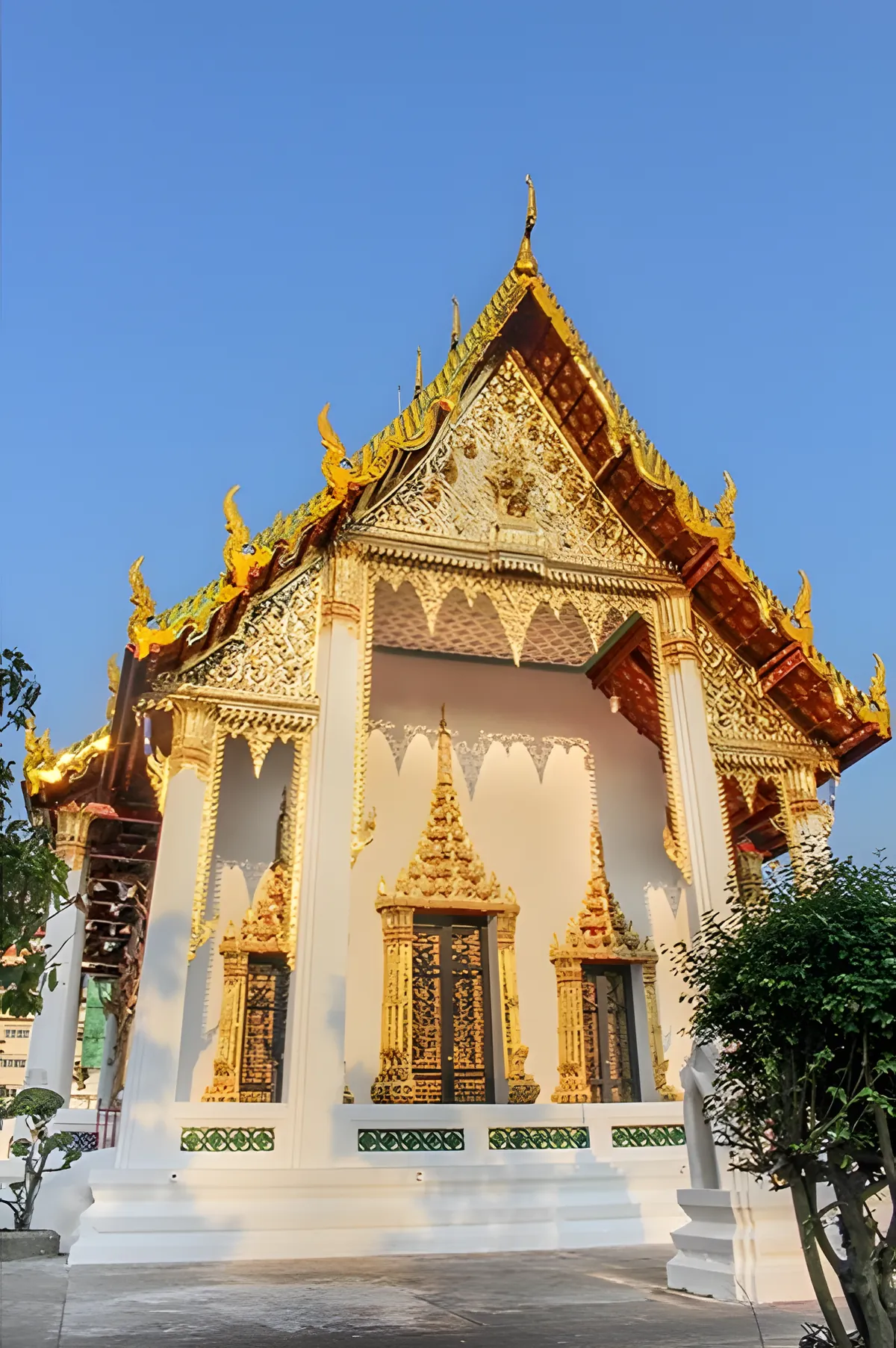
Wat Chotikaram in Nonthaburi started life under a different name entirely. Local tradition says it was founded around 1807 as Wat Sam Jin — “the temple of three Chinese” — after the brothers believed to have built it. It kept that name for over a century, was later restored and expanded by Chao Phraya Chodueg Ratchasetthi, and received its royal land grant for the ordination hall on 5 December 1917. Only in 1940 was it renamed Wat Chotikaram, after its patron’s title — the name that’s stuck since.
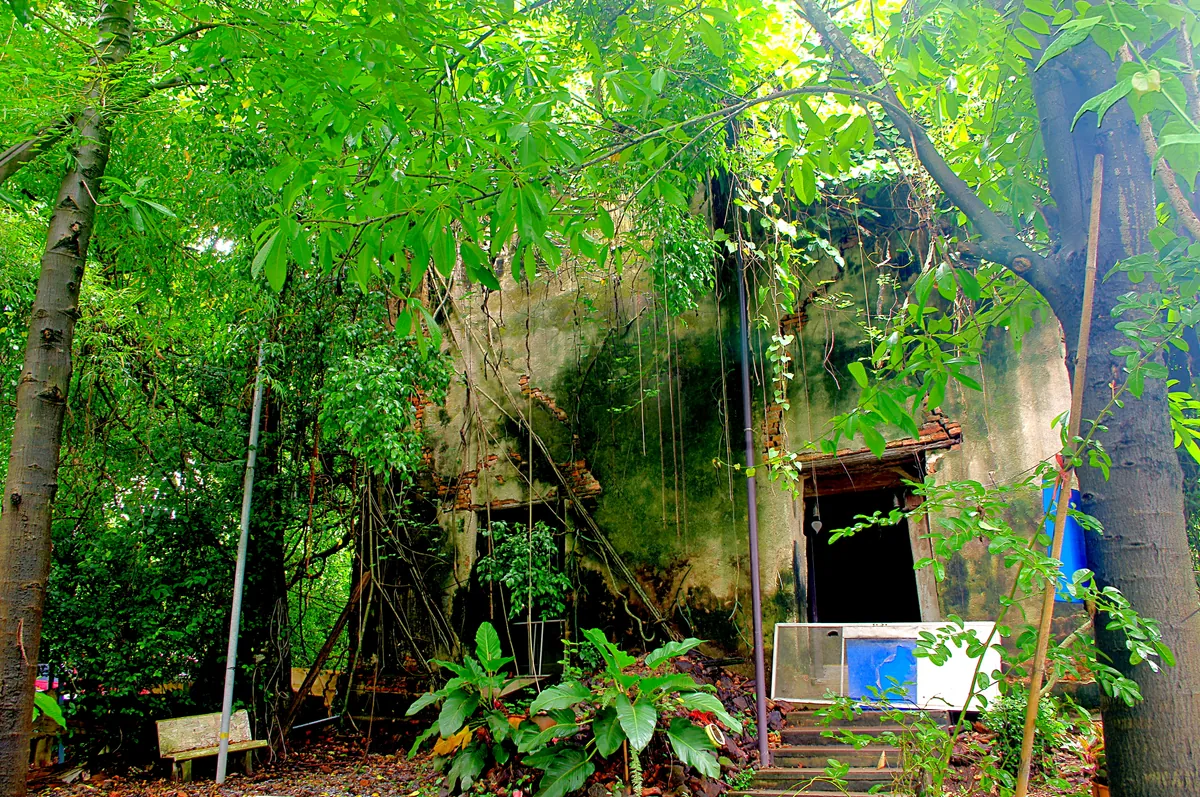
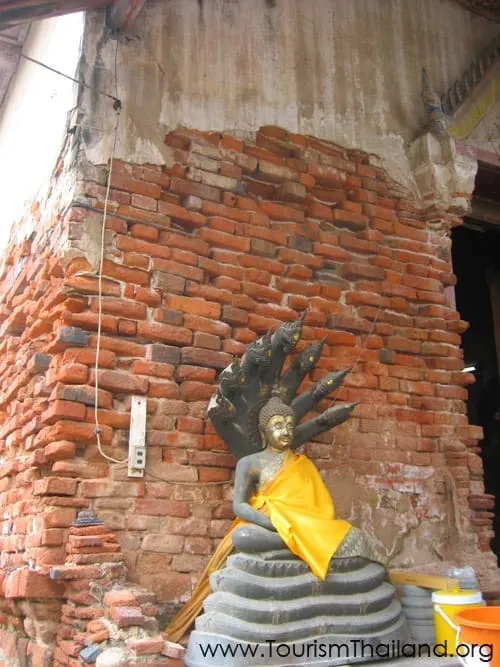
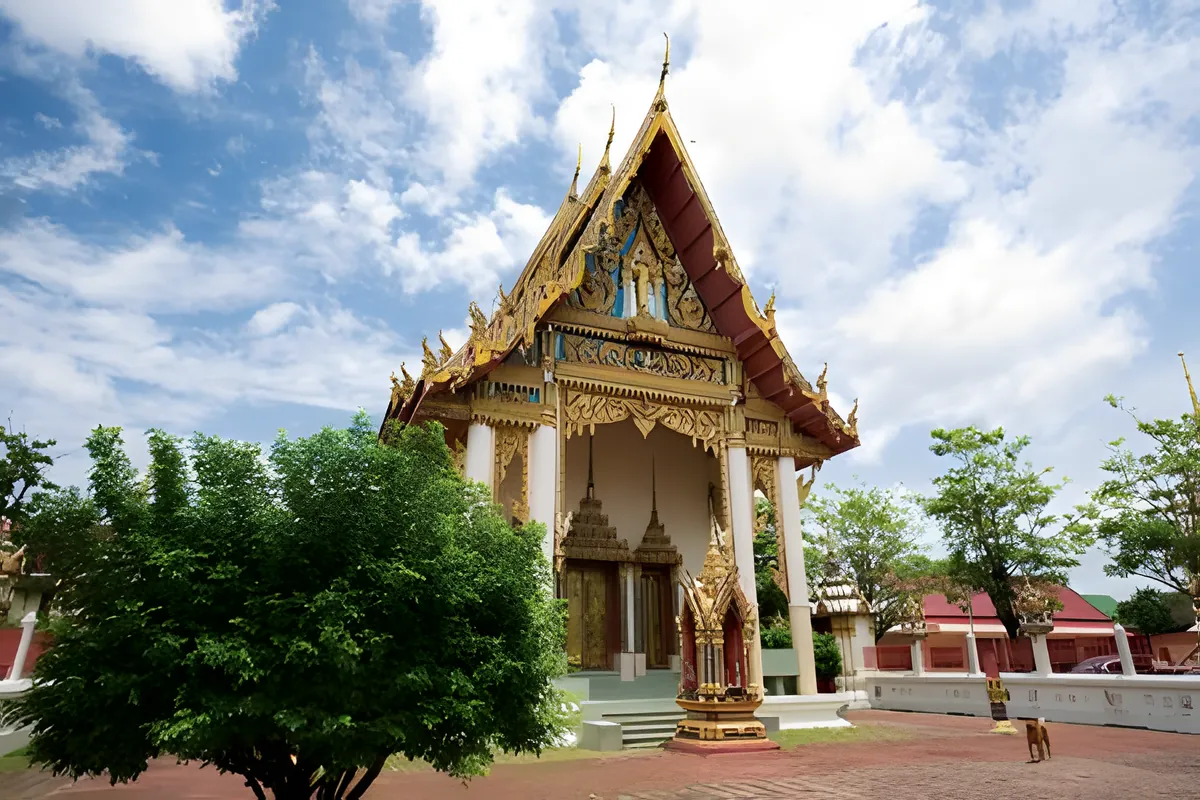
The temple’s real claim to distinction sits inside: a gold-faced statue of Thao Wetsuwan, a guardian deity linked to wealth and protection, wearing a gold bracelet. It was the first image of its kind built anywhere in Nonthaburi province, and it draws a steady stream of local visitors who come specifically to make offerings to it rather than to see the temple in general. Beyond that, it’s a working Mahanikai-sect temple with the usual features — an ordination hall, murals, resident monks going about daily merit-making — in Ban Bang Phai Yai village, a settlement in Bang Phai subdistrict that runs along the Chao Phraya’s west bank, though the temple compound itself sits back from the water rather than directly on it.
- Founded: Around 1807 as Wat Sam Jin; renamed Wat Chotikaram in 1940
- Notable: Gold-faced Thao Wetsuwan statue — the first built in Nonthaburi province
- Wisungkhamsima granted: 5 December 1917
- Location: Ban Bang Phai Yai, Bang Phai subdistrict, Mueang Nonthaburi
- Entry: Free
Insider Tip: The Thao Wetsuwan statue is the specific reason most Thai visitors stop here — if you only have a few minutes, that’s the one thing worth seeking out inside the grounds rather than trying to see everything.
There’s no boat pier serving the temple, despite the riverside district — a car or taxi from central Nonthaburi is the practical way in. Dress modestly, covered shoulders and knees, and remove your shoes before entering any of the halls. It’s a low-key stop best paired with other Bang Phai-area temples like Wat Sangkatan rather than visited on its own, and it makes a quieter alternative to the crowds at Ko Kret if you want river-district Nonthaburi without the ferry queues.
Location & Directions
Mueang Nonthaburi, Nonthaburi
Nonthaburi, Thailand
Show your taxi or Grab driver
วัดโชติการาม
Within Walking Distance




Frequently Asked Questions
Why was Wat Chotikaram originally called Wat Sam Jin?
What is the gold statue the temple is known for?
Is Wat Chotikaram directly on the Chao Phraya riverbank?
Is there an entry fee?
How do I get to Wat Chotikaram?
Spotted something out of date or incorrect? Let us know
Stay Near Wat Chotikaram
Compare places to stay in Nonthaburi, or open the map for options closest to the attraction.