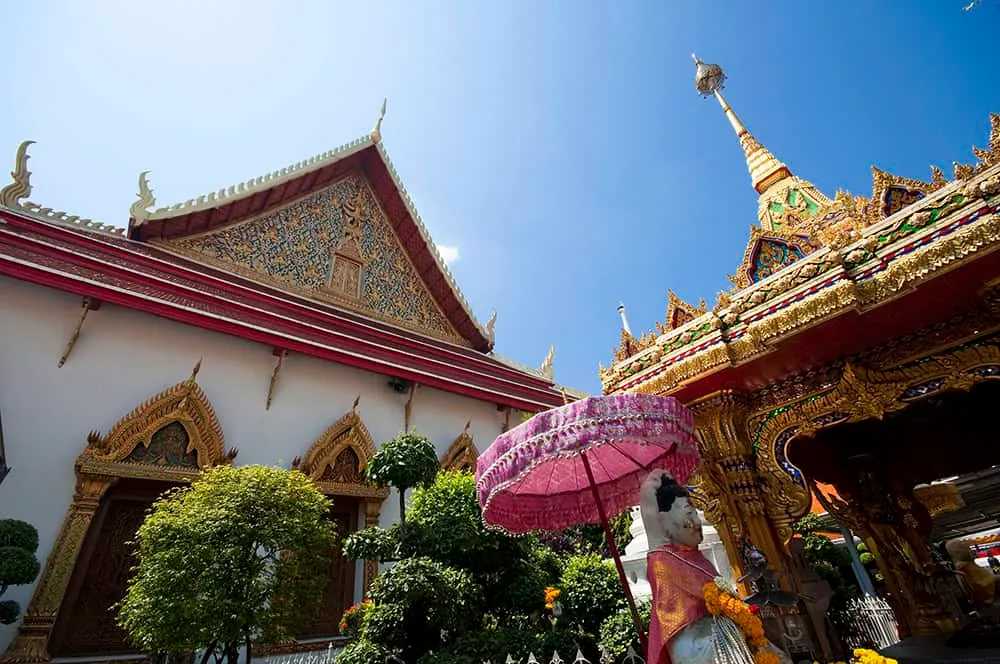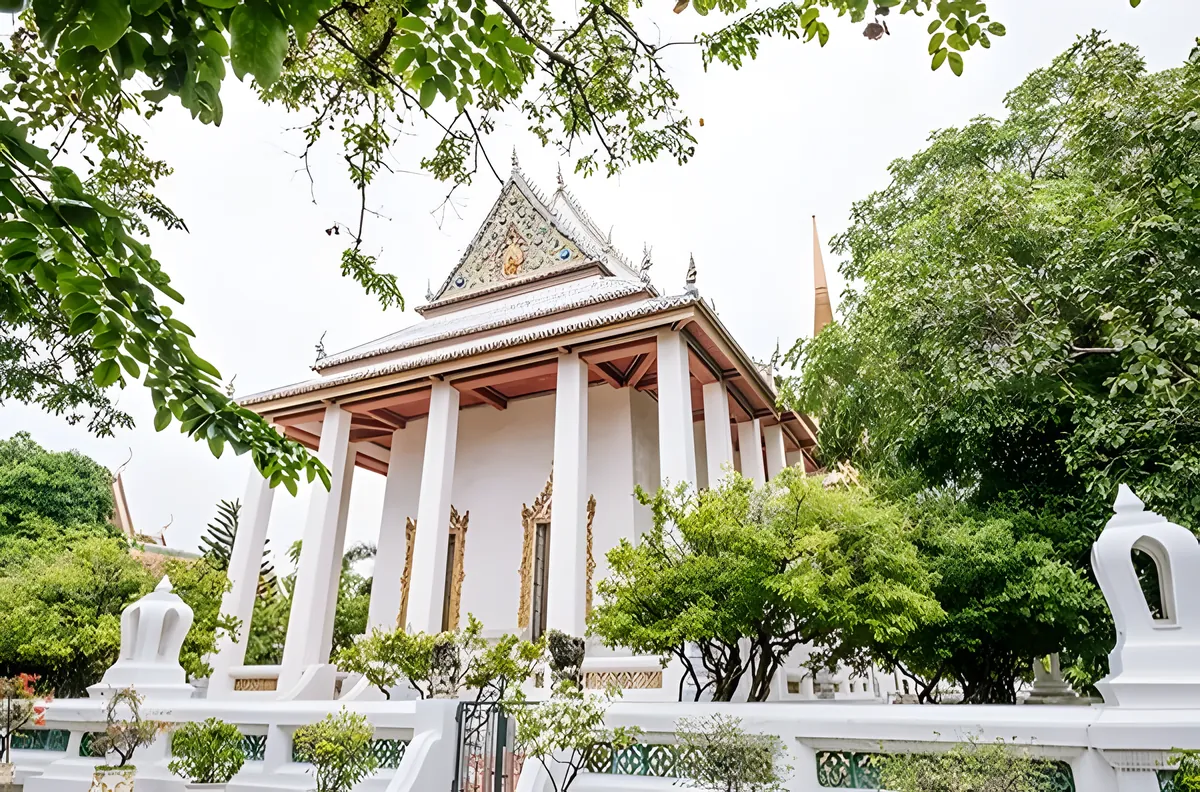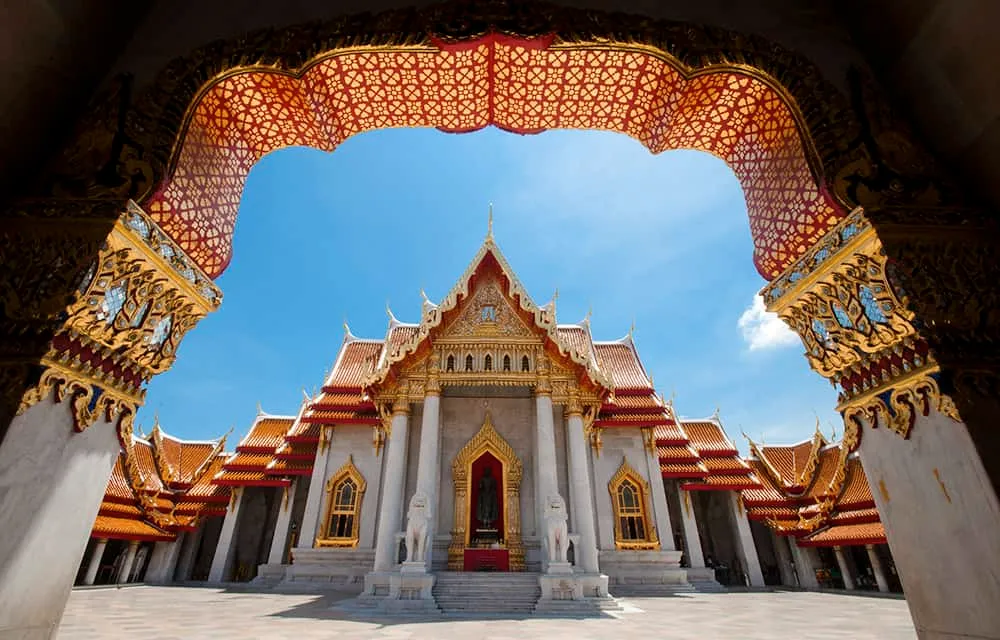

Wat Indharawihan holds Luang Pho To, a 32-metre gold-mosaic standing Buddha in Bangkok’s Thewet district, begun in 1867 and finished 60 years later in 1927. Entry is free and the temple is open daily from 08:30 to 20:00 — quieter than the Grand Palace circuit despite a statue that’s actually taller than the Reclining Buddha at Wat Pho is long.
The Standing Buddha, Luang Pho To
The temple started life centuries earlier as Wat Rai Phrik, named for the chilli fields that once surrounded it; King Rama I later granted the land to house prisoners of war. It took its current name — and its standing Buddha — under Chao Inthawong, a nobleman who restored the temple during King Vajiravudh’s reign and brought an abbot over from Vientiane to lead it.
The Buddha itself was the vision of Somdej Phra Buddhachan, the monk better known as Somdej Toh — the same revered figure behind the famous amulets of Wat Rakhang. Construction began in 1867; he died at the statue’s base in 1871, partway through the build. Work carried on without him and finished in 1927, 60 years after it started. The finished figure stands 32 metres tall and 10 metres wide, built from brick and stucco and faced in glass mosaic tiles gilded with gold — refreshed with Italian gold mosaic for Bangkok’s bicentennial celebrations in 1982. The ushnisha at the crown holds a relic of the Buddha, a gift from the Sri Lankan government enshrined in 1978 by then-Crown Prince Vajiralongkorn.
Inside the Temple Grounds
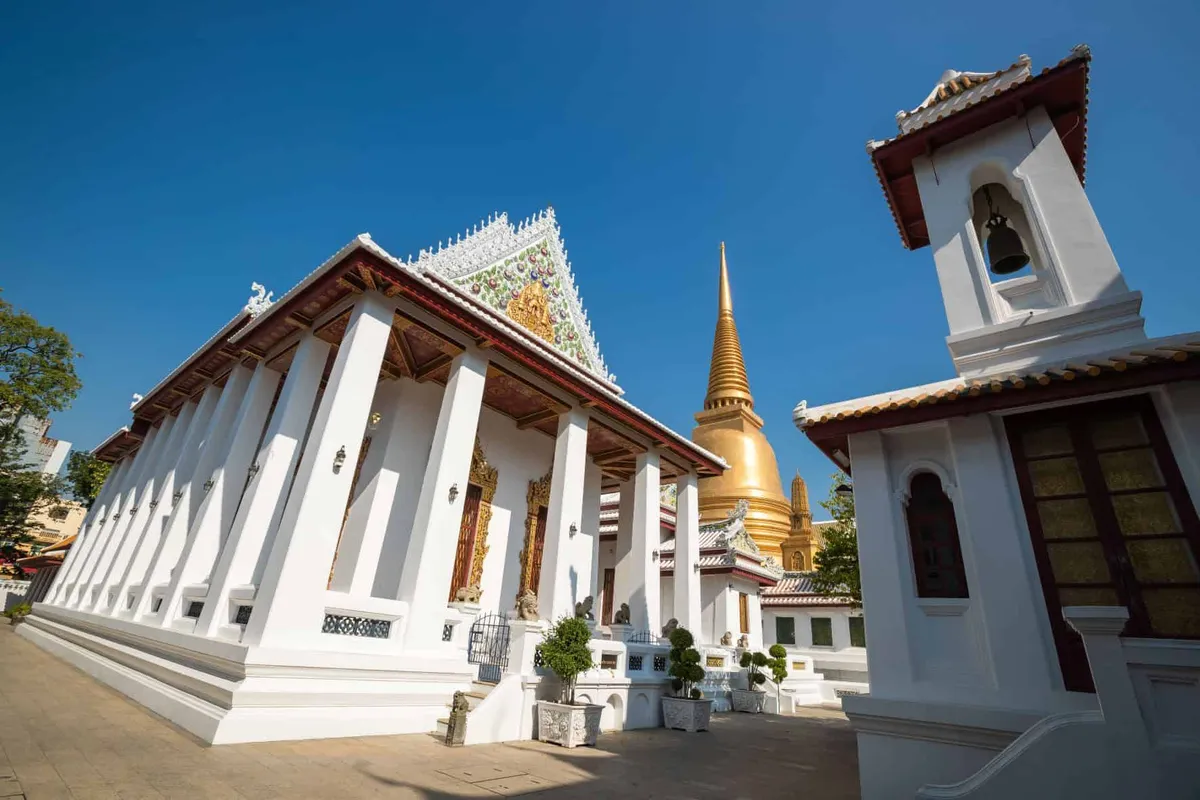
Beyond the standing Buddha, the ordination hall (ubosot) keeps its Ayutthaya-period layout despite a 1982 refurbishment that added Italian marble. A separate chamber holds a wax image of Somdej Toh, seated above a well of blessed water that visitors still draw on for good fortune. Elsewhere on the grounds are a Guanyin shrine and a shrine to the four-faced Brahma, Thao Maha Phrom — both draw a steady trickle of Chinese-Thai devotees alongside the crowds who come for the Buddha.
Insider Tip: the reclining Buddha at Wat Pho gets the tour buses; Luang Pho To gets a fraction of the visitors despite being taller. Come on a weekday afternoon and you can often have the courtyard to yourself.
Atmosphere & Timing
Thewet is a quieter, more residential slice of old Bangkok than Banglamphu a few streets over — flower and plant stalls line Thewet Market nearby, and the neighbourhood empties out by early evening. There’s no set “best time” the way there is for temples with morning chanting; the Buddha is visible from well outside the walls at any hour the gate’s open, its gold crown catching the light over the rooftops.
Watch out: the entrance on Wisut Kasat Road is easy to walk past — it sits between food stalls and shophouses rather than behind an obvious grand gate. Look for the gold spire rising above the roofline; it’s visible from Samsen Road and is the easiest landmark to navigate by.
Practical Information
- Entry fee: Free
- Hours: Daily 08:30-20:00
- Buddha statue: Luang Pho To, 32m tall, 10m wide, gold-mosaic brick and stucco
- Built: 1867-1927 (60 years)
- Getting there: Chao Phraya Express Boat to Rama VIII Pier (~700m walk), or bus 10/49
Wat Indharawihan sits within walking distance of Wat Bowon Niwet Ratchawarawihan toward Banglamphu, and both pair easily with a day that also covers the Grand Palace and Wat Pho further south along the river.
Tips for Visitors
- Dress modestly — cover shoulders and knees. Sarongs may be available at the entrance.
- Remove your shoes before entering any building.
- Keep your voice low and your head below any Buddha images when seated.
- Avoid pointing your feet at Buddha images or monks.
Location & Directions
Phra Nakhon, Bangkok
Bangkok, Thailand
Show your taxi or Grab driver
วัดอินทรวิหาร
Within Walking Distance



Frequently Asked Questions
How tall is the Luang Pho To Buddha statue?
Who built it, and how long did it take?
Is Wat Indharawihan free to visit?
How do I get there without a car?
What else is on the temple grounds besides the Buddha?
Spotted something out of date or incorrect? Let us know
Popular tours in Bangkok




Stay Near Wat Indharawihan
Compare places to stay in Bangkok, or open the map for options closest to the attraction.