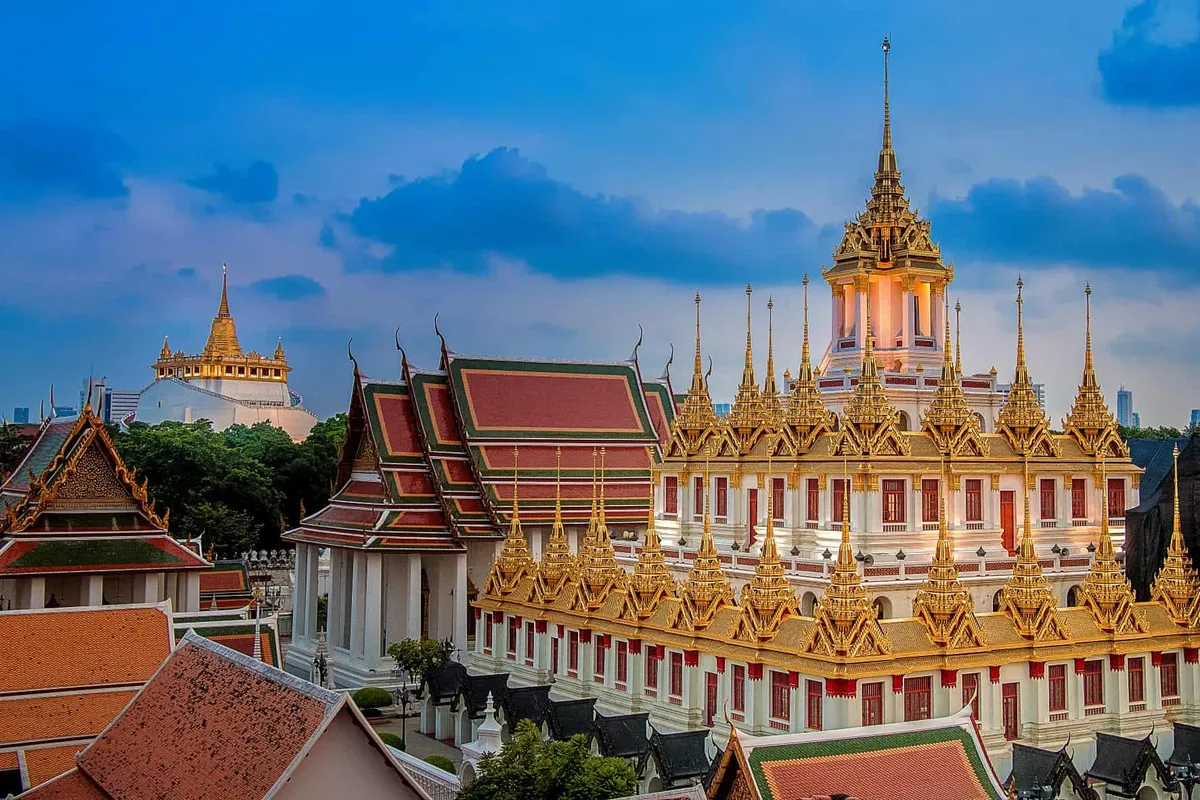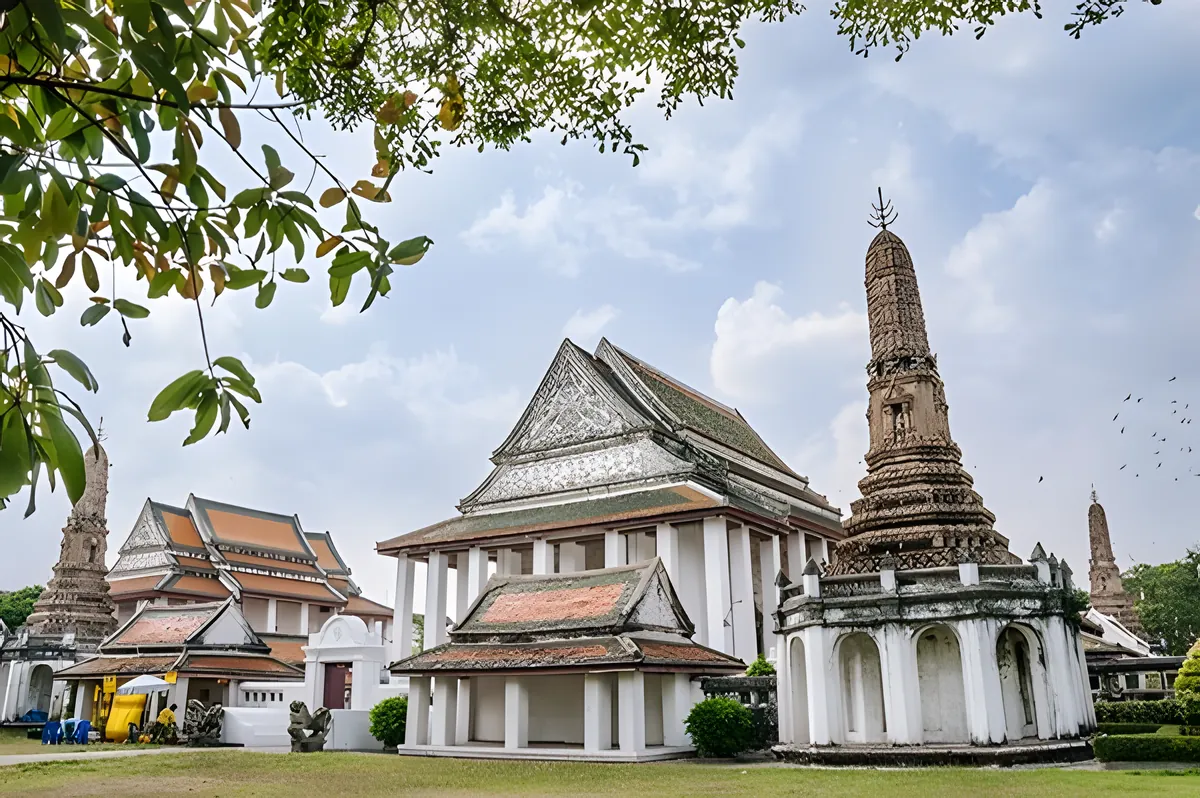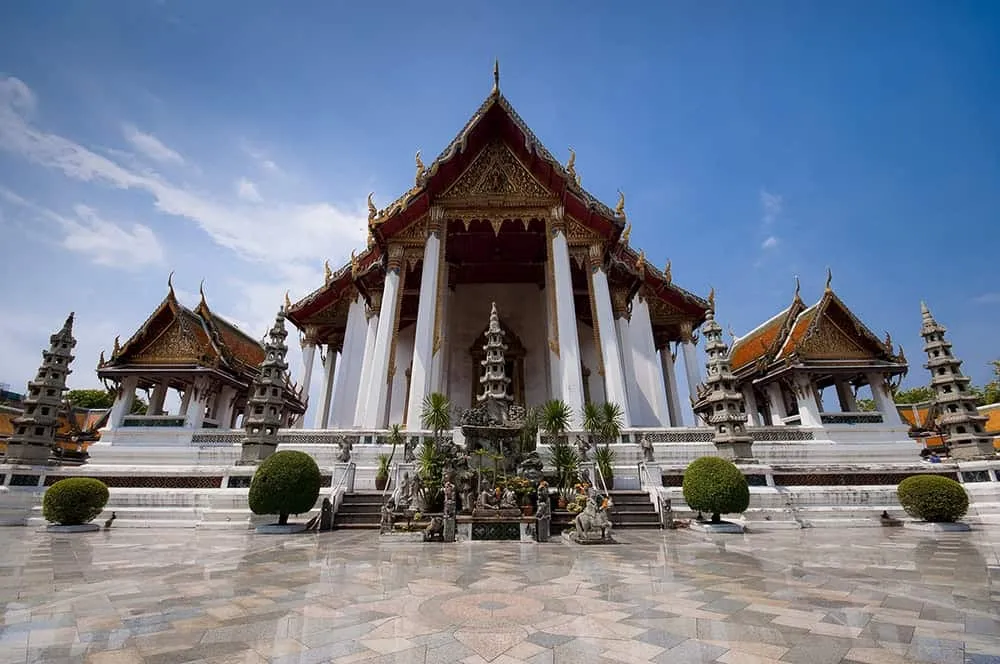

Wat Bowon Niwet Ratchawarawihan
วัดบวรนิเวศราชวรวิหาร
Wat Bowonniwet Vihara sits on Phra Sumen Road in Banglamphu, a five-minute walk from Khao San Road, and it costs nothing to walk in. There’s no ticket window, no queue, and no dress-code rental desk like at the Grand Palace — just a working monastery that happens to be the spiritual headquarters of the Thammayut order, the reformist branch of Thai Buddhism founded by a king who once swept its courtyards as a monk.
- Entry: Free, donation boxes only
- Hours: Daily 08:00-17:00
- Address: Phra Sumen Road, Bowon Niwet Subdistrict, Phra Nakhon
- Getting there: 10-minute walk from Khao San Road, or a Chao Phraya Express Boat to Phra Athit Pier
- Dress code: Covered shoulders and knees, shoes off in the ubosot
The temple was built between 1824 and 1832 under King Rama III, commissioned by his half-brother the Front Palace viceroy and supervised by the Palace Department. It absorbed two older neighbouring monasteries, Wat Mai and Wat Rangsi Suthawat, into one compound. In 1836, Rama III invited his half-brother Prince Mongkut — who had already been a monk for a decade — to become abbot of the newly finished Wat Mai. Mongkut stayed in robes for 27 years, 14 of them as Wat Bowonniwet’s abbot, before the death of his predecessor brought him to the throne in 1851 as Rama IV. As king, he kept the reformed monastic discipline he’d built here and made this temple the permanent seat of the Thammayut Nikaya, which still governs from Wat Bowonniwet today.
That set a pattern. Rama VI was ordained under the temple’s Thammayut preceptor Prince Vajirananavarorasa in 1902, and Rama VII followed the same teacher in 1917. King Bhumibol Adulyadej, Rama IX, was ordained in 1956 and spent 15 days living as a monk inside these walls; his son, King Vajiralongkorn, Rama X, did the same for 15 days in 1978. Five reigns of the Chakri dynasty have now passed through this one temple as monks before — or in Rama IV’s case, long before — they wore the crown.
Insider Tip: Arrive before 8:30 AM. This is a functioning monastery with resident monks, not a static monument, so the morning chanting and alms rounds you’ll see are real religious practice, not a show staged for tour groups.
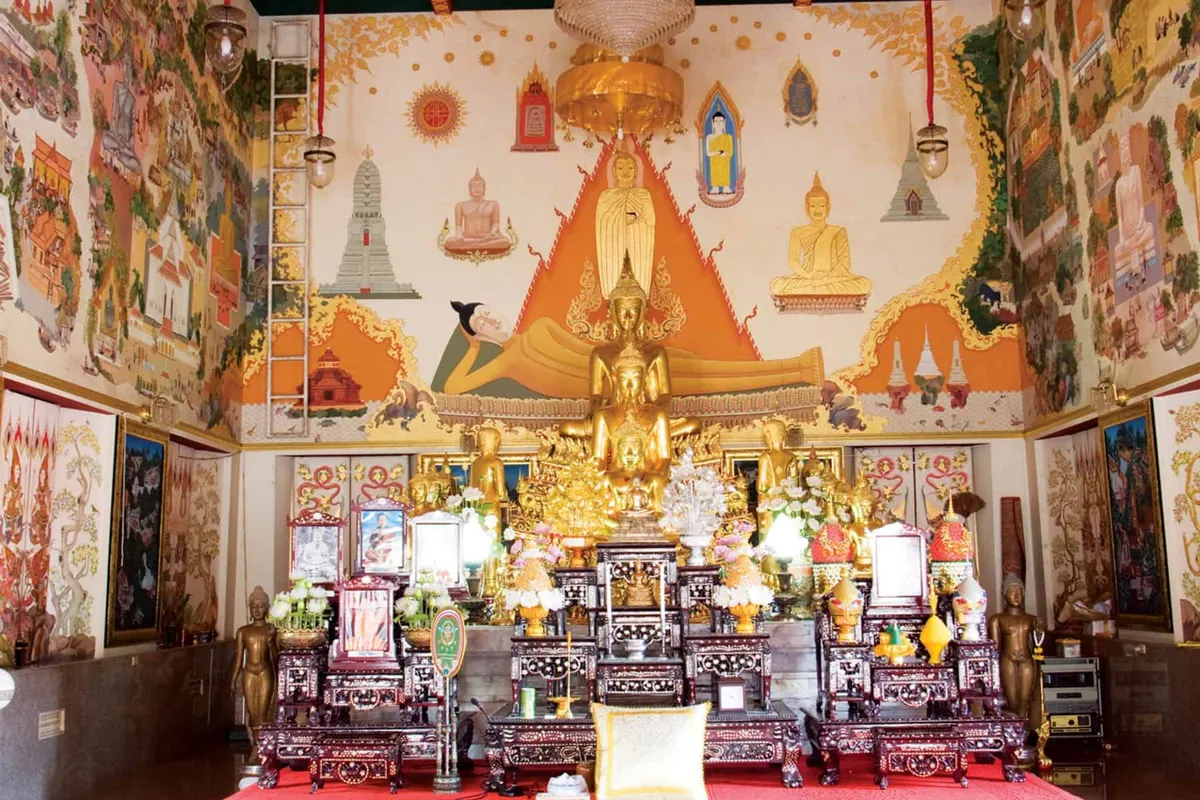
The ordination hall’s principal Buddha image, Phra Phuttha Chinnasi, is a bronze Sukhothai-period casting from around 1357. It was moved to Wat Bowonniwet in 1829 from the northern viharn of Wat Phra Si Rattana Mahathat in Phitsanulok, alongside a second principal image, Phra Phuttha Suwannakhet (Luang Pho To), brought from Wat Sa Taphan in Phetchaburi province. A golden chedi beside the ubosot, ringed by four smaller memorial chedis, holds Buddha relics — and the base of the two principal images holds something else: part of the ashes of Rama VI and Rama IX, both of whom were ordained at this temple before their coronations.
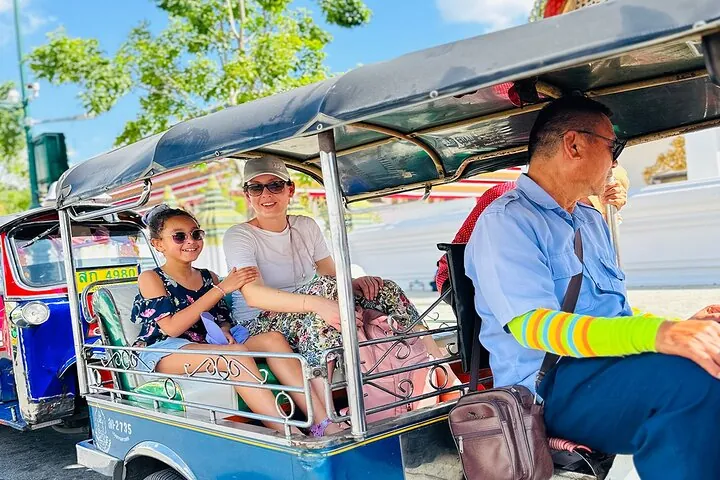
Watch out: Tuk-tuk drivers working the Banglamphu temple circuit sometimes claim Wat Bowonniwet is “closed for a ceremony” and offer to take you to a gem shop instead. It’s a working temple with an active daily schedule — walk past them and go to the gate yourself.
Visit early and you’ll get the temple close to how its royal monks experienced it: quiet courtyards, sandalwood incense drifting from the ordination hall, and the low murmur of Pali chanting rather than camera shutters. Combine it with Wat Chana Songkhram a few minutes’ walk away, or the Emerald Buddha at Wat Phra Kaew in the Grand Palace, the temple where Rama IX’s own ordination ceremony was held before he came to reside at Bowonniwet.
Location & Directions
Phra Sumern Road
Bangkok, Thailand
Show your taxi or Grab driver
วัดบวรนิเวศราชวรวิหาร
Frequently Asked Questions
Is Wat Bowonniwet free to enter?
Which kings were ordained at Wat Bowonniwet?
What is Phra Phuttha Chinnasi?
Is this where King Bhumibol's ashes are kept?
What should I wear to visit?
Spotted something out of date or incorrect? Let us know
Popular tours in Bangkok




Stay Near Wat Bowon Niwet Ratchawarawihan
Live prices for places closest to Wat Bowon Niwet Ratchawarawihan — tap a pin to compare.