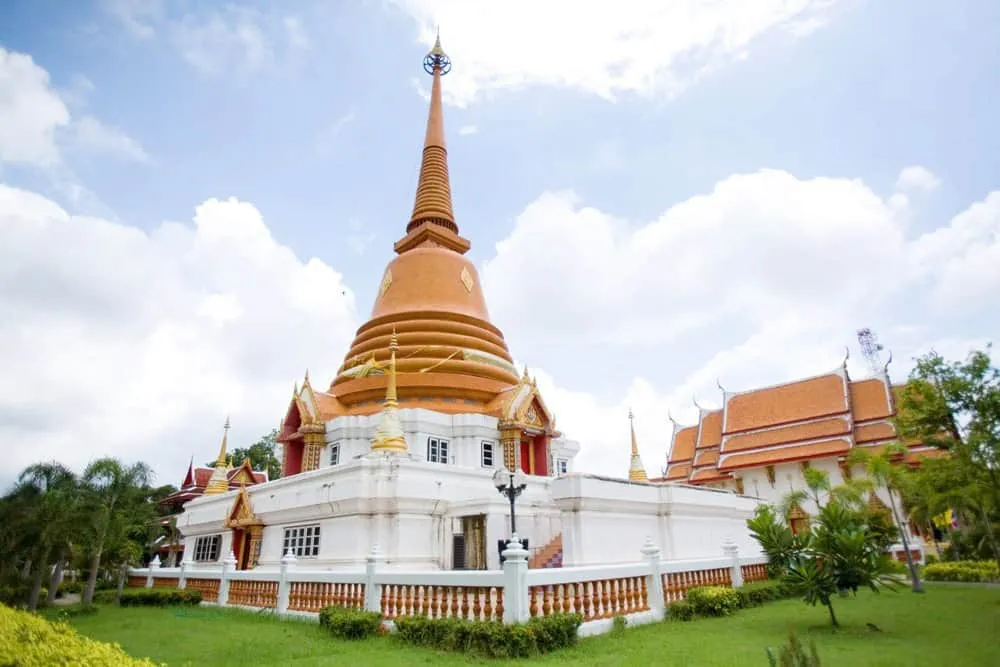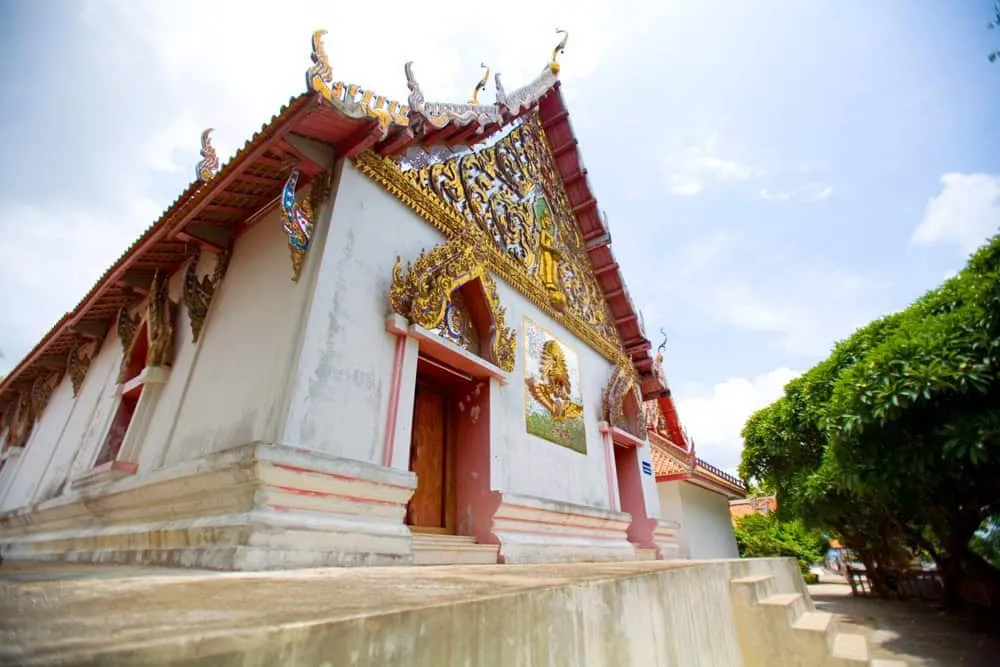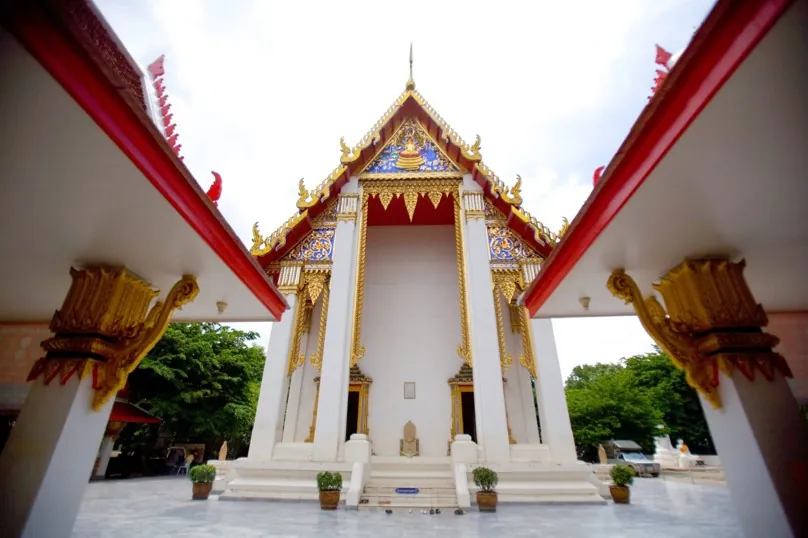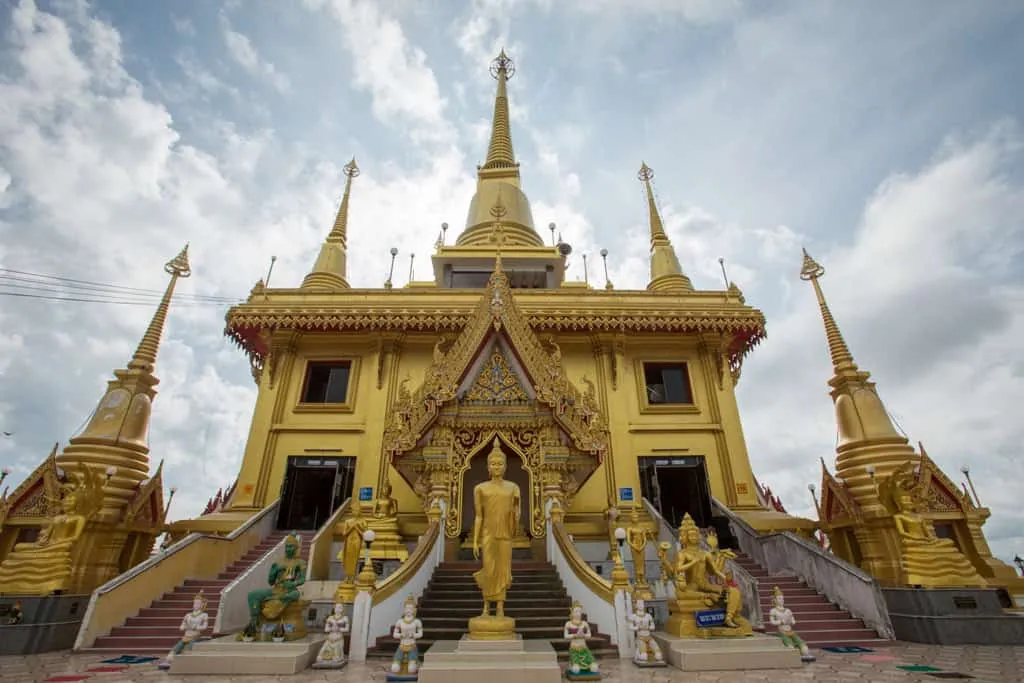

Wat Kho Hong’s viharn stands on the bank of the Chao Phraya River in Takhian Luean subdistrict, on the edge of Nakhon Sawan town — not near Chainat, a neighbouring province roughly an hour’s drive south, despite what some older listings for this temple say. A Mon-descended community founded it around 1757, late in the Ayutthaya period, under the original name Wat Ko; it wasn’t renamed Wat Kho Hong until around 2012, when Sangha authorities needed to distinguish it from another temple sharing the earlier name.
The viharn’s murals are the reason to stop here: continuous wall paintings of thep chumnum — assemblies of deities — rendered in the late Ayutthaya style, alongside Buddha footprint impressions and decorative work in Mon script. King Chulalongkorn visited in 1906, venerating the temple’s principal Buddha image and donating 80 baht toward casting its replacement, a detail still noted in the temple’s own records. The site is also registered as an archaeological location: excavations here turned up human skeletal remains around 2,000 years old, along with stone tools and ornaments, evidence of settlement on this riverbank long before the temple itself existed.
This is a working neighbourhood temple rather than a curated heritage site, so the murals share space with an active ordination hall, a sermon hall built in 1959, monastic residences, and a Dharma school running since 1929. Riverside temples along this stretch of the Chao Phraya catch a breeze most of the year, making late afternoon a comfortable time to walk the grounds before evening chanting.
Entry is free, and the temple is open daily from 06:00 to 18:00. It’s on the west bank of the Chao Phraya within Mueang Nakhon Sawan district — reachable by local transport or a short drive from Nakhon Sawan town centre, not from Chainat. Dress modestly, particularly around the ordination hall where services are still held.
Insider Tip: Ask to see the viharn’s mural wall directly rather than just the main Buddha image — the thep chumnum paintings are the temple’s real highlight, and they’re easy to miss if you don’t specifically look for them.
Watch out: don’t confuse the directions with Chainat — Wat Kho Hong is in Nakhon Sawan’s Mueang district, on the Chao Phraya’s bank, not in the neighbouring province.
- Entry: Free, daily 06:00–18:00
- Founded: Around 1757, late Ayutthaya period, by a Mon-descended community; renamed from Wat Ko to Wat Kho Hong around 2012
- Highlight: Ayutthaya-style thep chumnum murals in the viharn
- Royal visit: King Chulalongkorn (Rama V) visited in 1906
- Archaeological finds: Human remains around 2,000 years old and stone tools excavated on-site
For a different side of the province, Bueng Boraphet — Thailand’s largest freshwater swamp — and the excavated Khok Mai Den Ancient City are both worth pairing with a Nakhon Sawan visit.
Location & Directions
Mueang Nakhon Sawan, Nakhon Sawan
Nakhon Sawan, Thailand
Show your taxi or Grab driver
วัดเกาะหงษ์
Frequently Asked Questions
Is Wat Kho Hong near Chainat or Nakhon Sawan?
What's the main thing to see inside?
Why is it called Wat Kho Hong rather than Wat Ko?
Did a Thai king actually visit this temple?
Is there an entry fee?
Spotted something out of date or incorrect? Let us know
Stay Near Wat Kho Hong
Live prices for places closest to Wat Kho Hong — tap a pin to compare.