



Wat Si Sawan Sangkharam (Thue Nam)
วัดศรีสวรรค์สังฆาราม (วัดถือน้ำ)
Wat Si Sawan Sangkharam is better known by its old name, Wat Thue Nam — “Water-Oath Temple” — a nickname that has outlasted the formal one by two centuries. From around 1807, this was where Nakhon Sawan’s government officials performed the thue nam phiphat sattaya ceremony each year: drinking consecrated water while swearing loyalty to the king, a formal oath of allegiance rather than a religious rite in the everyday sense. When the province later built a proper city pillar shrine, the ceremony relocated there and the temple took its current formal name — but the water-oath nickname had already stuck with local people, and it’s still how most Nakhon Sawan residents refer to it. Entry is free.
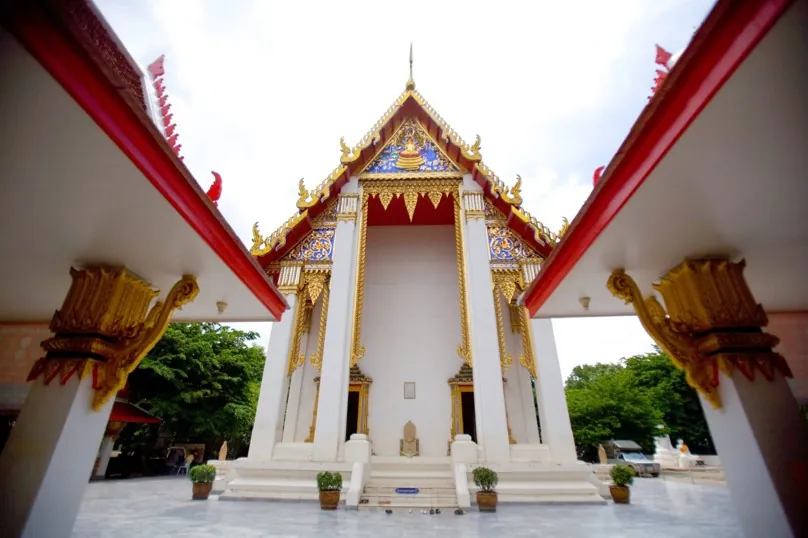
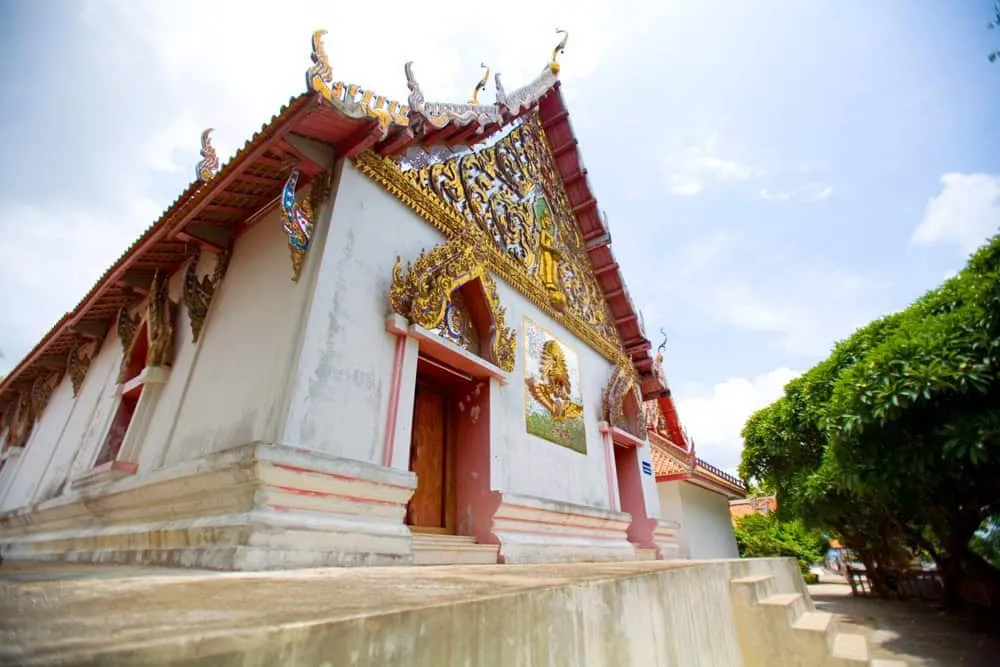
The temple sits on the Chao Phraya riverside, about 4 km from central Nakhon Sawan, at Ban Thue Nam in Tambon Nakhon Sawan Ok. Local accounts describe the old ubosot as having originally stood out on a sandbank in the middle of the river’s channel before later ending up on solid ground — an unusual detail for a temple building, and one that hints at how much the river here has shifted over two centuries. The current ubosot and a teak sermon hall (hor suat mon) with an elaborately carved gable are both roughly a century old, giving the grounds a lived-in, weathered character rather than a restored-for-tourists finish.
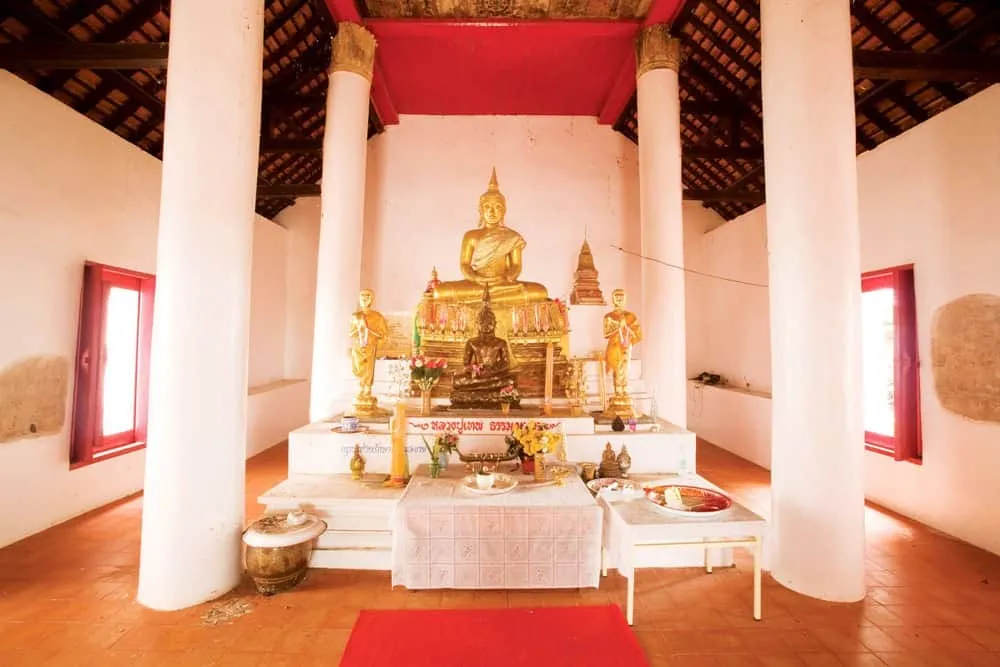
Inside the ubosot, the principal Buddha image holds an unusual detail in its base: antique spearheads, paddle blades, knives, and swords, reportedly enshrined inside the pedestal as relics rather than displayed openly. Alongside it stands a separate golden Buddha image in the Pang Pathom Set posture (First Sermon, hands raised in the “turning the wheel of dharma” gesture) and a silver Buddha image — three distinct devotional objects worth seeking out specifically, since none of them are signposted for casual visitors. The temple’s best-known abbot, Luang Pho Somkuan, remains a locally revered figure decades on; his 1977 amulet coins still circulate among Nakhon Sawan collectors.
Insider Tip: Ask for “Wat Thue Nam” rather than the formal name when getting directions locally — almost nobody in Nakhon Sawan uses “Wat Si Sawan Sangkharam” day to day, and taxi or songthaew drivers will place the water-oath name faster.
- Entry fee: Free
- Founded: c. 1807 (BE 2350)
- Name origin: Site of the annual royal water-oath (thue nam phiphat sattaya) ceremony until it moved to the city pillar shrine
- Notable objects: Antique weapons enshrined in the principal Buddha’s pedestal; golden Pang Pathom Set Buddha; silver Buddha image
- Location: Ban Thue Nam, Tambon Nakhon Sawan Ok, ~4 km from central Nakhon Sawan on the Chao Phraya riverside
This is a quiet, largely local temple rather than a tourist stop — expect to have the grounds mostly to yourself outside of merit-making days. Dress modestly and remove shoes before entering any building. It’s most easily reached by car from central Nakhon Sawan; there’s no dedicated public transport route, so a short taxi or grab ride covers the 4 km comfortably.
Location & Directions
Mueang Nakhon Sawan, Nakhon Sawan
Nakhon Sawan, Thailand
Show your taxi or Grab driver
วัดศรีสวรรค์สังฆาราม (วัดถือน้ำ)
Within Walking Distance




Frequently Asked Questions
Why is it called "Wat Thue Nam" (Water-Oath Temple)?
Do monks here collect alms by boat?
How old is the temple?
What's inside the old ubosot?
Is it free to visit?
Spotted something out of date or incorrect? Let us know
Stay Near Wat Si Sawan Sangkharam (Thue Nam)
Compare places to stay in Nakhon Sawan, or open the map for options closest to the attraction.