
Wat Muang sits in Hua Taphan Subdistrict, Ang Thong province, and it’s built around one landmark: the Great Buddha of Thailand, a 92-metre seated Buddha image in the Maravijaya (Subduing Mara) posture, formally titled Phra Phuttha Maha Nawamin Sakayamuni Si Wiset Chai Chan. At 63 metres across the lap, it’s the tallest Buddha statue in the country and visible from several kilometres out on the flat central-plains approach roads. Construction ran from 1990 to 2008, gold paint over a concrete frame.
The temple itself is much older than the statue. It was founded around 1687, in the last years of Ayutthaya’s rule, when Wiset Chai Chan was a working river town. It didn’t survive Ayutthaya’s fall to Burma in 1767 — the site was abandoned and left in ruins for over two centuries until Luang Pho Kasem began restoring it in 1983, rebuilding it into the working temple that later added the Great Buddha.
Most visitors come for two things beyond the statue itself: the giant Buddha hand, a standalone hand sculpture where people pray and photograph themselves at the fingertips, and the hell garden — a walk-through display of naraka scenes, with statues of tormented souls and two oversized ghost figures illustrating the punishments awaiting a bad life. It’s graphic rather than gory, closer to a morality lesson carved in concrete than a haunted house.
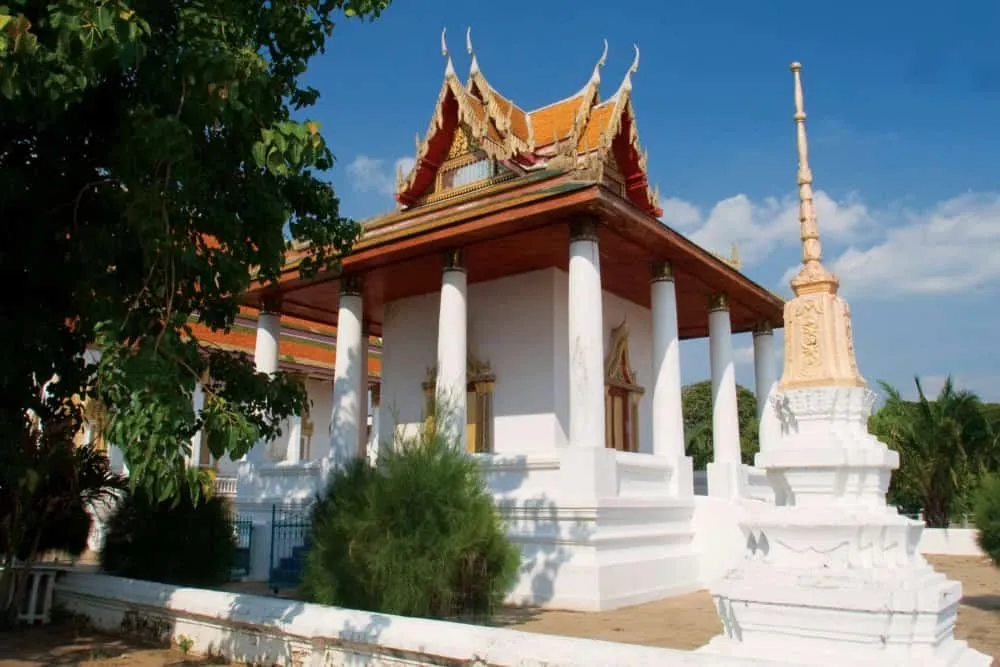
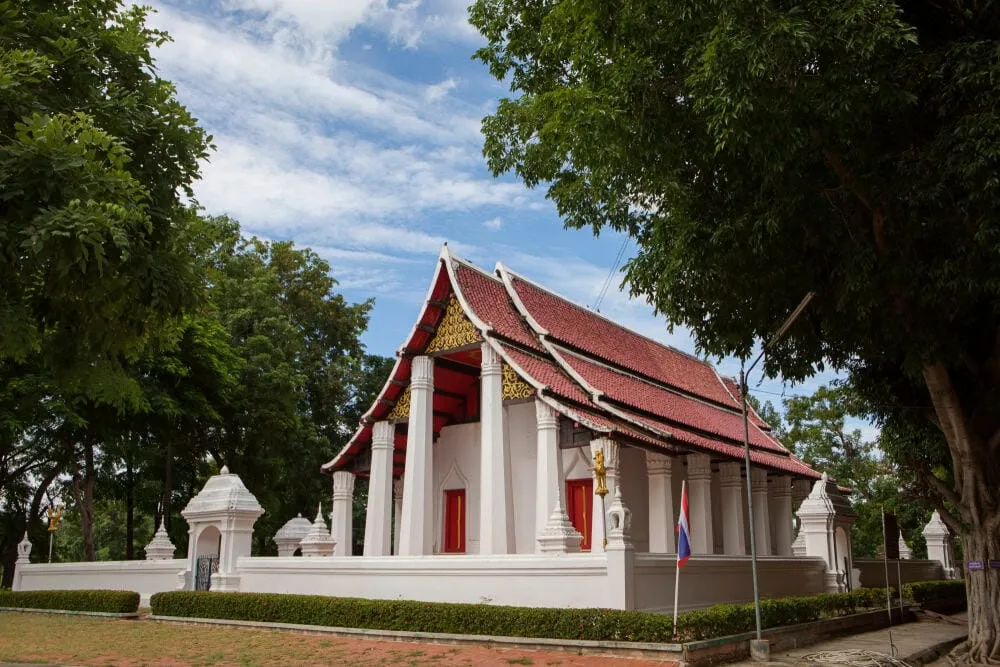
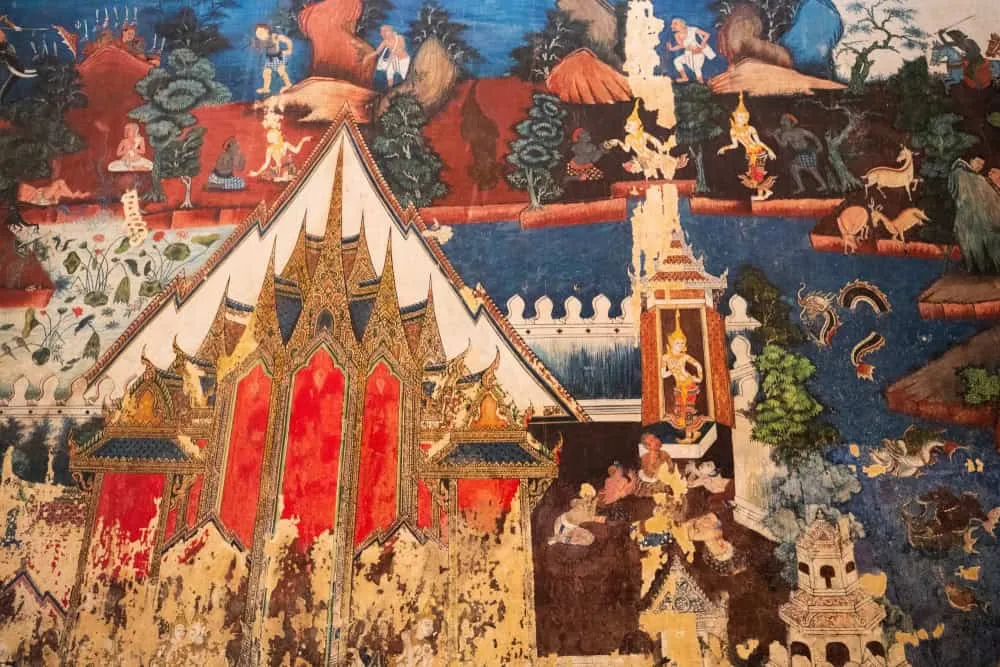
The scale is what actually surprises first-time visitors — the statue is visible well before you reach the temple gates on the approach roads through Ang Thong’s flat rice country, and photos taken from ground level rarely convey how much it dominates the skyline up close. Inside the grounds, the ordination hall’s stucco pink lotus decoration and mural work are a much quieter counterpoint to the statue outside, and worth the ten minutes most people skip on their way to the Buddha and the hell garden.
- Entry fee: Free
- Hours: Daily 09:00-17:00
- Buddha statue: 92 m tall, 63 m wide at the lap
- Built: Statue 1990-2008; temple founded c.1687, restored from 1983
- Getting there: Wiset Chai Chan district, Ang Thong — self-drive or taxi from Ang Thong town
Insider Tip: Park near the hell garden entrance rather than directly below the Buddha — the closest lot fills fast on weekends, and the walk back from the far car park is longer than it looks in the flat, shadeless heat.
Watch out: There’s very little shade around the statue and hell garden. Bring water and sun protection, especially between March and May.
Remove your shoes before entering the ordination hall, keep your head lower than any seated Buddha image, and don’t point your feet at Buddha images or monks. Nearby in Wiset Chai Chan district, Wat Wiset Chai Chan and the Wiset Chai Chan Old Market both make an easy add-on to a Wat Muang visit.
Good to Know
Good for
Things to do
On site
Location & Directions
Wiset Chai Chan, Ang Thong
Ang Thong, Thailand
Show your taxi or Grab driver
วัดม่วง
Frequently Asked Questions
How tall is the Great Buddha at Wat Muang?
Is Wat Muang free to visit?
What are the opening hours?
What is the "hell garden" at Wat Muang?
How old is Wat Muang?
Spotted something out of date or incorrect? Let us know
Tours visiting Wat Muang

Stay Near Wat Muang
Live prices for places closest to Wat Muang — tap a pin to compare.