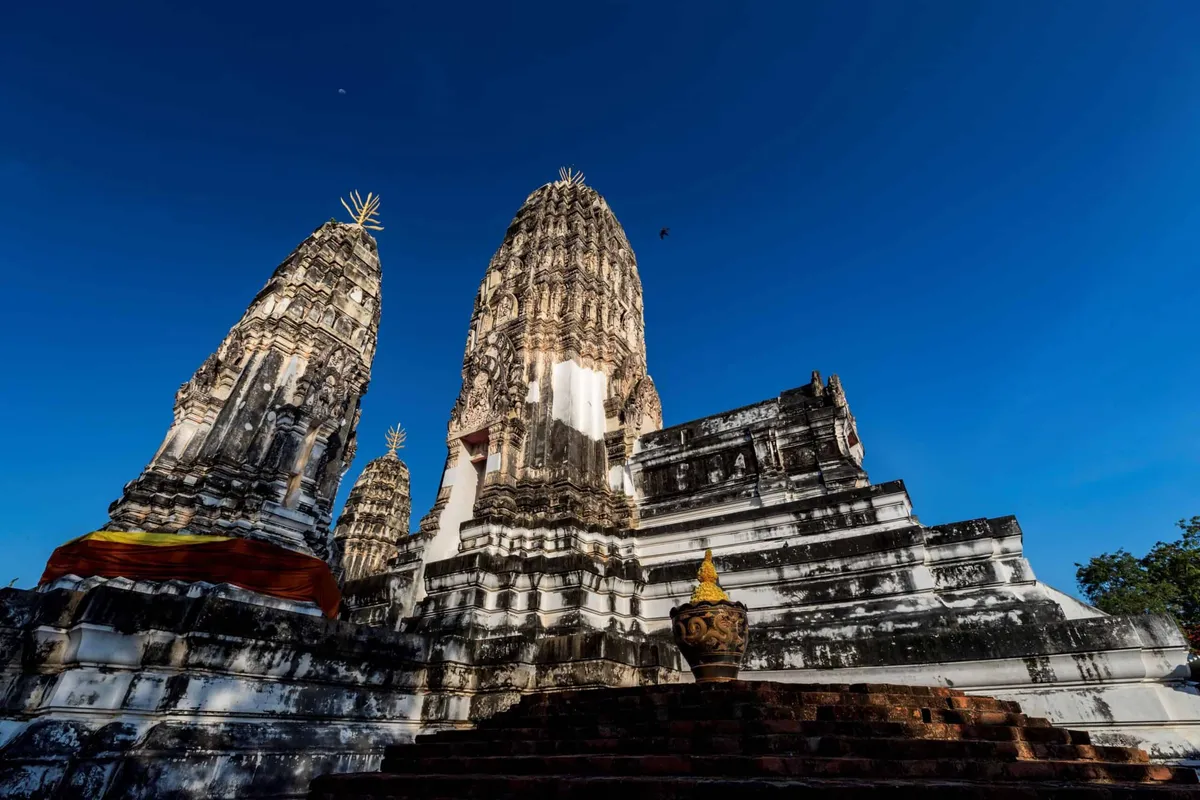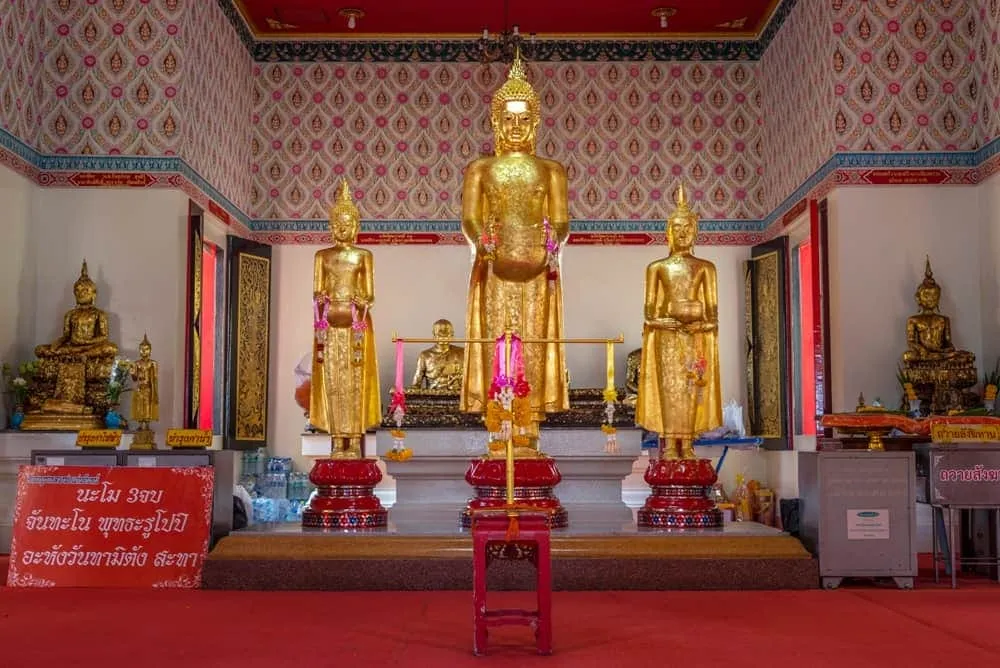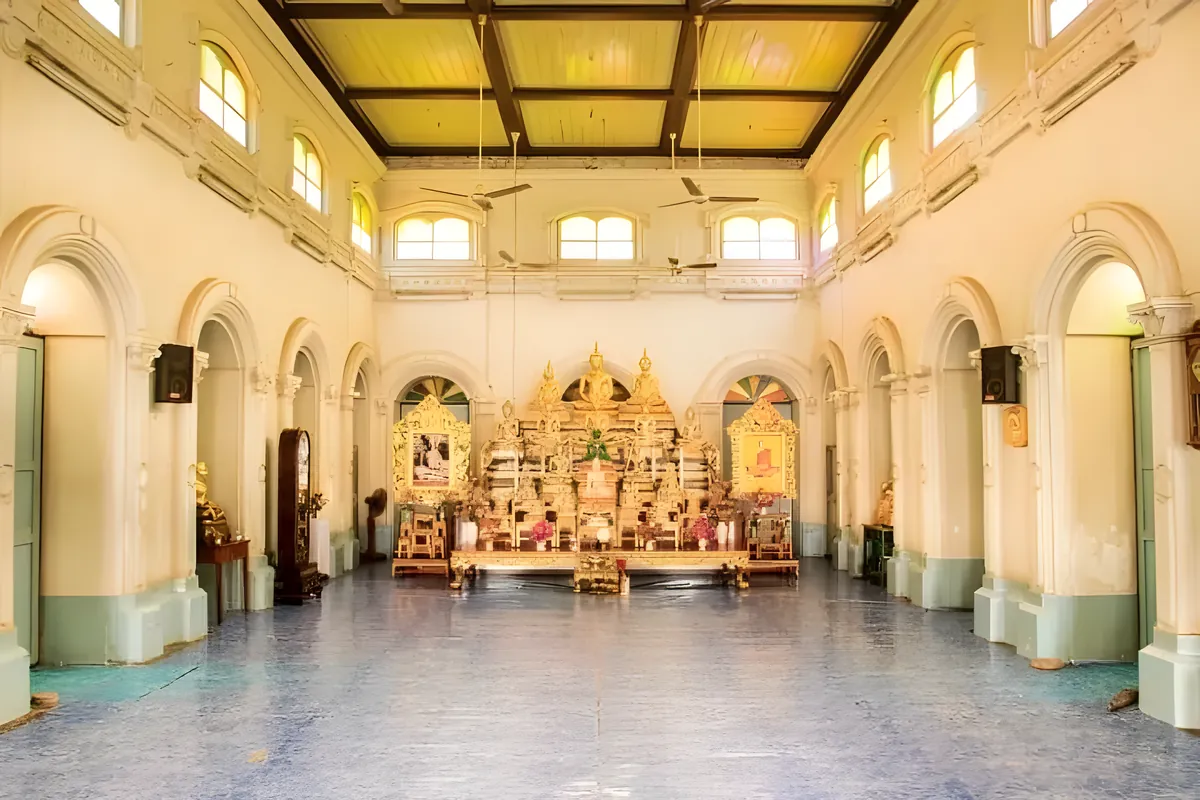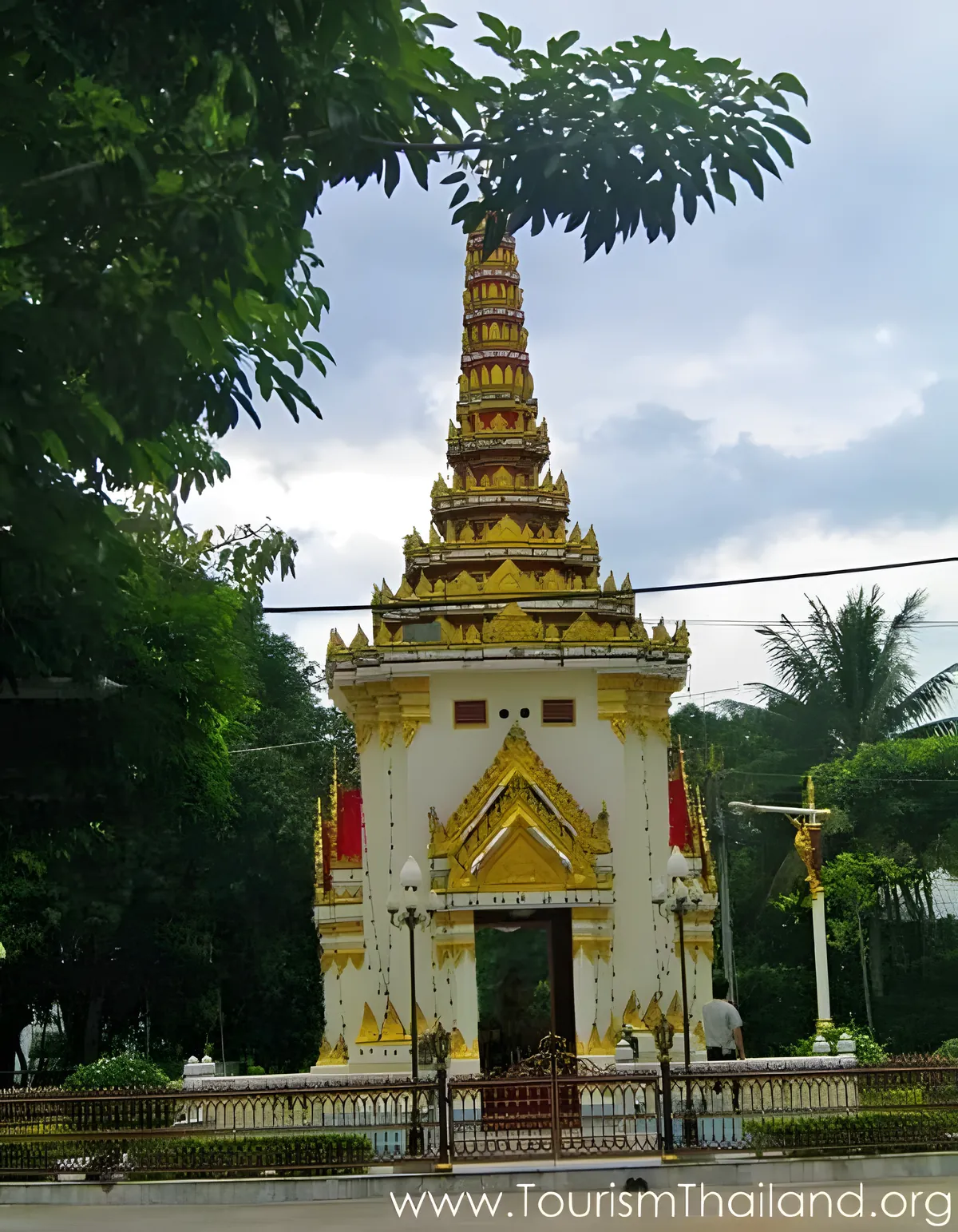






Wat Nong Hoi Phra Aram Luang sits on Khao Raeng, a low hill in Khao Raeng Subdistrict of Mueang Ratchaburi district, about 12 km from Ratchaburi town centre — not the Suan Phueng hills further west, a mix-up that trips up a lot of trip planning. The temple was established in 1873 and carries royal status (Phra Aram Luang), a rank reserved for temples with particular historical or religious weight.
The site occupies two adjacent summits, each with its own shrine. One holds a 16-metre Guanyin statue with a nine-metre chest width, set inside a hillside wihan built for Avalokitesvara worship. Locals call this shrine Khao Chao Mae Kuan Im Wat Nong Hoi, and it’s the busiest spot on the grounds during Chinese New Year, the temple’s main annual event. The second hilltop holds Phra Phuttha Rattanakosin Mahamuni, a large seated Buddha image known as Luang Pho Yai, which draws its own steady flow of merit-makers rather than the crowds next door.
The dual dedication is what makes the temple distinctive rather than a stop on the standard Ratchaburi circuit: Chinese-Thai visitors come specifically for the Guanyin shrine, following the same merit-making customs found at Kuan Im temples across the country, while Thai Buddhist visitors split their time between both hilltops. It’s roughly a two-hour drive southwest of Bangkok, which puts it within range of a day trip but far enough out that it doesn’t see the same crowds as temples closer to the capital.
- Entry fee: Free
- Hours: Approximately 07:00-18:00 daily (some sources list 06:30-17:00 — call 032-206873 to confirm)
- Getting there: Highway 3089 to the Khao Raeng access road, then about 500 m to the temple entrance
- Parking: Free, ample space at the base
- Busiest period: Chinese New Year (late Jan/Feb)
From either hilltop the view runs out over rice fields — green in the rainy season, gold-brown once harvested — with little else on the horizon to interrupt it. Most people drive rather than walk up; the access road is paved and the car park sits close to both shrines.
Watch out: Monkeys work the grounds and the approach road in numbers, and they’re quick around anything that looks like food. Zip your bag and don’t carry snacks or plastic bags in your hand — they’ve learned to associate both with an easy meal.
Insider Tip: Visit on a weekday morning if you want the Guanyin wihan without a crowd — tour groups tend to arrive from around 10am, and the shrine gets genuinely packed during the Chinese New Year festival.
Dress modestly (shoulders and knees covered) and take your shoes off before entering either prayer hall. Seeing both hilltops properly takes about 45 minutes to an hour; longer if a festival is on.
Two more stops round out a half-day in Mueang Ratchaburi: Khao Ngu Stone Park, a limestone park with rock-cut Buddha reliefs, and Wat Khao Wang, another hilltop temple complex closer to the town centre.
Location & Directions
Mueang Ratchaburi, Ratchaburi
Ratchaburi, Thailand
Show your taxi or Grab driver
วัดหนองหอย พระอารามหลวง
Frequently Asked Questions
Is Wat Nong Hoi free to enter?
What are Wat Nong Hoi's opening hours?
Is Wat Nong Hoi in Suan Phueng?
Are the monkeys at Wat Nong Hoi dangerous?
When is the best time to visit?
Spotted something out of date or incorrect? Let us know
Stay Near Wat Nong Hoi
Live prices for places closest to Wat Nong Hoi — tap a pin to compare.