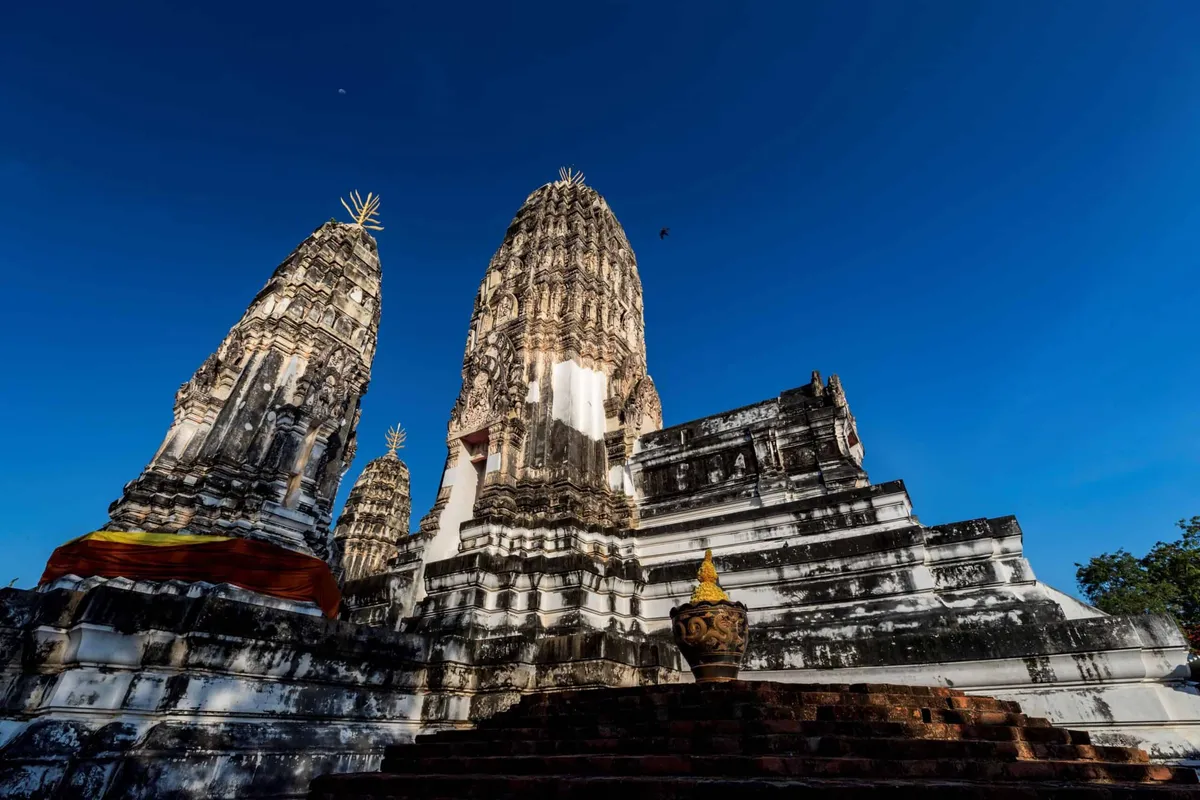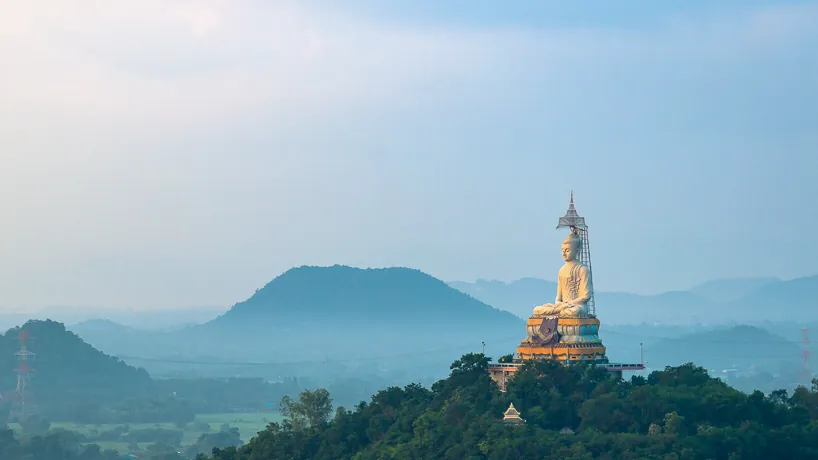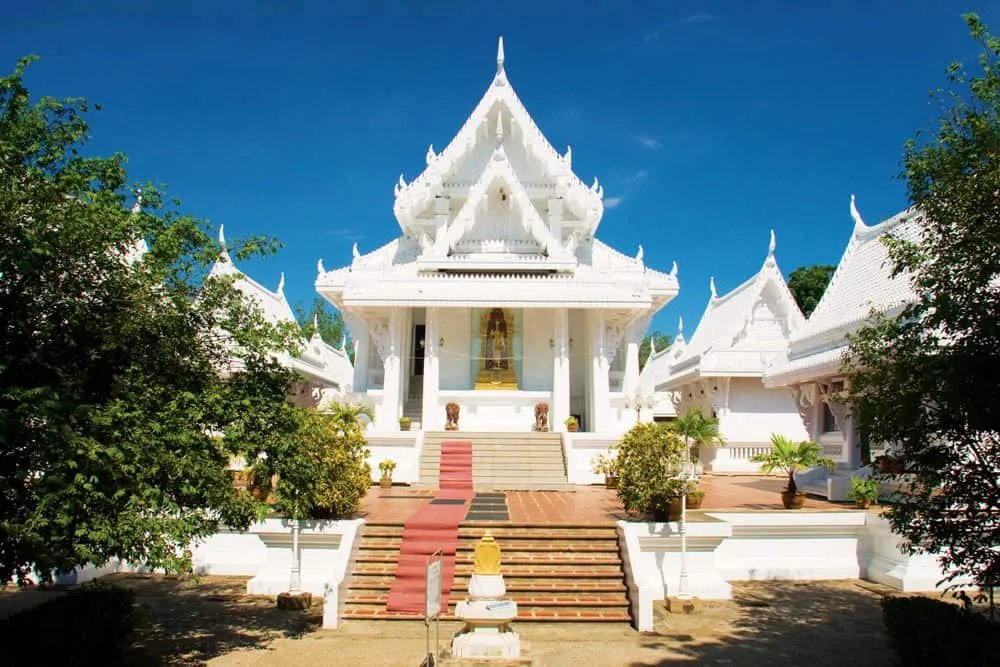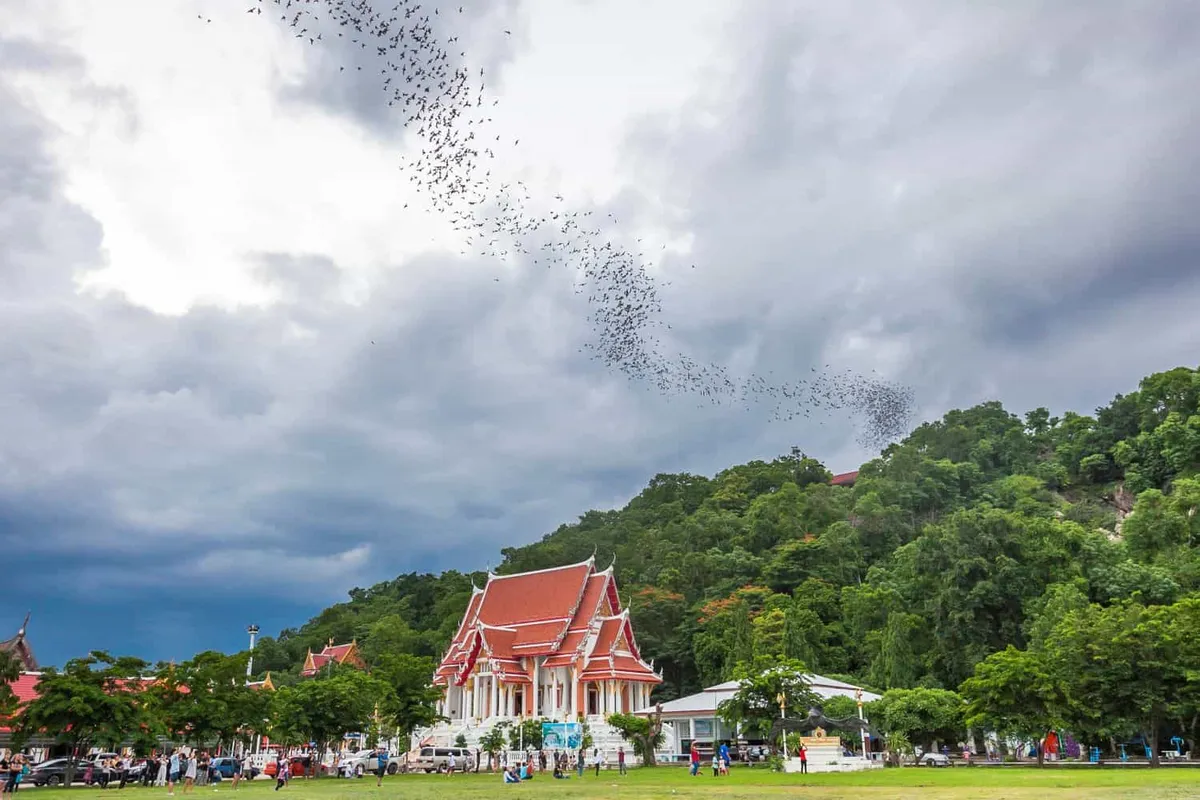





Wat Khao Wang sits on a 44-metre hill about 2 km west of Ratchaburi town, and it’s free to visit every day. King Taksin founded it in 1785 as Wat Khao Sattanat; the current name dates from the early 1930s, after a hilltop palace built for King Chulalongkorn (Rama V) was handed over to the monastery. This is not the well-known Khao Wang in Phetchaburi. See the FAQ below if you’re trying to work out which one you’re planning to visit.
A paved road climbs to the temple, but most people park near Khao Wang School at the base and walk up. It’s steep but short, not a long staircase. At the top, the ordination hall (ubosot) holds the temple’s main Buddha image, and a sanctuary nearby houses around ten older Buddha statues that locals consider especially sacred. The viharn mixes traditional Thai design with European-influenced interior touches from its palace-building days, and a chedi marks the highest point of the complex. From the open ground around the buildings, Ratchaburi’s rooftops, rice paddies and the hills beyond are laid out below, no entry fee, no ticket booth, just a working monastery that happens to have the best view in town.
Weekday mornings are quietest; Thai visitors come mainly to make merit or consult resident monks rather than to sightsee, so don’t expect a crowd either way. Bring water for the climb (there’s little shade on the open sections of the path) and wear shoes with grip, since the paving can be slick after rain.
Insider Tip: Skip the car and walk up from Khao Wang School even if you’re driving elsewhere that day. The short climb is the whole point, and cars queuing on the narrow summit road can turn a five-minute drive into a much longer wait on weekend mornings.
Dress modestly (shoulders and knees covered) as at any Thai temple, and remove shoes before entering the ordination hall or viharn. The temple is roughly a 10-minute drive from central Ratchaburi by car or motorbike; there’s no public bus stop directly at the hill, so a private ride or your own transport is the practical option. If you’re touring the town’s temples, Wat Mahathat Worawihan in the old quarter makes an easy pairing with Wat Khao Wang’s hilltop setting.
- Location: Sattanat Mountain, ~2 km west of Ratchaburi town centre
- Entry: Free
- Founded: 1785 (as Wat Khao Sattanat); renamed Wat Khao Wang in the early 1930s
- Getting there: Short climb (or drive) up from the base near Khao Wang School
- Not to be confused with: Khao Wang / Phra Nakhon Khiri in Phetchaburi (~60 km south, ticketed, has a cable car)
Location & Directions
Mueang Ratchaburi, Ratchaburi
Ratchaburi, Thailand
Show your taxi or Grab driver
วัดเขาวัง
Frequently Asked Questions
Is this the same as the famous Khao Wang in Phetchaburi?
How much does it cost to enter Wat Khao Wang?
How do I get up the hill?
What's the history behind the temple?
What's there to see once you reach the top?
Spotted something out of date or incorrect? Let us know
Stay Near Wat Khao Wang
Live prices for places closest to Wat Khao Wang: tap a pin to compare.