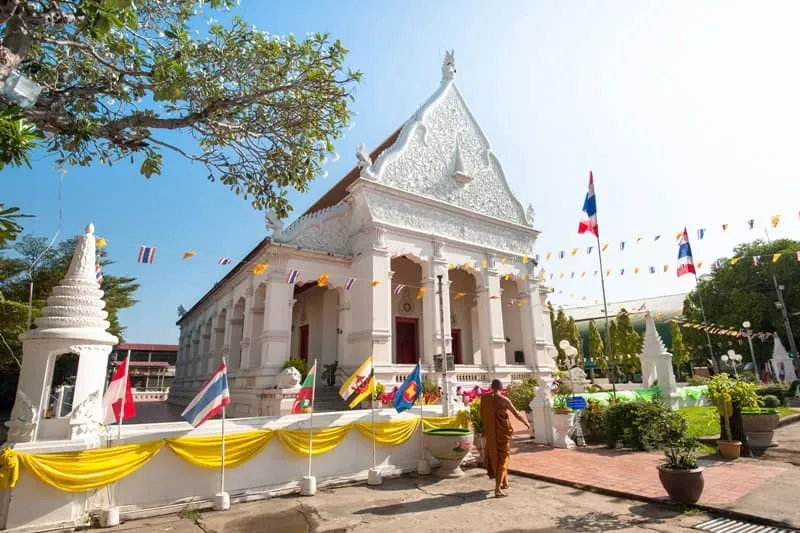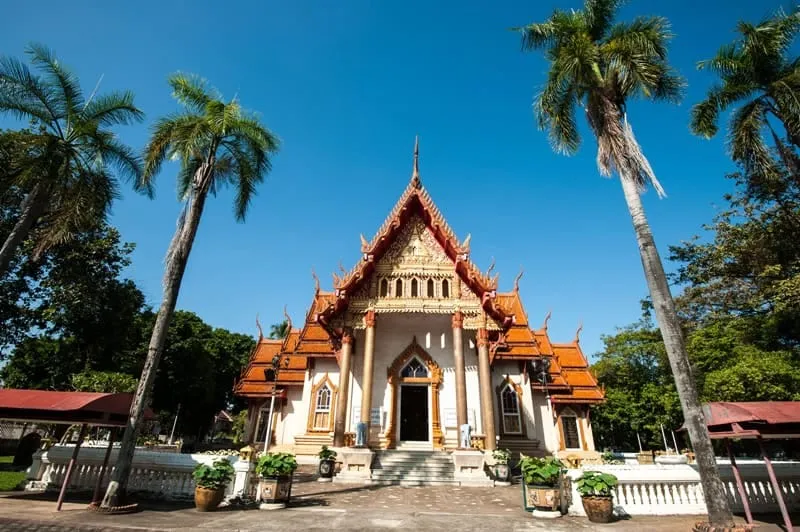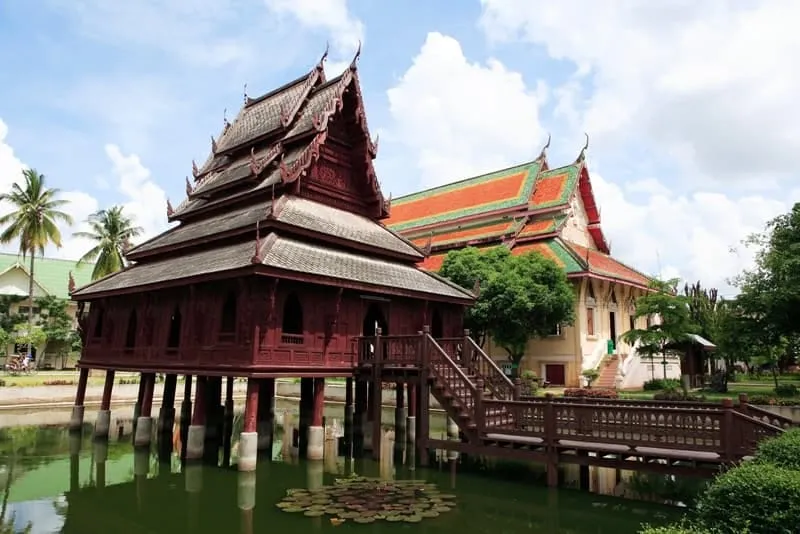




Wat Nong Pa Phong is the monastery Ajahn Chah founded in 1954 near Ubon Ratchathani, and it remains the mother monastery of the Thai Forest Tradition he built around it — a lineage that now runs to more than 250 branch monasteries in Thailand alone, plus dozens more overseas. Entry is free and the grounds are open to day visitors daily, roughly 08:00 to 16:30, but this is a working monastery first and a tourist site a distant second.
- Founded: 1954, by Ajahn Chah (Phra Bodhinyanathera)
- Entry: Free, daily approximately 08:00-16:30
- Museum: Three-storey building with a life-like statue of Ajahn Chah, his robes, and personal effects
- Chedi: Holds Ajahn Chah’s ashes, on a meditation mound north of the main grounds
- Getting there: About 12 km southeast of Ubon Ratchathani, in Warin Chamrap district
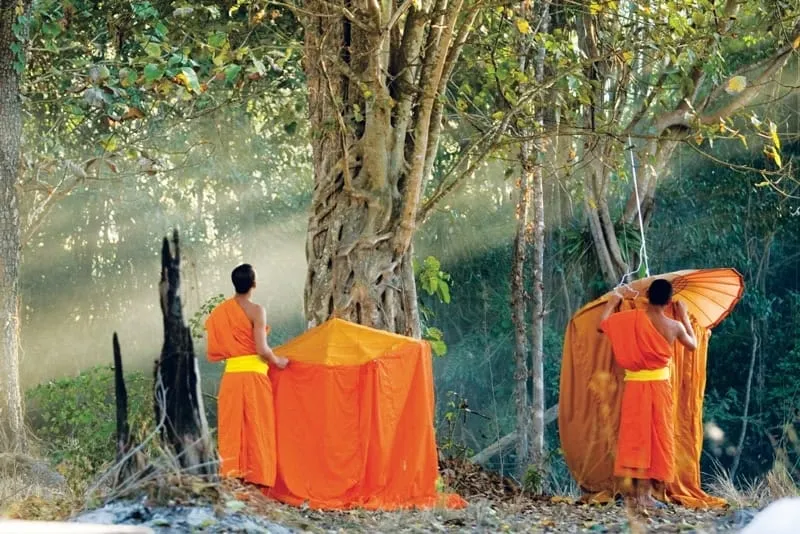
The grounds spread across forest that the monastery itself has protected for seven decades — simple wooden sala (meeting halls), scattered kutis for individual monks, and shaded paths connecting them rather than a single showpiece building. The main sala houses the monastery’s Buddha images and is where communal chanting happens; day visitors are free to sit quietly at the back during a session rather than treating the hall as a photo stop. The museum building is the one concession to visitor interest, with three floors covering Ajahn Chah’s life and the wider forest tradition he taught. North of the main compound, a circular meditation mound holds the gold chedi containing his ashes — it’s a working meditation spot for resident monks as much as a monument, so quiet is expected there more than anywhere else on site.
There’s no English signage and, outside of the museum captions, little explanation of what you’re looking at — this is a monastery run for its resident monks and lay Thai devotees, not curated for foreign visitors. If a language barrier makes that frustrating, Wat Pa Nanachat, the English-speaking sister monastery Ajahn Chah founded in 1975 specifically for non-Thai monks, sits about 20 minutes away and is set up to explain itself to outsiders in a way this one isn’t.
Insider Tip: Come between 8am and 10am if you want to see the monastery at its most active — alms rounds and morning routines happen early, and by midday the grounds are quiet with little to observe beyond the museum and chedi.
Watch out: This is a living monastery, not a heritage attraction. Dress modestly (long trousers, covered shoulders), keep your voice down throughout the grounds, and don’t photograph monks or interrupt chanting for a better shot — the etiquette that applies at Wat Pa Nanachat applies here too, just without English staff to explain it if you get it wrong.
The monastery is reachable by car or motorbike from Ubon Ratchathani city centre, or by taking a pink songthaew to its terminus at Ban Gor and covering the last 2 km on foot or by tuk-tuk. There’s no public transport that drops you at the gate directly, so agree a return trip with a driver before you arrive if you’re not self-driving. Visitors wanting to stay and meditate can simply arrive in the morning and ask for an English-speaking monk, though conditions are basic — most kutis have no running water or electricity — and Thai is the working language of instruction.
Location & Directions
Warin Chamrap, Ubon Ratchathani
Ubon Ratchathani, Thailand
Show your taxi or Grab driver
วัดหนองป่าพง
Frequently Asked Questions
What is Wat Nong Pa Phong famous for?
Can foreigners just walk in and look around?
Is there an entry fee?
What can you actually see at the museum and chedi?
Can you stay and meditate at Wat Nong Pa Phong?
Spotted something out of date or incorrect? Let us know
Stay Near Wat Nong Pa Phong
Compare places to stay in Ubon Ratchathani, or open the map for options closest to the attraction.