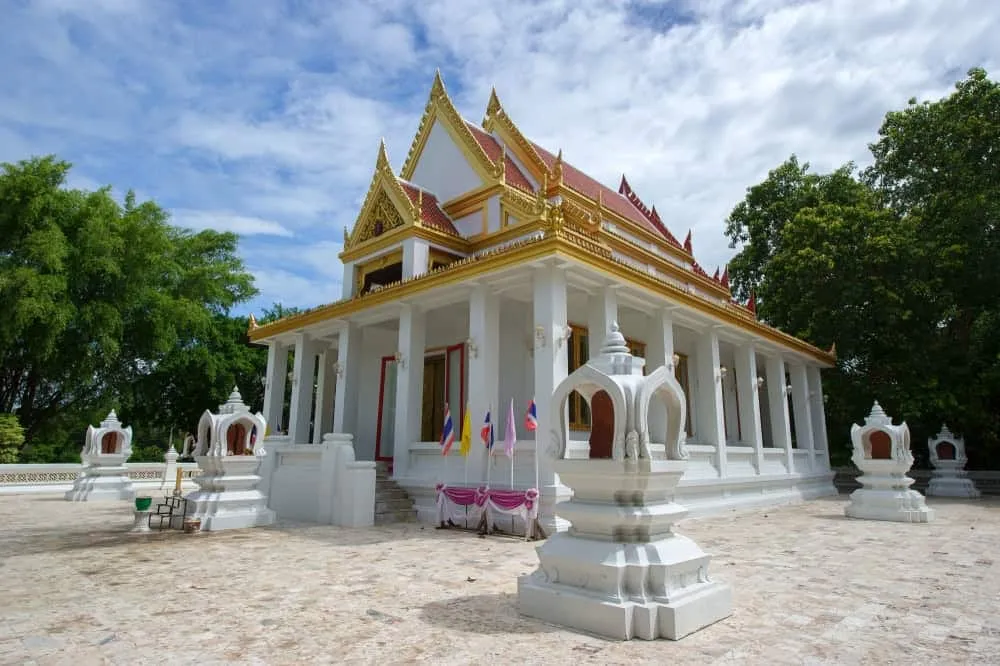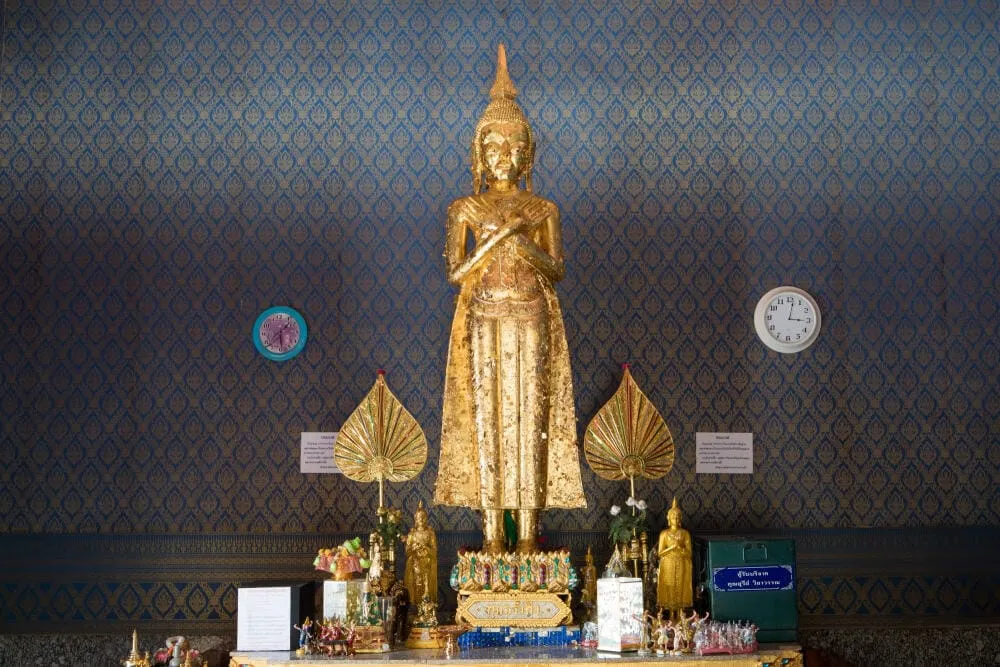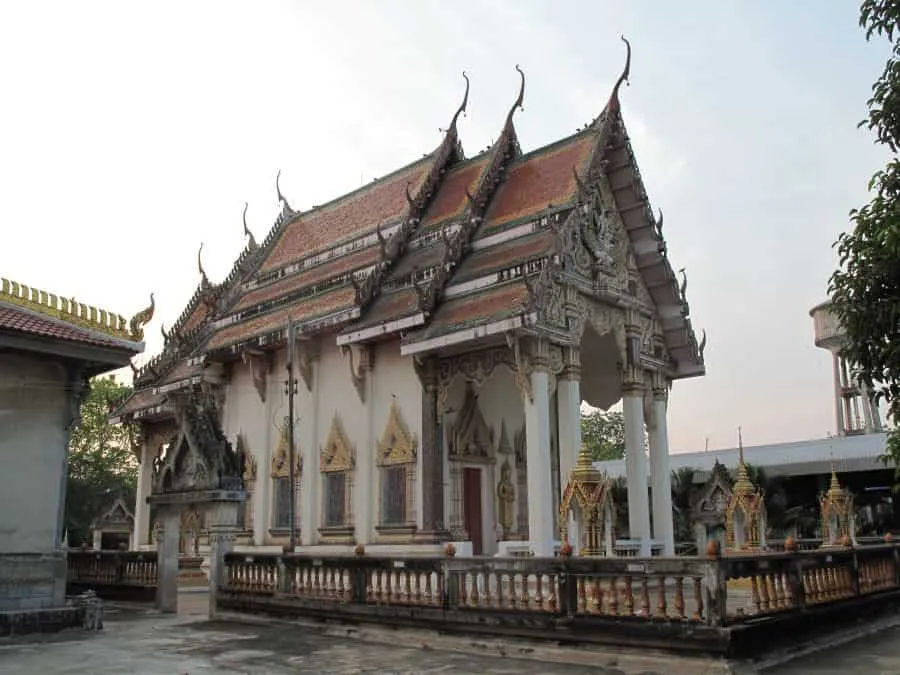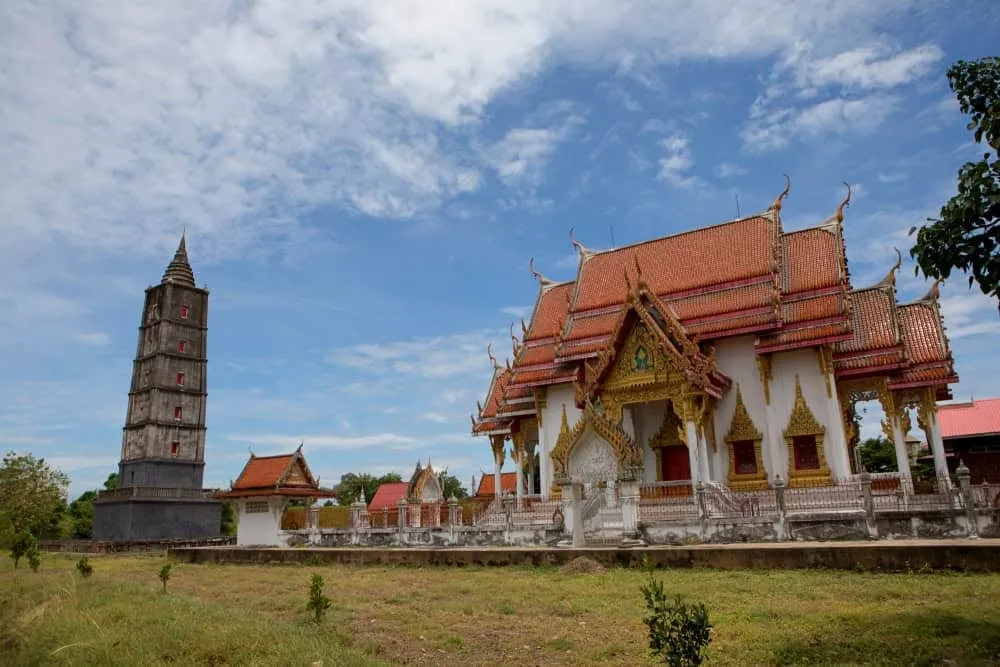
Wat Pa Mok Worawihan’s reclining Buddha — Phra Phutthasaiyat — stretches 22.58 metres from topknot to feet, brick and mortar under gold leaf, and is old enough that historians place its origin in the Sukhothai period. King Naresuan the Great is recorded stopping here in 1592 to pay homage and muster his army before marching on Burma’s Maha Uparacha, the campaign that ended with his elephant-back duel at Nong Sarai. The temple sits on the west bank of the Chao Phraya River in Ang Thong’s Pa Mok district, about 12 kilometres south of the provincial town. Entry is free, daily 08:00–17:00.
Inside the image hall, the Buddha lies on its side facing the river, head resting on one arm, the curve of the robe picked out in gold against white plaster. Thirty-six relics are said to have been placed inside the statue by Phra Maha Thera Lailai — one of the details that separates this from a purely decorative monument and explains why it still draws Thai pilgrims rather than only sightseers. A temple legend adds a second layer to the Naresuan connection: before the 1592 campaign, the king is said to have dreamed of floodwaters filling the forest and of wrestling and killing a giant alligator in them — a vision his Brahmin advisors read as a sign of coming victory. Treat that story as temple lore rather than verified history; the 1592 visit itself is the part chronicles actually record.
The Buddha’s real crisis came more than a century later, not from Naresuan’s war but from the river itself. By around 1725, erosion was eating into the bank beneath the image, and King Thai Sa ordered a rescue: Phraya Ratcha Songkhram oversaw an operation that raised the entire statue roughly 50 centimetres and shifted it to firmer ground, a job that took about five months and finished in early 1727. King Borommakot rededicated the rebuilt temple in 1734 with royal ceremony, and it was restored again under King Mongkut in 1863 and King Chulalongkorn in 1901 — three centuries of Chakri and Ayutthaya-era kings, each treating the image as worth the trouble of saving.
Insider Tip: Time a visit for late afternoon, when the light comes in low off the river and falls directly along the length of the reclining figure — better for photos than the flat overhead light of midday.
Getting here is a short drive from Ang Thong town along the riverside road; there’s no reliable public transport directly to the temple gate, so a car, motorbike, or arranged taxi is the practical option. Dress modestly — shoulders and knees covered, sarongs sometimes available at the entrance — and remove your shoes before stepping into the image hall. If you’re touring Ang Thong’s riverside temples, Wat Khun Inthapramun has its own large reclining Buddha a short drive away, and Wat Chaiyo Worawihan pairs a giant seated Buddha with the same stretch of the Chao Phraya.
- Reclining Buddha: 22.58 m, Sukhothai-period, brick and mortar under gold leaf
- Entry fee: Free
- Hours: Daily 08:00–17:00
- History: Relocated 1725–27 to escape river erosion; restored under Kings Borommakot (1734), Mongkut (1863), Chulalongkorn (1901)
- Location: Pa Mok district, ~12 km south of Ang Thong town, west bank of the Chao Phraya
Good to Know
Good for
Things to do
On site
Location & Directions
Pa Mok, Ang Thong
Ang Thong, Thailand
Show your taxi or Grab driver
วัดป่าโมกวรวิหาร
Frequently Asked Questions
How big is the reclining Buddha at Wat Pa Mok Worawihan?
What's the connection to King Naresuan?
Why was the Buddha image moved?
Is Wat Pa Mok Worawihan free to visit?
How far is the temple from Ang Thong town?
Spotted something out of date or incorrect? Let us know
Stay Near Wat Pa Mok Worawihan
Live prices for places closest to Wat Pa Mok Worawihan — tap a pin to compare.