Wat Pho Chai Semaram
วัดโพธิ์ชัยเสมาราม (วัดบ้านก้อม)
Wat Pho Chai Semaram, also known locally as Wat Ban Kom, holds one of Isan’s largest collections of ancient bai sema — carved stone boundary markers rarely found anywhere else in Thailand at this concentration. Entry is free, daily 08:00-16:30.
The temple is believed to have served Fa Daet Song Yang, the ancient moated town whose earthworks still ring the surrounding area in Kamalasai district. When the old town’s boundary stones were gathered and preserved, many ended up here rather than scattered across the wider site — which is why a single village temple holds a collection significant enough to draw archaeologists and art historians from outside the province. The stones split into two groups: carved slabs depicting Jataka tales and scenes from the Buddha’s life, kept in a small purpose-built museum behind the main temple building; and plain, uncarved sema still planted upright in their original positions along the temple’s north perimeter wall, much as they would have stood centuries ago.
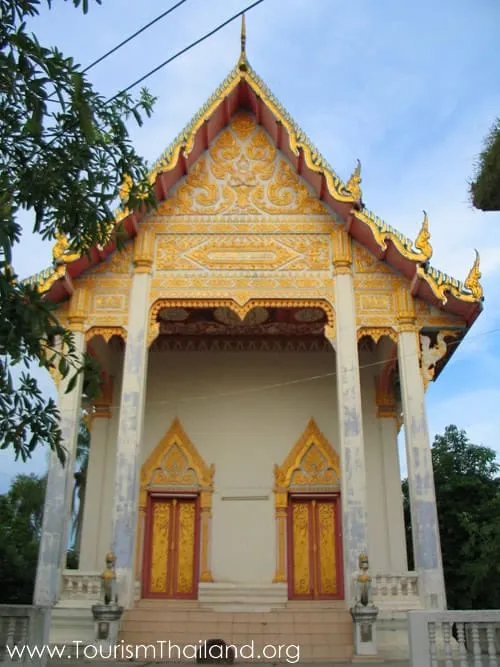
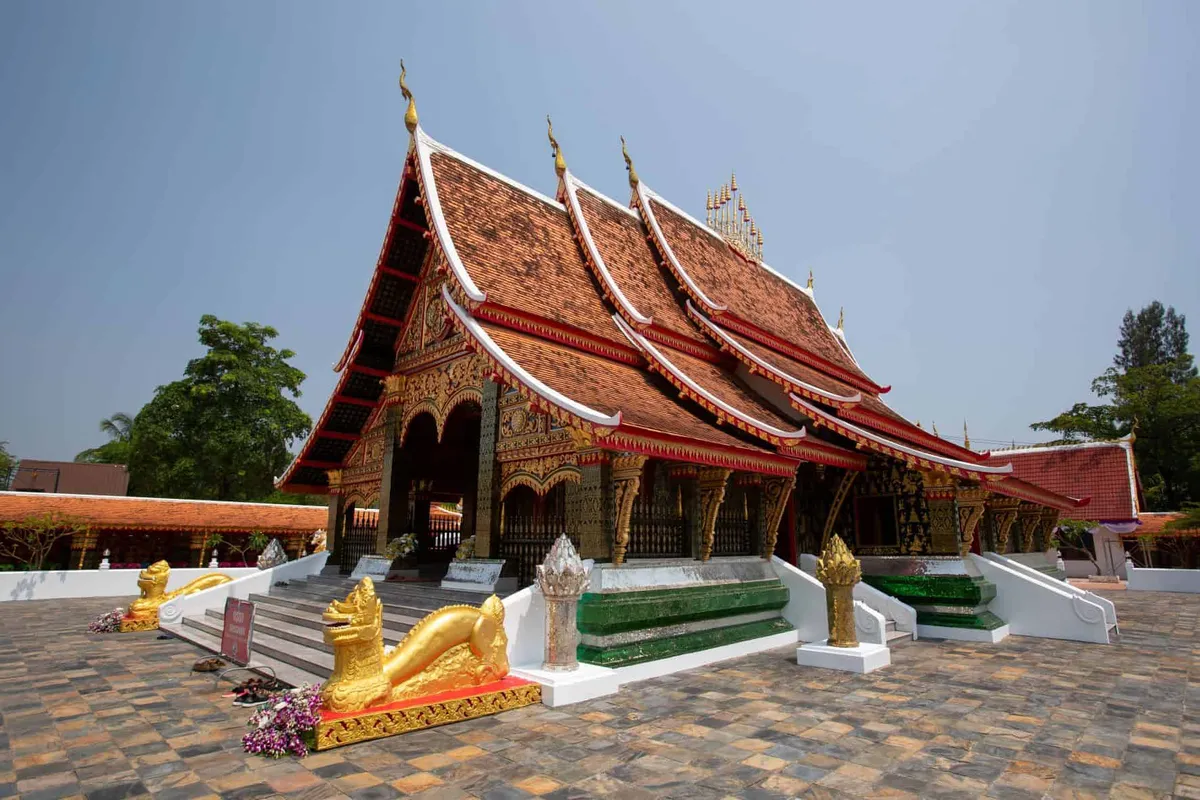
Beyond the sema collection, Wat Pho Chai Semaram functions as an ordinary working temple — a main hall with the standard complement of Buddha images, a scattering of smaller shrines, monks going about daily routines. It’s the stones, not the architecture, that make this stop worth the detour off Kalasin’s main tourist trail (which mostly runs through nearby Kalasin town and the Sirindhorn Museum’s dinosaur exhibits).
The carved sema are worth slowing down for: figures and scenes worked into the stone in a flattened, linear style typical of Dvaravati-era craftsmanship, distinct from the rounder, more ornamented carving of later Ayutthaya and Rattanakosin temple art. Fa Daet Song Yang’s original moated boundary is still traceable in the surrounding fields if you know roughly where to look, though the earthworks themselves are unmarked and easy to miss without a local guide — the temple’s sema collection is by far the more legible way to encounter the site’s history.
Insider Tip: Ask at the temple office if the museum building is unlocked — it’s a small volunteer-run space and isn’t always staffed, especially outside weekends. If it’s closed, the uncarved sema row by the north wall is freely viewable any time.
Visit in the cooler morning hours if you’re combining this with walking the wider Fa Daet Song Yang earthworks nearby — there’s little shade once the sun is up. Dress modestly and remove shoes before entering the main hall; the outdoor sema areas don’t require the same. The temple sits roughly 20 minutes by car southeast of Kalasin town in Kamalasai district, an easy half-day pairing with the town’s other Dvaravati-era sites.
- Entry fee: Free
- Hours: Daily 08:00-16:30
- Also known as: Wat Ban Kom
- Historical link: Believed to have served the ancient moated town of Fa Daet Song Yang
- Standout feature: Carved and uncarved ancient bai sema (boundary stones), some kept in an on-site museum
Location & Directions
Kamalasai, Kalasin
Kalasin, Thailand
Show your taxi or Grab driver
วัดโพธิ์ชัยเสมาราม (วัดบ้านก้อม)
Frequently Asked Questions
What are the bai sema at Wat Pho Chai Semaram?
Is Wat Pho Chai Semaram free to visit?
Why is the temple also called Wat Ban Kom?
Where can I see the carved sema stones?
How do I get there from Kalasin town?
Spotted something out of date or incorrect? Let us know
Stay Near Wat Pho Chai Semaram
Live prices for places closest to Wat Pho Chai Semaram — tap a pin to compare.