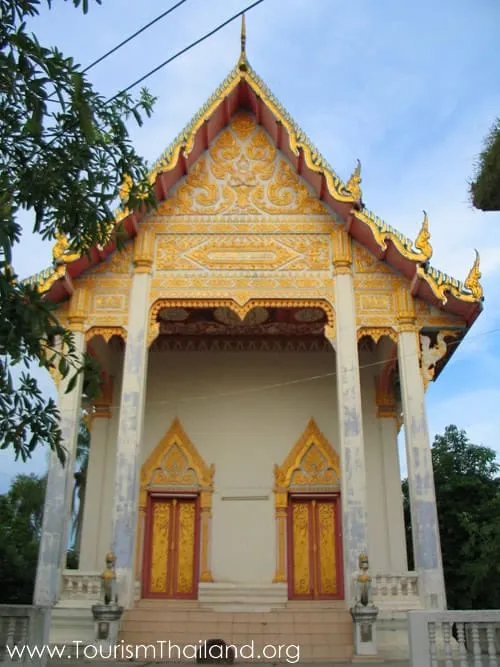




Wat Wang Kham, in Ban Nathawi village in Kalasin’s Khao Wong district, is the only temple in the province built in Lan Xang style — the architectural tradition of old Laos, rather than the Isan or central-Thai temple forms found almost everywhere else in the region. The main hall is modelled directly on the sim of Wat Xieng Thong in Luang Prabang, a UNESCO World Heritage temple widely regarded as the finest surviving example of Lan Xang religious architecture.
The choice of style isn’t decorative. Ban Nawi, the village that built and maintains the temple, is a Phu Thai community with family and cultural ties extending across the Thai-Lao border, and the Lan Xang design was a deliberate way of using shared architecture to connect Phu Thai identity on both sides of that border. Construction began on 22 February 1996 through the efforts of villagers from Ban Nawi and neighbouring communities; the site gained formal recognition as a temple under the Thammayut order on 7 July 2000, and received its consecrated boundary in March 2002 — making the whole complex barely three decades old rather than an ancient site.
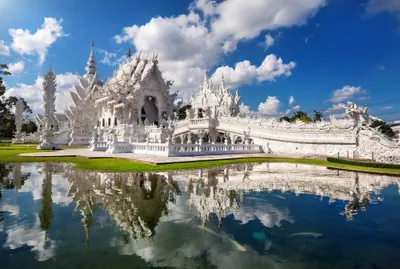
The sim’s triple-tiered roofline is the most striking feature, echoing its Luang Prabang model, with naga serpents, carved lion figures, and Buddhist narrative scenes worked into the exterior. Inside and on the surrounding walls, mosaic and coloured-glass work depicts a large decorated tree alongside Buddha images — a level of ornamentation that stands out against the plainer temple architecture typical of this part of Isan. Some visitors describe being invited to change into Phu Thai clothing before entering, part of the temple’s broader role as a showcase for local Phu Thai culture rather than religious practice alone.
Insider Tip: Because this is a relatively young, community-built temple rather than a historic monument, the story of why it was built — as a cultural bridge for a border-spanning Phu Thai community — is arguably more interesting than the building’s age. For a deeper look at Phu Thai life beyond the temple itself, the Phu Thai Khok Kong Cultural Tourism Village elsewhere in Kalasin lets you watch local weavers and potters at work.
Watch out: Khao Wong district is well off Kalasin’s main tourist routes, with no public transport running directly to the temple — a rented car or a driver hired for the day from Kalasin town is the realistic way to reach it.
- Style: Lan Xang (Laotian) architecture, modelled on Wat Xieng Thong in Luang Prabang
- Built: Construction started 1996; recognised as a temple in 2000, consecrated boundary granted 2002
- Community: Ban Nawi, a Phu Thai village with cross-border ties to Laos
- Entry: Free, daily 09:00–17:00
- Sect: Thammayut order
Dress modestly with covered shoulders and knees, and remove shoes before entering the sim. A small donation toward the temple’s upkeep is appropriate given it was built entirely through community effort rather than state or royal funding.
Location & Directions
Ban Nathawi, Song Plueai, Khao Wong, Kalasin
Kalasin, Thailand
Show your taxi or Grab driver
วัดวังคำ
Frequently Asked Questions
What makes Wat Wang Kham different from other Isan temples?
What is the design based on?
Why would a Thai temple copy a Lao design?
How old is the temple?
Do visitors really wear Phu Thai clothing here?
Spotted something out of date or incorrect? Let us know
Stay Near Wat Wang Kham
Compare places to stay in Kalasin, or open the map for options closest to the attraction.