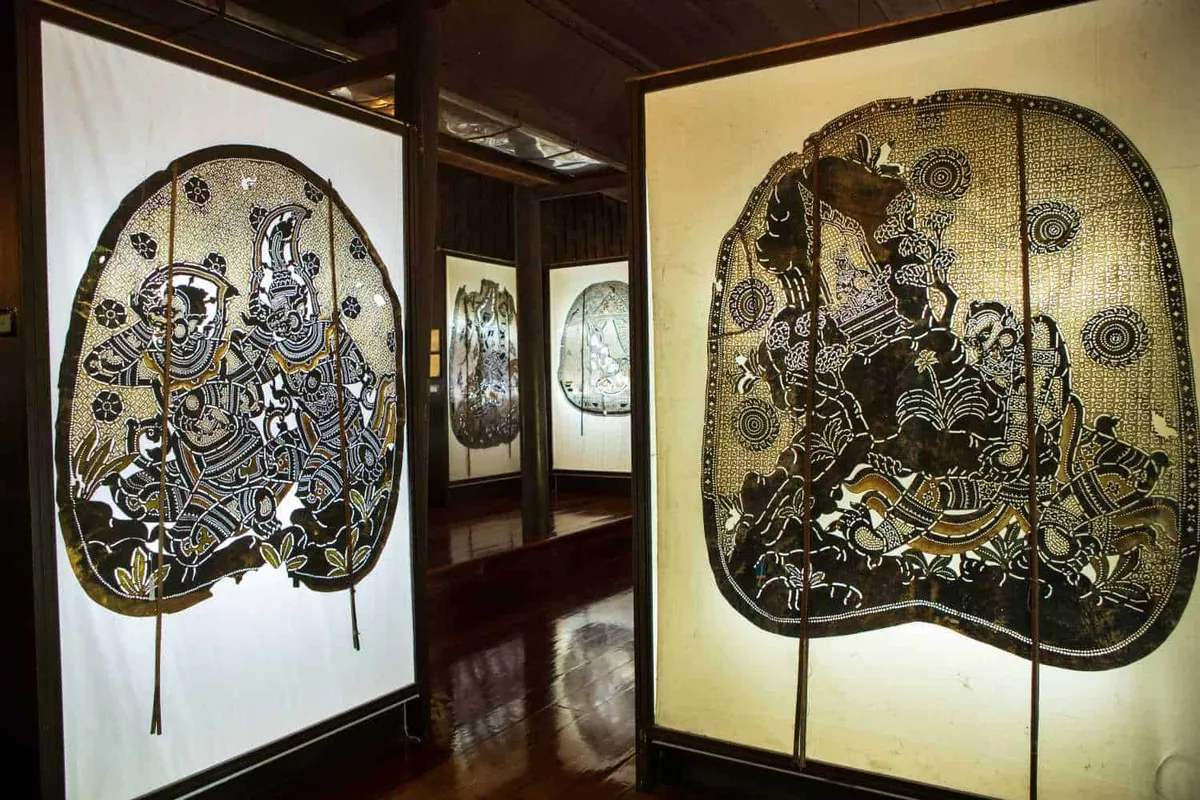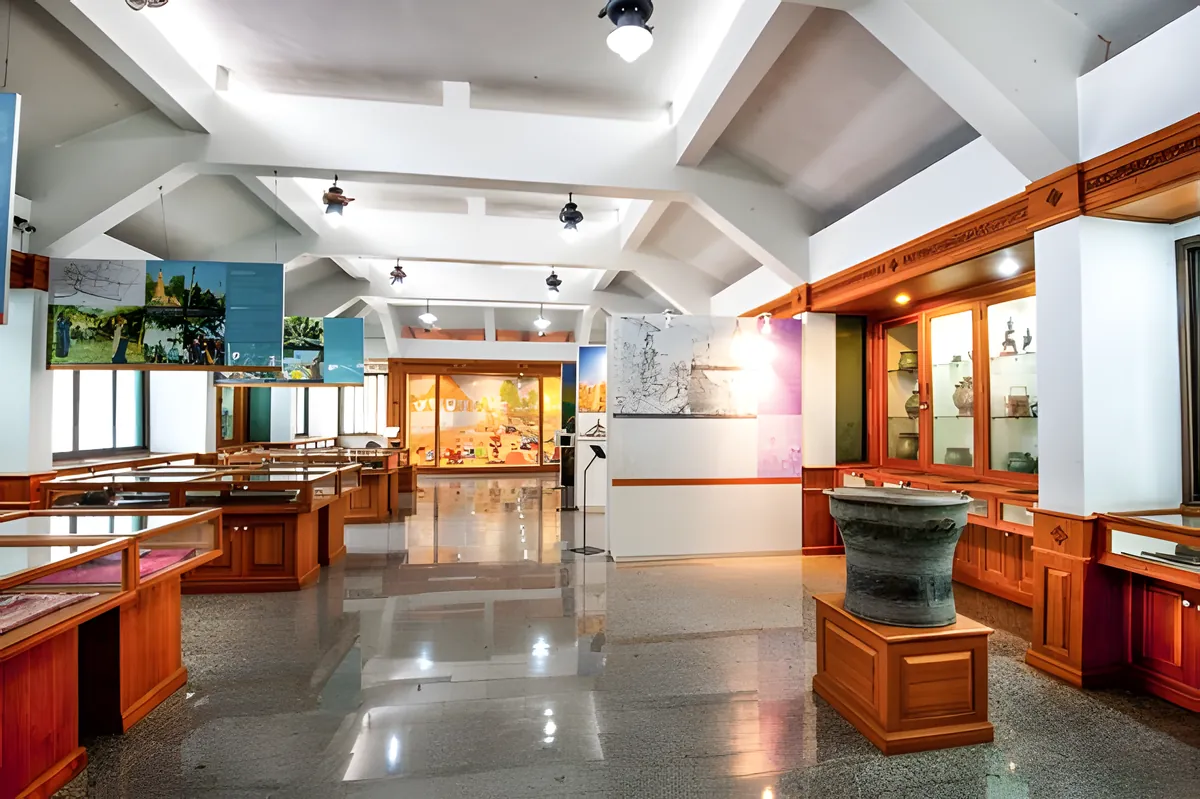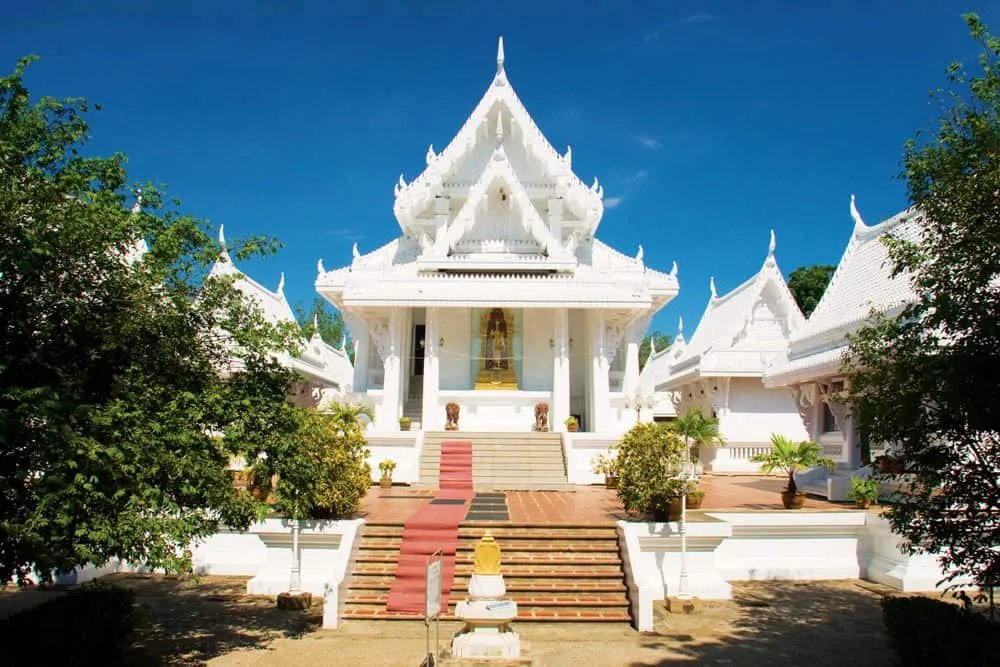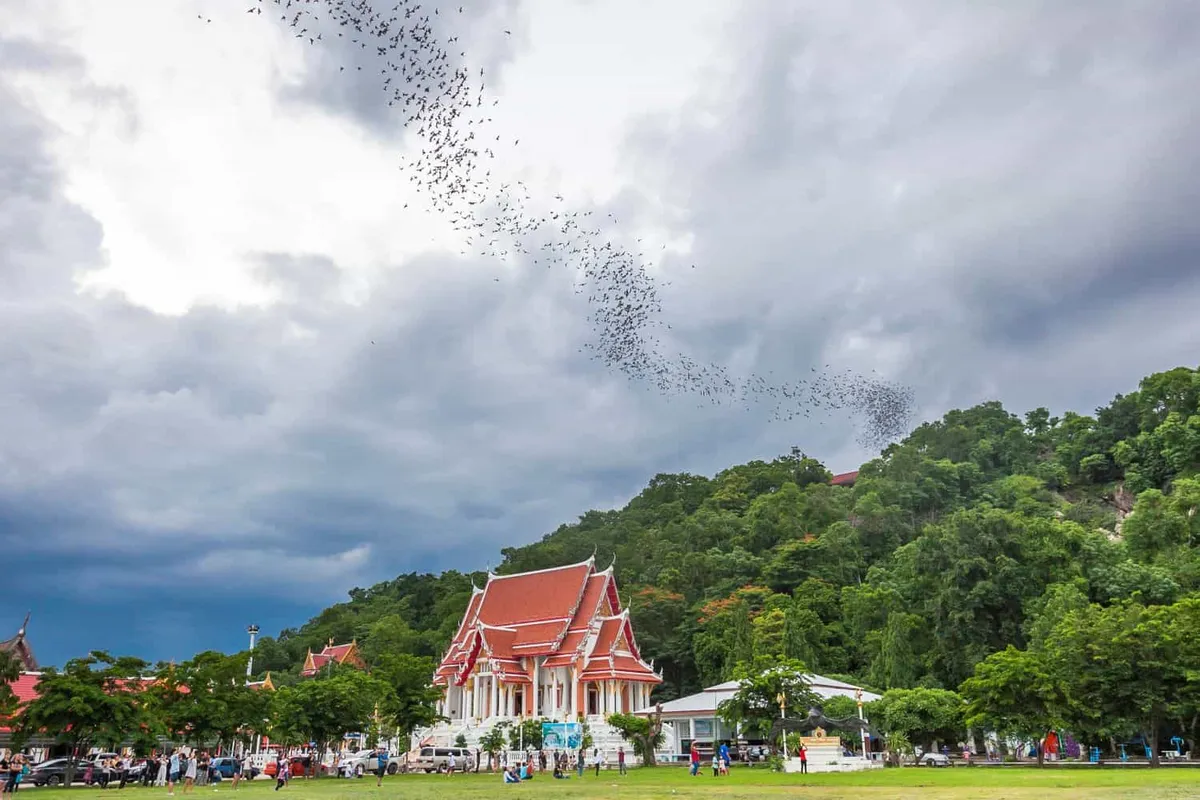




Wat Phra Si An’s golden ordination hall is the reason to detour into Photharam district, Ratchaburi — a structure reported to have cost over 100 million baht and taken 37 years to finish, its walls covered inside and out in stucco relief worked entirely by hand rather than cast from moulds. The scenes depict the ten great Jataka tales of the Buddha’s past lives and five Buddhas of different eras, rendered in enough detail that a single circuit of the exterior walls takes a genuine look to absorb.
The temple’s own history is older and quieter than the building suggests. Records trace it to the late Ayutthaya period, around 1732, under the original name Wat Sara An — a modest brick ordination hall with no resident monks for roughly two centuries. A monastic community only settled here in the 1930s, and the temple took its current name, Wat Phra Si An, in the 1950s. The golden ubosot that draws visitors today is a modern addition to that old, largely undocumented site, built up gradually by donation over decades rather than in a single construction campaign — which explains the 37-year build time.
Inside the hall, the principal Buddha image sits in the bhumisparsha posture (touching the earth, the moment of enlightenment), facing out across a floor that’s usually busy with local visitors making merit rather than tour groups. The gilding and relief work continue onto the exterior gables and doorways, so even a walk around the outside of the building — free, unhurried, no ticket required — gives a sense of the scale of the undertaking.
What makes the relief work notable isn’t just the scale but the method: every figure was modelled by hand in wet stucco rather than pressed from a repeating mould, which is the slower, harder route and the reason a project like this took decades rather than years. It’s the kind of detail that’s easy to walk past without knowing, but it’s the difference between a temple that looks impressive in photos and one where the individual panels reward a slow, close look.
Insider Tip: Walk the full exterior of the ubosot before going in — the relief panels wrap around all four sides, and the outdoor scenes are easy to miss if you head straight for the entrance.
Watch out: This is a working village temple in a district that sees a fraction of the tourist traffic of nearby Damnoen Saduak. There’s minimal English signage, so a guide or some background reading beforehand helps make sense of which Jataka scene is which.
- Entry fee: Free
- Hours: Daily 07:00-17:00
- Signature feature: Golden ubosot, hand-worked stucco relief, 37 years to build
- Founded: Late Ayutthaya period, c. 1732, as Wat Sara An
- Location: Ban Lueak subdistrict, Photharam district — about 20km from Ratchaburi town
Dress modestly with shoulders and knees covered, and remove your shoes before entering the ordination hall. Photography of the exterior reliefs is generally fine; check with temple staff before photographing inside during active prayer.
Location & Directions
Ban Lueak, Photharam, Ratchaburi
Ratchaburi, Thailand
Show your taxi or Grab driver
วัดพระศรีอารย์
Within Walking Distance

Frequently Asked Questions
What is Wat Phra Si An known for?
How old is the temple?
Is there an entrance fee?
Is Wat Phra Si An near Kanchanaburi?
What's inside the golden ubosot?
Spotted something out of date or incorrect? Let us know
Stay Near Wat Phra Si An
Compare places to stay in Ratchaburi, or open the map for options closest to the attraction.