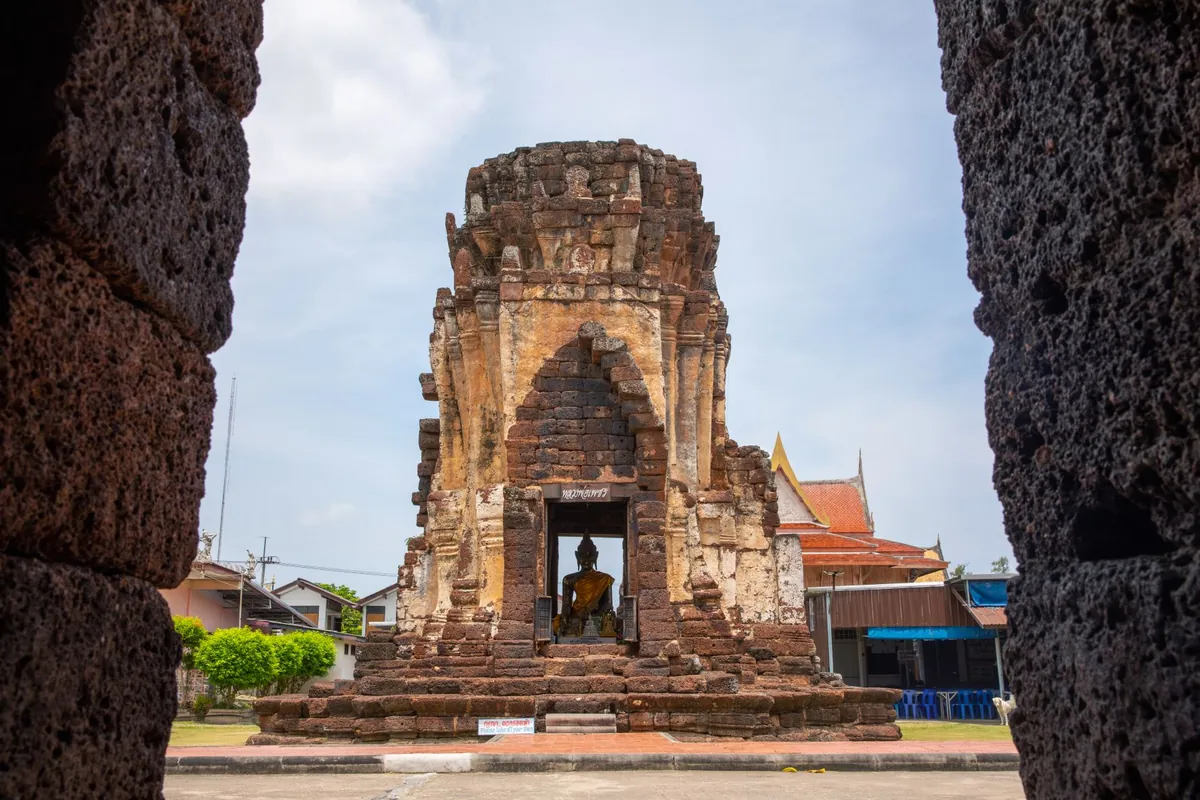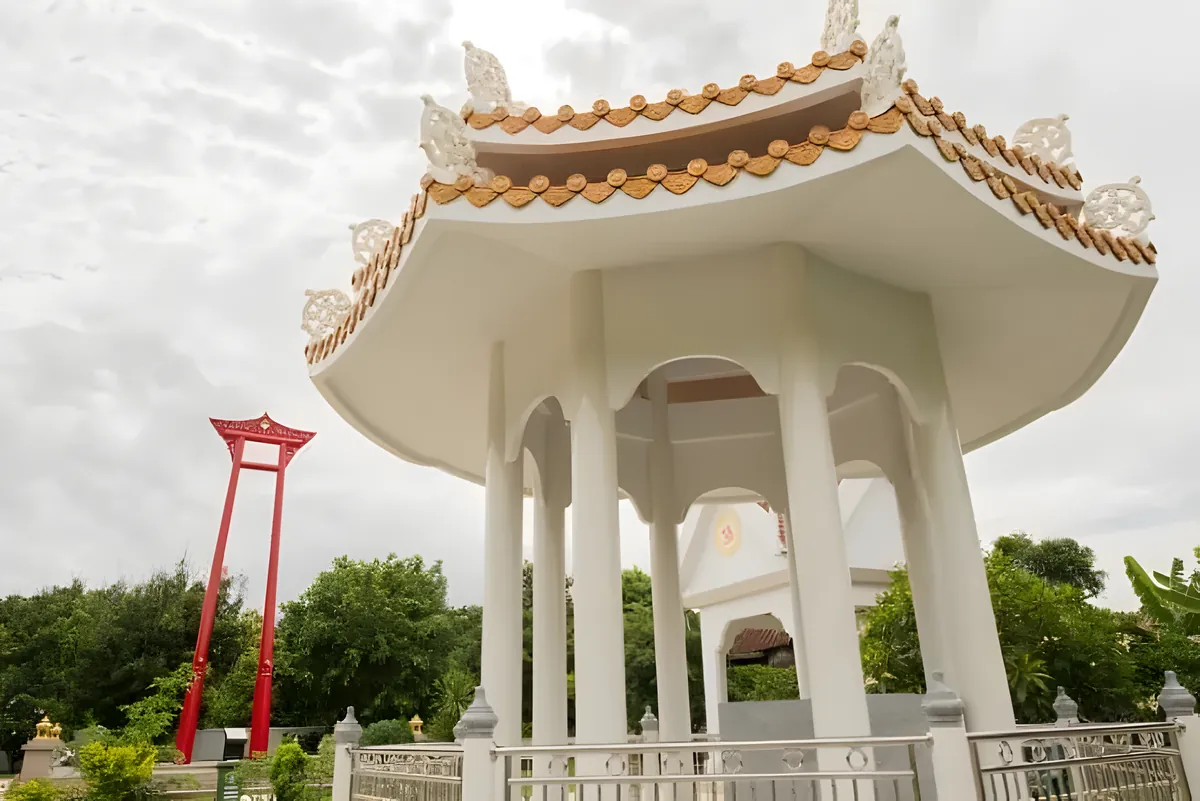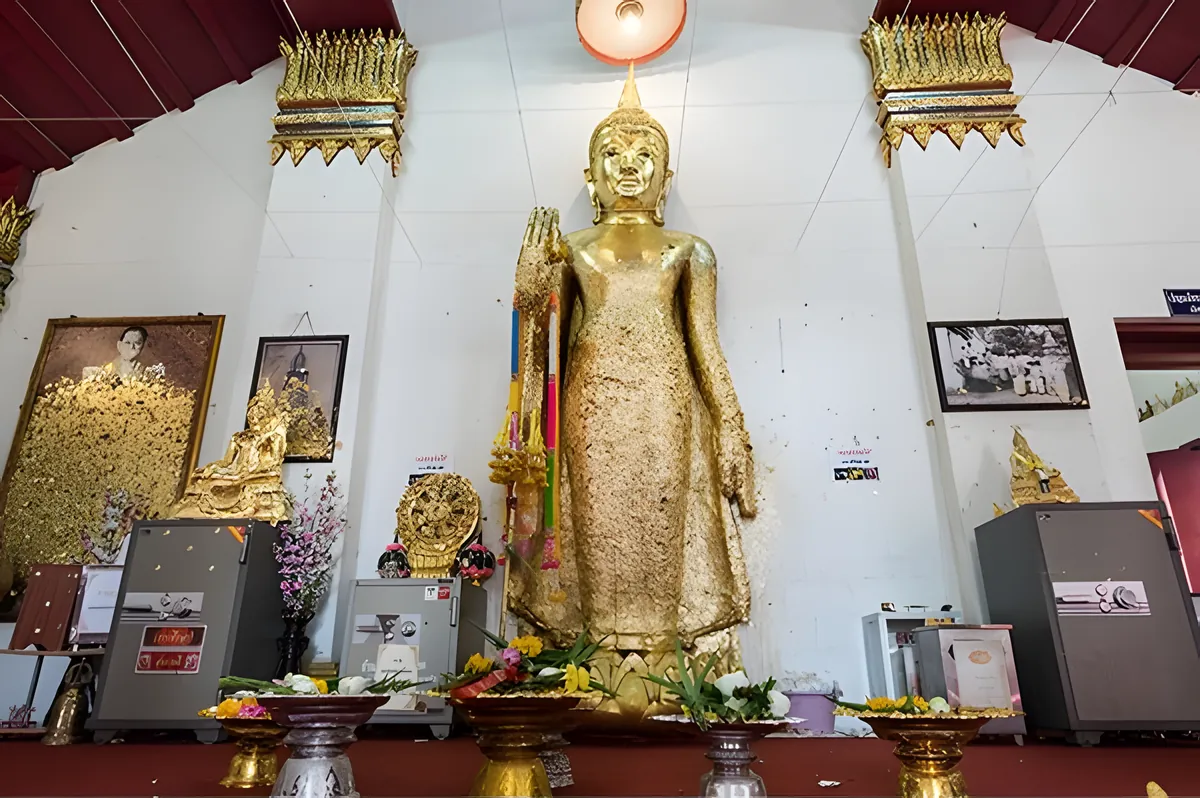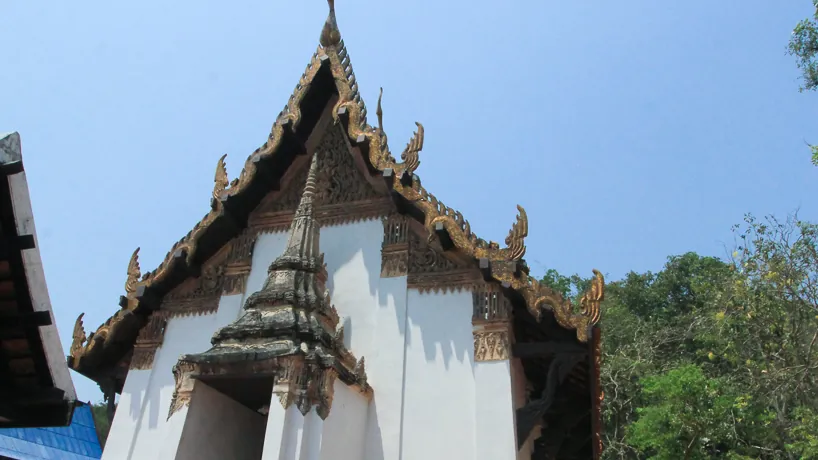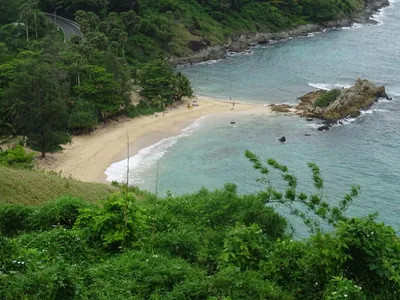





Wat Phra Song sits in Tha Rap subdistrict, about 1.5 km from central Phetchaburi, close enough to walk in twenty minutes or catch a short tuk-tuk ride. It is nowhere near the coast despite what some listings claim. Hat Chao Samran, Phetchaburi’s nearest beach, is roughly 20 km away; there’s no sea view, no salt air, and no waves to hear from these grounds.
What draws visitors here isn’t ancient architecture, it’s the memory of Luang Pho Lae Thitapalo, the temple’s late abbot, who died in 2008 at 92 after more than seven decades as a monk. Luang Pho Lae became one of Thailand’s best-known sak yant masters, famous nationwide for tattooing the Hanuman, or monkey-god, design onto devotees who believed it granted protection and invulnerability. His students reportedly included celebrities, soldiers, and police officers, and the temple still holds an annual bucha khru ceremony honouring his teaching lineage.
Watch out: whether any of his students still tattoo in his tradition today isn’t something we could independently confirm. Several Thai-language sources describe his particular Hanuman method as having no clear successor. Don’t turn up expecting an active tattoo studio; come for the temple and his memory rather than a guaranteed sak yant session.
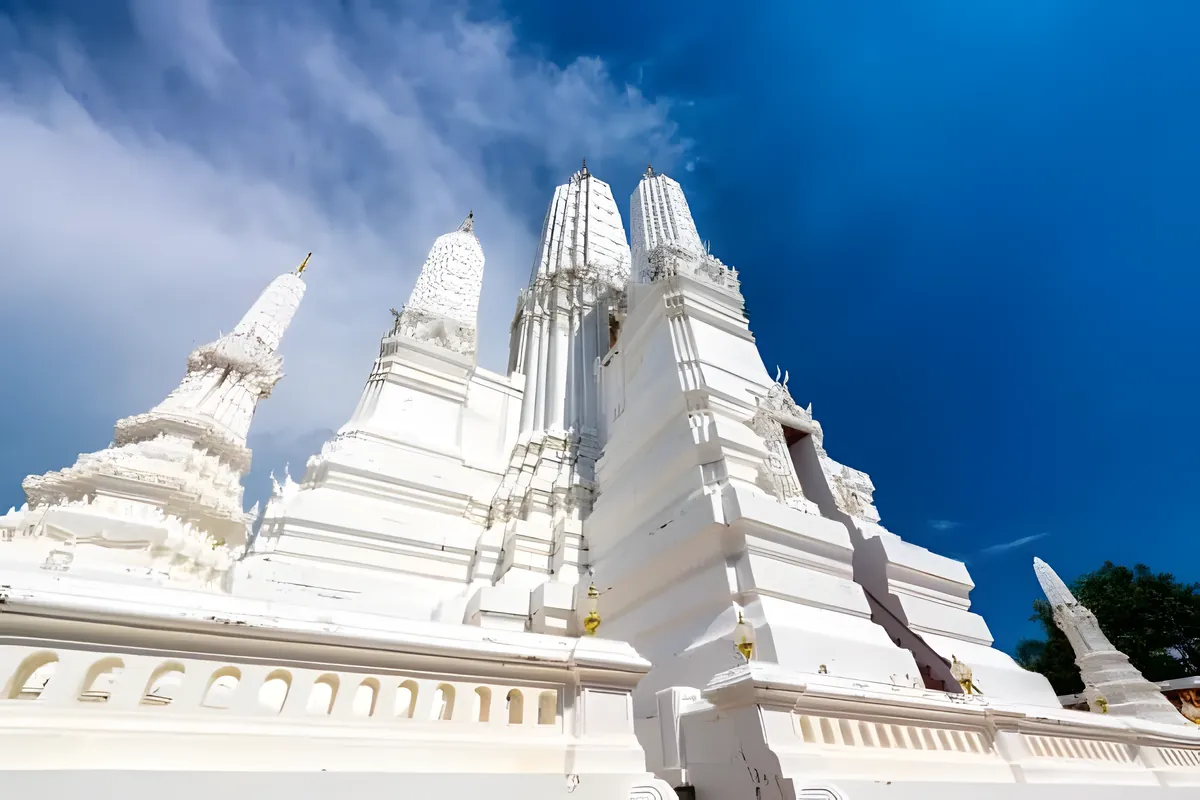
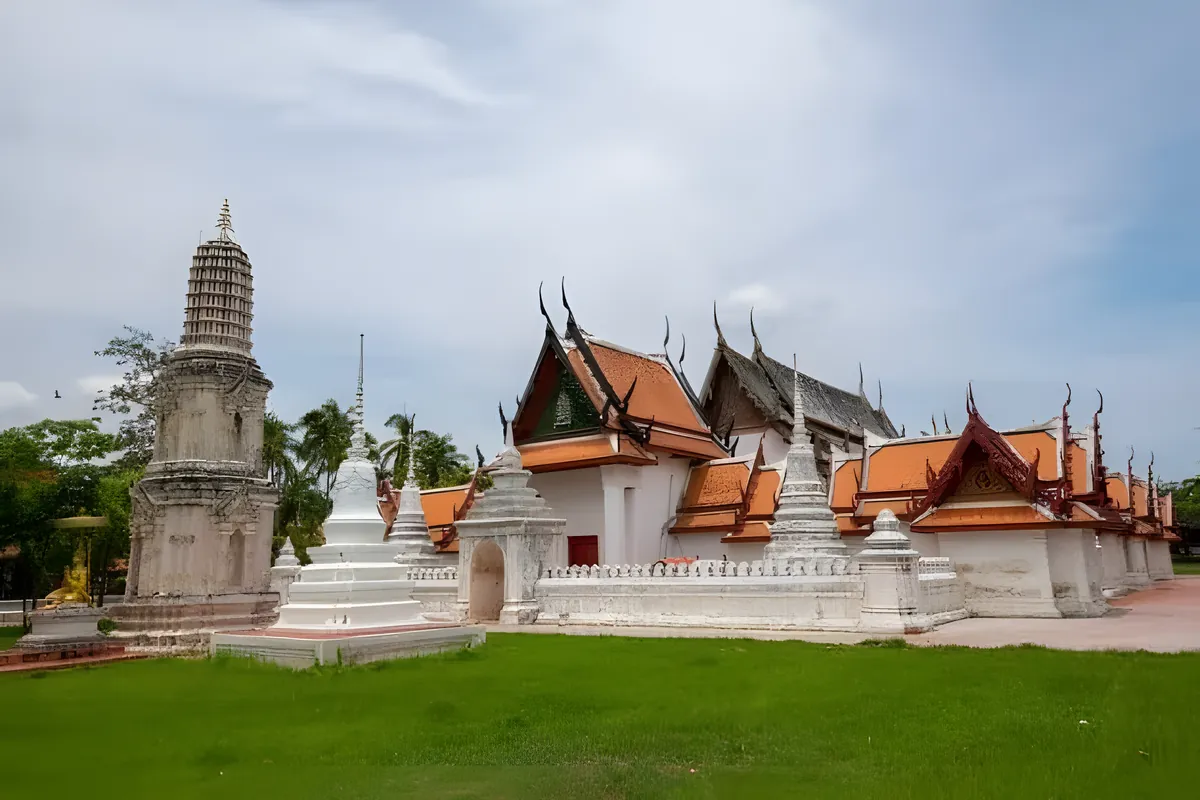
The temple itself functions as an ordinary community monastery rather than a grand royal foundation: a working ordination hall, a handful of monks’ quarters, and grounds that see more merit-making locals than sightseeing visitors. Under its current abbot, the temple still takes part in the annual nationwide kathina robe-offering season each October or November, a sign this is an active, ordinary parish temple rather than a preserved relic. That’s part of the appeal if you’ve already covered Phetchaburi’s headline sites. It’s quiet, unhurried, and close enough to fold into a single morning alongside the town’s older, more decorated temples.
Insider Tip: Pair the visit with Wat Khao Bandai It, a hillside cave-shrine temple a few minutes’ drive away, or work it into a loop that includes Phra Nakhon Khiri Historical Park on the hill above town. Both give you the historic architecture that Wat Phra Song itself doesn’t have.
Dress modestly, cover your shoulders and knees, and remove your shoes before entering the ordination hall. There’s no entrance fee and no fixed visitor schedule beyond general daylight hours, since this is a functioning neighbourhood temple in Phetchaburi, not a ticketed attraction. Time your visit around respect for whatever ceremony might already be under way.
- Entry: Free
- Location: Tha Rap subdistrict, Mueang Phetchaburi, about 1.5 km from the town centre
- Known for: Luang Pho Lae Thitapalo (1916–2008), sak yant master famed for Hanuman tattoos
- Coast distance: About 20 km to Hat Chao Samran; not a coastal temple
- Getting there: Short walk, bicycle, or tuk-tuk from central Phetchaburi
Location & Directions
Mueang Phetchaburi, Phetchaburi
Phetchaburi, Thailand
Show your taxi or Grab driver
วัดพระทรง
Within Walking Distance




Frequently Asked Questions
Is Wat Phra Song on the coast?
What is Wat Phra Song known for?
Can I get a Hanuman tattoo at Wat Phra Song today?
Is there an entrance fee?
How do I get to Wat Phra Song from central Phetchaburi?
Spotted something out of date or incorrect? Let us know
Stay Near Wat Phra Song
Compare places to stay in Phetchaburi, or open the map for options closest to the attraction.