
Wat Phrathat Doi Kong Mu
วัดพระธาตุดอยกองมู
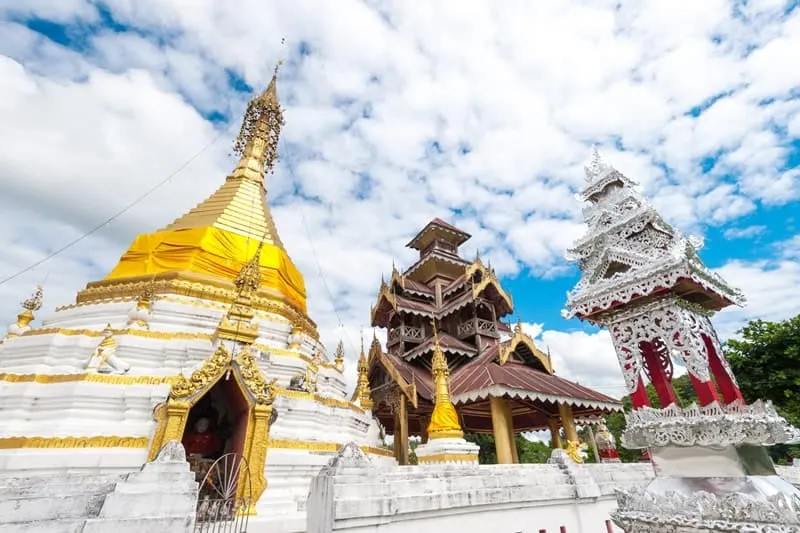
Wat Phrathat Doi Kong Mu crowns a hill on the western edge of Mae Hong Son town, its two white Shan-style chedis visible from almost anywhere in the valley below. The larger chedi went up in 1860, funded by a merchant named Jong Tong Su and built to hold relics of Phra Mokkhalana, one of the Buddha’s two chief disciples, carried over from Mawlamyine in Myanmar. The smaller chedi followed in 1874, commissioned by Phraya Singhanatracha, the first governor of Mae Hong Son, to enshrine relics of Phra Sariputta from Mandalay. The temple’s original name was Wat Plai Doi.
Both chedis follow the Tai Yai (Shan) style found across the border in Myanmar — sloped bases with no stairway or circumambulation terrace, a design thought to echo Yangon’s Shwedagon Pagoda on a much smaller scale. Gilded spires catch the light against the tree line, and rows of Buddha images sit in niches around the bases. Between the two chedis, a covered walkway and a small viharn give shelter from sun and rain, and prayer flags strung along the railings snap in the wind that runs along the ridge. The whitewash and gold trim are kept up by the temple community rather than a government restoration programme, which is part of why the site still reads as a living place of worship rather than a monument behind rope barriers.
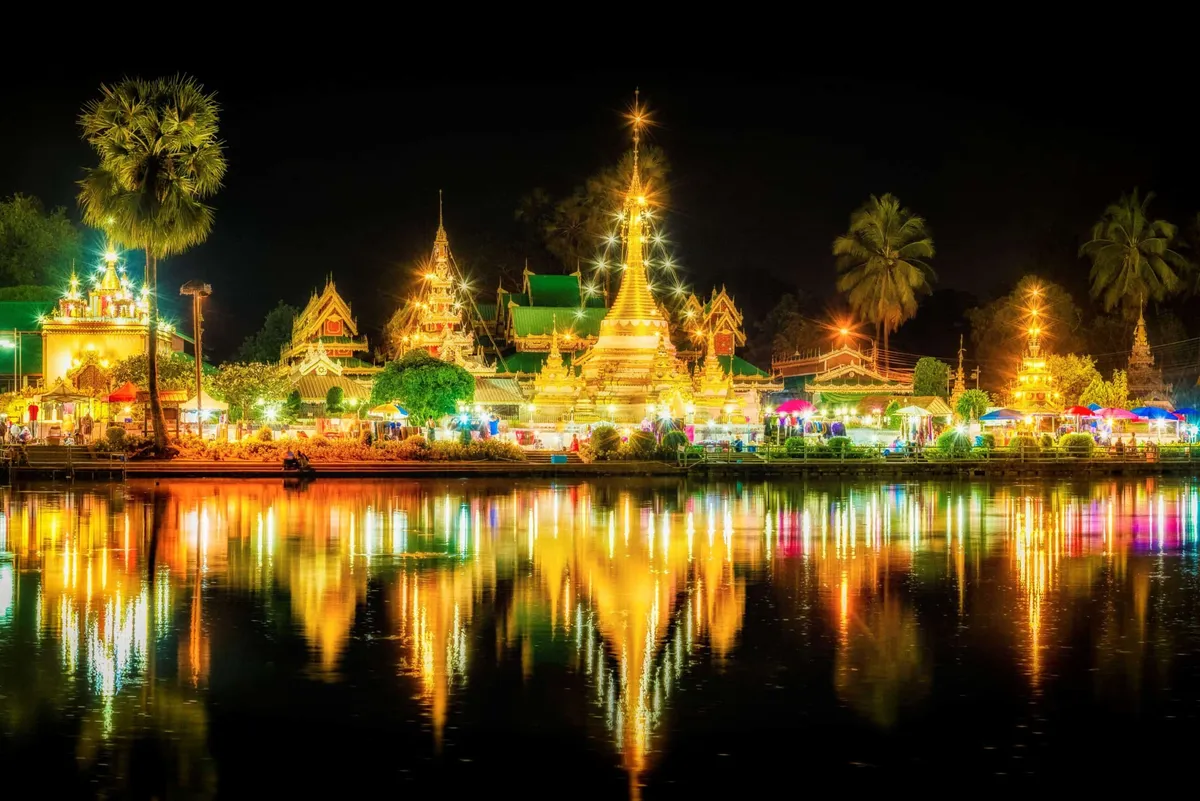
Mae Hong Son itself sits in a bowl of hills close to the Myanmar border, and the town’s Tai Yai and Burmese heritage shows clearly at Doi Kong Mu — the architecture, the alms-round routines, and the way locals refer to the hill as the town’s spiritual anchor rather than just a viewpoint. Long-tail visitors often pair the temple with Wat Chong Kham and Wat Chong Klang down by the lake, since the two sites share the same Shan-Burmese architectural lineage and were built within a few decades of each other.
The real draw is the view. Doi Kong Mu’s summit looks straight down over Mae Hong Son’s rooftops, Nong Chong Kham lake with its twin lakeside temples, and the airport runway cutting across the valley floor, with layered hills folding into Myanmar on the far side. Sunset is when the crowd builds: the sun drops behind the Burmese ridgeline and the temple courtyard fills with a mix of monks, locals and visitors watching in near silence. Cool season (November-February) gives the clearest air; burning season (roughly February-April) fills the valley with haze that can flatten the whole panorama to a grey smear.
Insider Tip: Arrive 30-40 minutes before sunset to find a spot along the western railing before the tour groups pull in — the platform is narrow and fills fast once the light starts to turn gold.
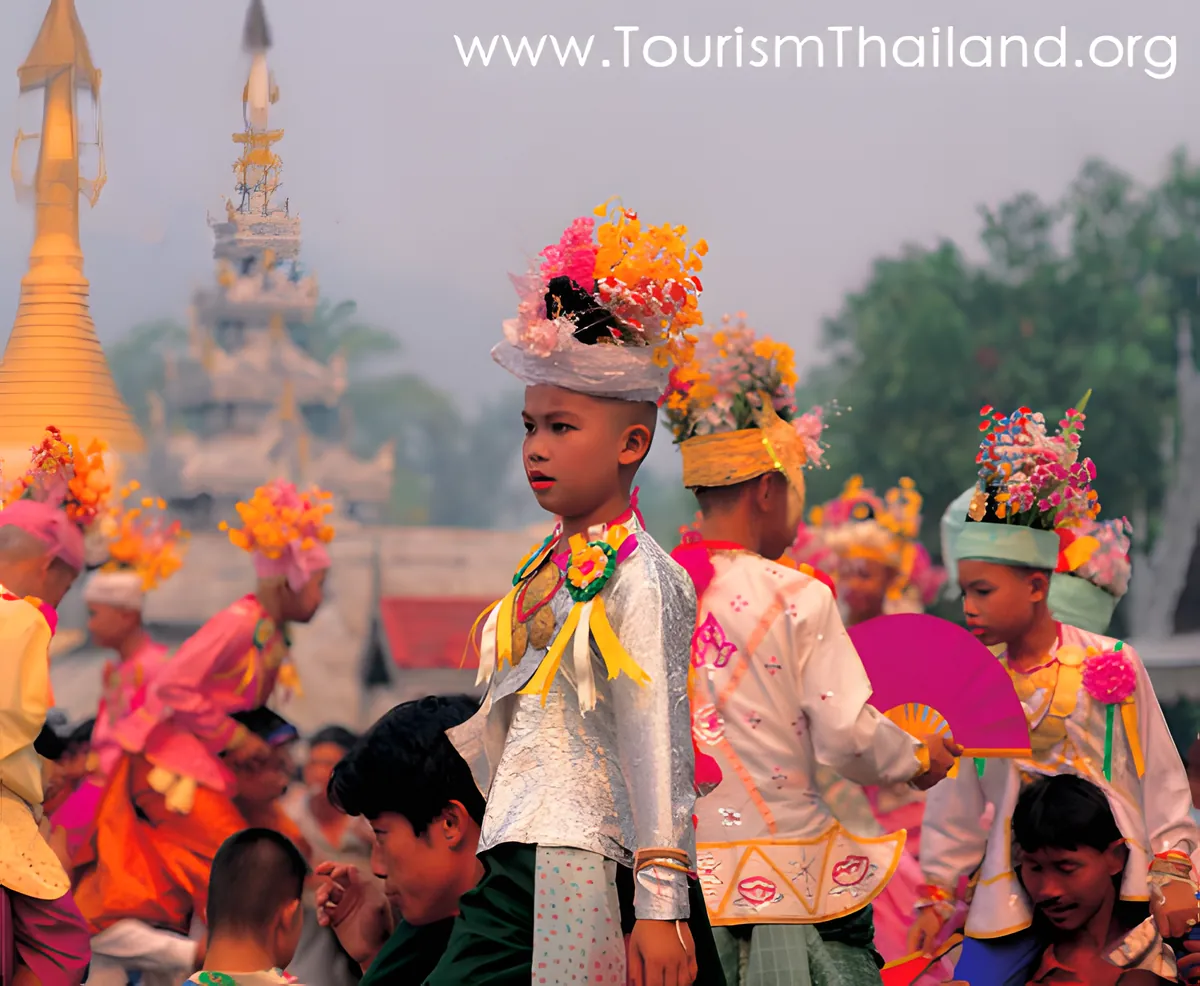
Wat Phrathat Doi Kong Mu is a working temple as well as a viewpoint. Monks live on site, and Songkran and Shan New Year both bring processions up the hill. The bigger date on the calendar is Tak Bat Devo, an alms-giving ceremony held on Wan Ok Phansa — the end of Buddhist Lent, usually in October — commemorating the Buddha’s descent from Tavatimsa heaven; it draws Tai Yai families in traditional dress from across the province.
Watch out: The hill gets genuinely windy and can be several degrees cooler than the town below, especially at sunset in the cool season — bring a layer even if it’s warm at street level.
A paved road switchbacks up from town, easy enough for a motorbike, songthaew or car; there’s no need to walk up. Entry is free and the temple stays open daily from 07:00 to 19:00. Dress modestly — covered shoulders and knees — and remove shoes before stepping onto the chedi platforms. A small shop near the car park sells drinks and snacks, useful since there’s nowhere to eat on the hill itself.
- Entry fee: Free
- Hours: Daily 07:00-19:00
- Built: Larger chedi 1860, smaller chedi 1874
- Best for: Sunset views over the Mae Hong Son valley
- Getting there: Paved road up Doi Kong Mu, a short drive by motorbike, songthaew or car from town
Location & Directions
Mueang Mae Hong Son, Mae Hong Son
Mae Hong Son, Thailand
Show your taxi or Grab driver
วัดพระธาตุดอยกองมู
Frequently Asked Questions
Is Wat Phrathat Doi Kong Mu free to enter?
Why does the temple have two chedis?
What's inside the chedis?
What's the best time to visit for the view?
How do I get to the top of Doi Kong Mu?
Is there a dress code at the temple?
Spotted something out of date or incorrect? Let us know
Stay Near Wat Phrathat Doi Kong Mu
Live prices for places closest to Wat Phrathat Doi Kong Mu — tap a pin to compare.