

Wat Paramaiyikawat
วัดปรมัยยิกาวาสวรวิหาร
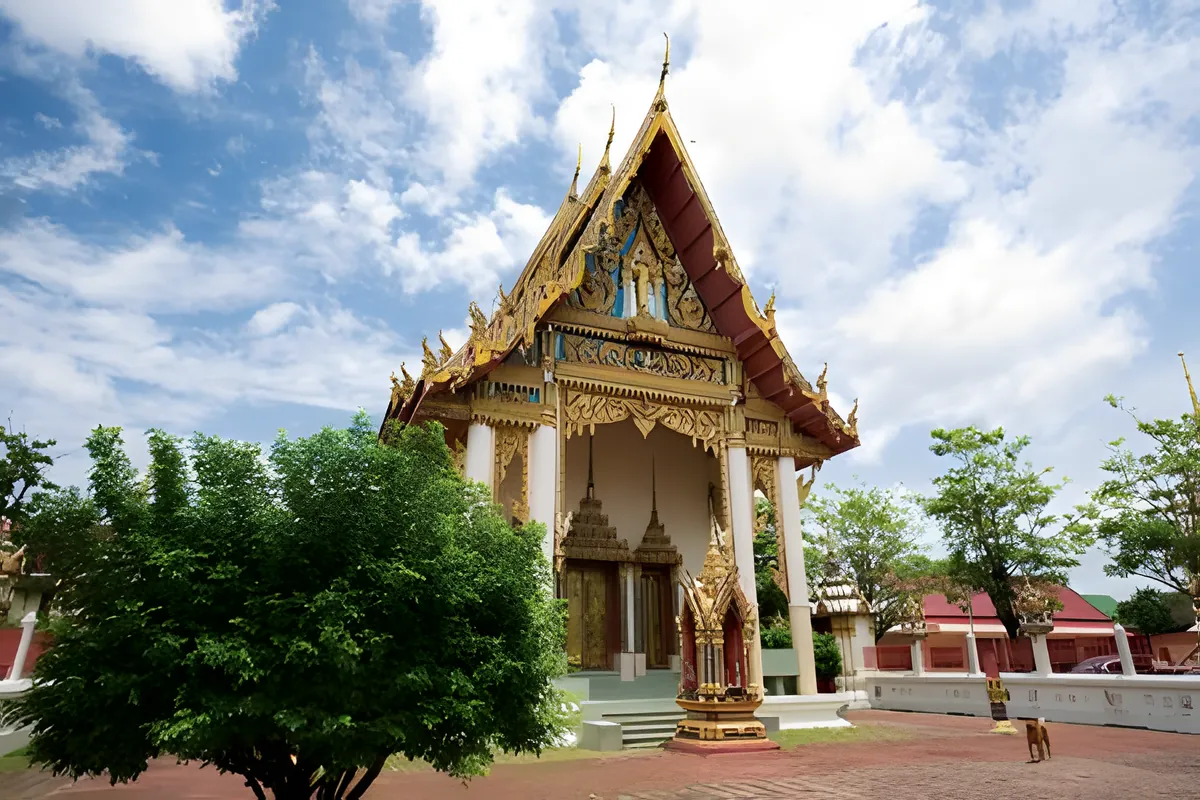
Wat Paramaiyikawat is the temple that gives Koh Kret its postcard image: a white, unmistakably tilted chedi standing at the island’s northeastern point, visible from boats on the Chao Phraya long before you land. The temple itself is older than the chedi’s famous lean: founded in the late Ayutthaya period as Koh Kret’s community grew, abandoned in 1764 when Burmese forces occupied Ayutthaya, then rebuilt in 1774 on the orders of King Taksin by Mon refugees who resettled the island. It kept its Mon architectural identity through a later royal restoration and remains one of the clearest places on Koh Kret to see that heritage still standing.
The chedi, Phra Chedi Mutao, was built as a replica of the Shwemawdaw Pagoda in Bago, Myanmar, a monument the Mon community holds in particular reverence. King Chulalongkorn had Buddha relics sealed inside in 1884 and, a decade later, renamed the whole complex Wat Paramaiyikawat (“temple of grandmother”) when he ordered its restoration in 1874, deliberately preserving the Mon style rather than converting it to central Thai temple architecture. Around 1891, riverbank erosion caused the pagoda to tilt; a 1992 attempt to straighten it failed, and it has leaned ever since. Both the temple and the chedi have been registered as national ancient monuments by the Fine Arts Department since 1935.
Insider Tip: Get off the Pak Kret ferry at the Wat Paramaiyikawat pier rather than one of the other Koh Kret landings: it puts you right at the temple and chedi first, before the walk around to the island’s pottery villages and market stalls.
The temple functions as the de facto gateway to Koh Kret: its ferry pier, directly opposite Pak Kret’s Wat Sanam Nuea pier on the mainland, is the busiest crossing point onto the island, and most day-trip routes start here. As a second-tier royal temple, the compound has more formal upkeep than a typical village wat, but it hasn’t been over-restored into a shiny replica: the wear on the chedi’s white plaster and the lean itself are the point, not a flaw to fix. Weekends bring the heaviest foot traffic, since Koh Kret’s pottery and food-stall circuit draws Bangkok day-trippers alongside temple visitors.
- Entry fee: Free
- Hours: Daily 13:00–16:00 for the main viharn; temple grounds and chedi accessible more broadly during daylight hours
- Getting there: Ferry from Wat Sanam Nuea pier, Pak Kret, to the Wat Paramaiyikawat pier, a few baht each way, no bridge on this crossing
- Landmark: Phra Chedi Mutao, the leaning white pagoda modelled on Myanmar’s Shwemawdaw Pagoda, tilted since around 1891
- Status: Second-tier royal temple; both temple and chedi are registered national ancient monuments (1935)
Pair the temple with the rest of Koh Kret island (the pottery workshops and Mon food stalls are a short walk from the pier) and the Suan Kret Buddha statue elsewhere on the island. See the Nonthaburi destination guide for the wider area.
Location & Directions
51 Moo 7, Chaeng Watthana Road
Nonthaburi, Thailand
Show your taxi or Grab driver
วัดปรมัยยิกาวาสวรวิหาร
Frequently Asked Questions
Why is the chedi at Wat Paramaiyikawat leaning?
What's the temple's connection to the Mon people?
How do I get to Wat Paramaiyikawat?
Is there an entry fee?
Why is it called "temple of grandmother"?
Spotted something out of date or incorrect? Let us know
Stay Near Wat Paramaiyikawat
Live prices for places closest to Wat Paramaiyikawat: tap a pin to compare.