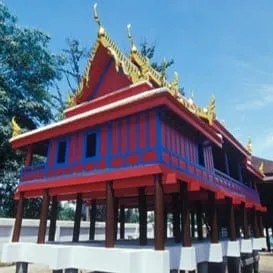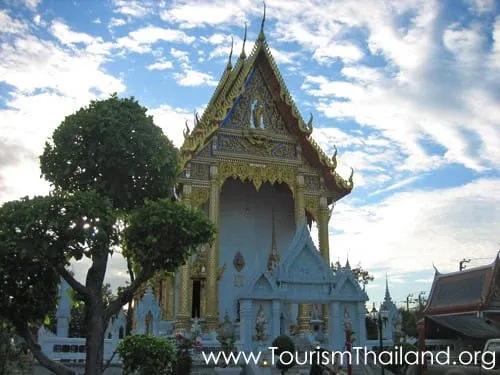


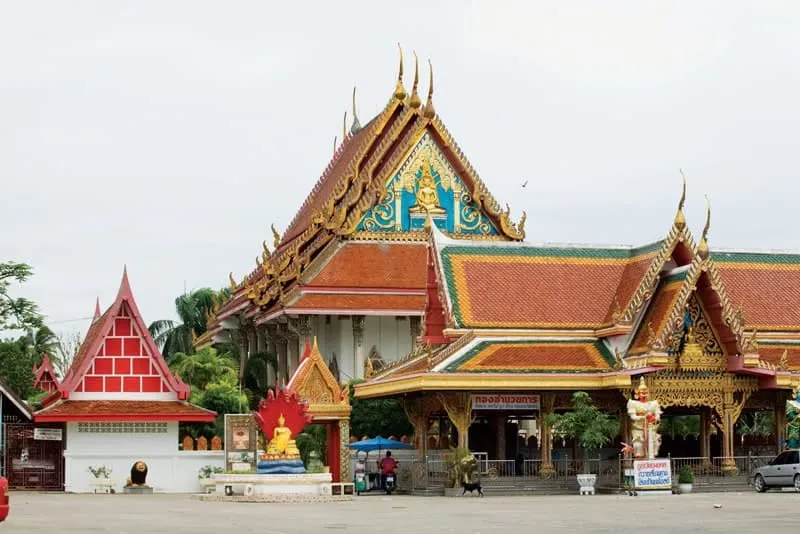
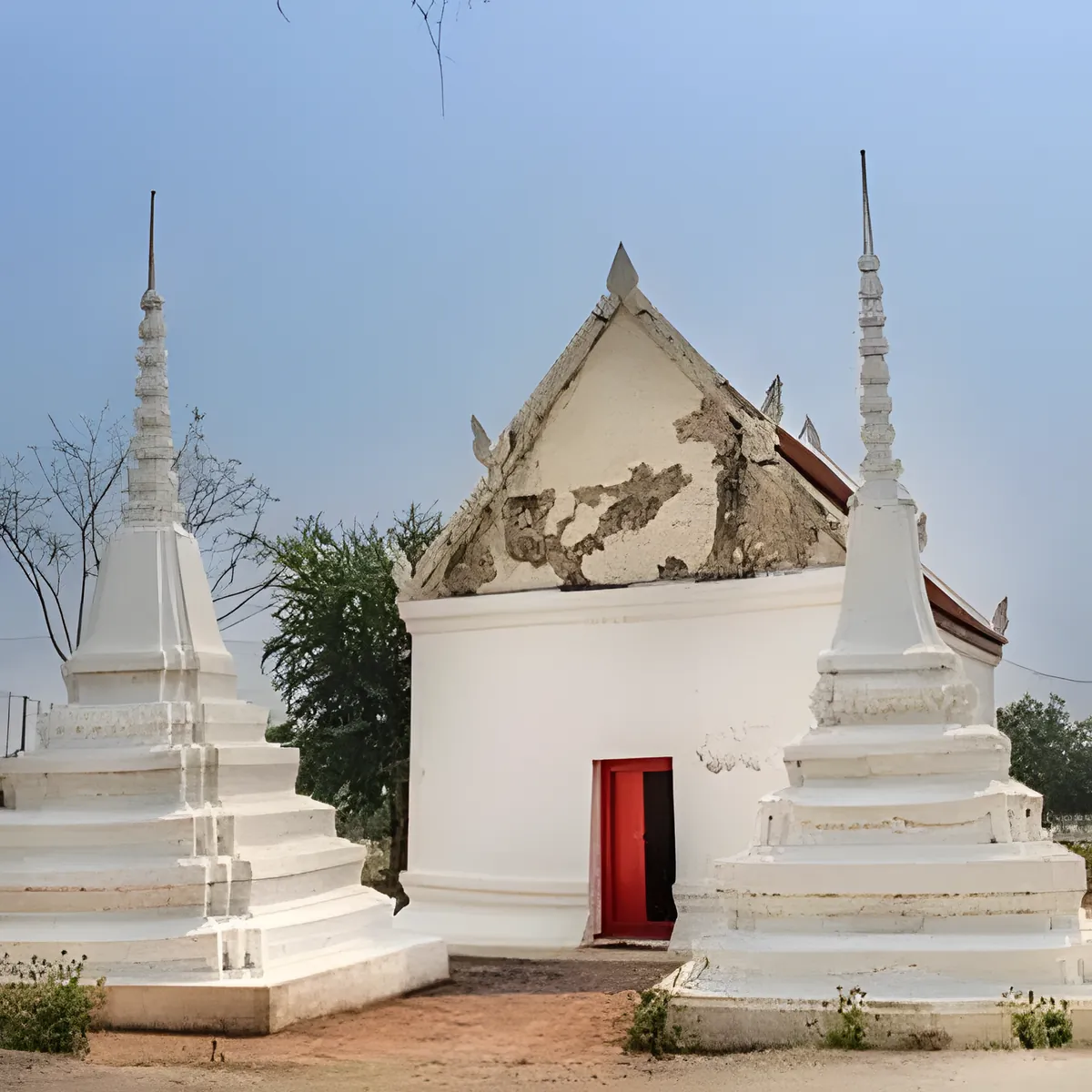
Wat Sao Thong Hin sits on Khlong Om Non, a canal in Nonthaburi’s Bang Yai district, and its name comes from a King Taksin legend rather than any temple treasure. Local history holds that Taksin stopped here to muster troops after the fall of Ayutthaya, planting his campaign flagpole (sao thong) in the sand and ringing it with stones (hin) — giving the temple its current name. Entry is free.
The temple itself predates that story by only a little. Records place its founding around 1767, right at the end of the Ayutthaya period, on roughly 9 rai of land in what was then Ban Khlong Om. It was originally known as Wat Sak — sak meaning teak — for the teak forest that once covered the area, a name preserved only in old records now.
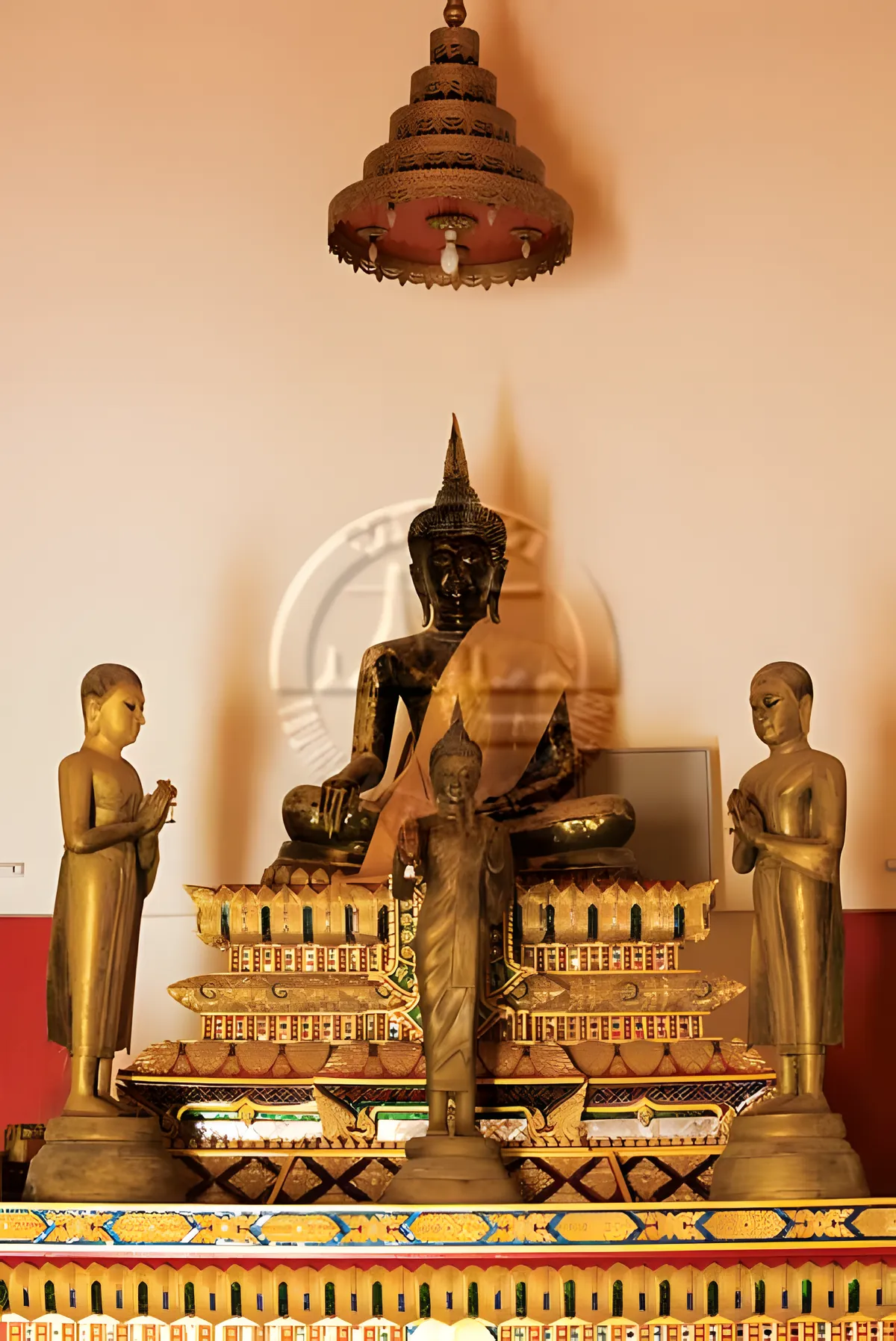
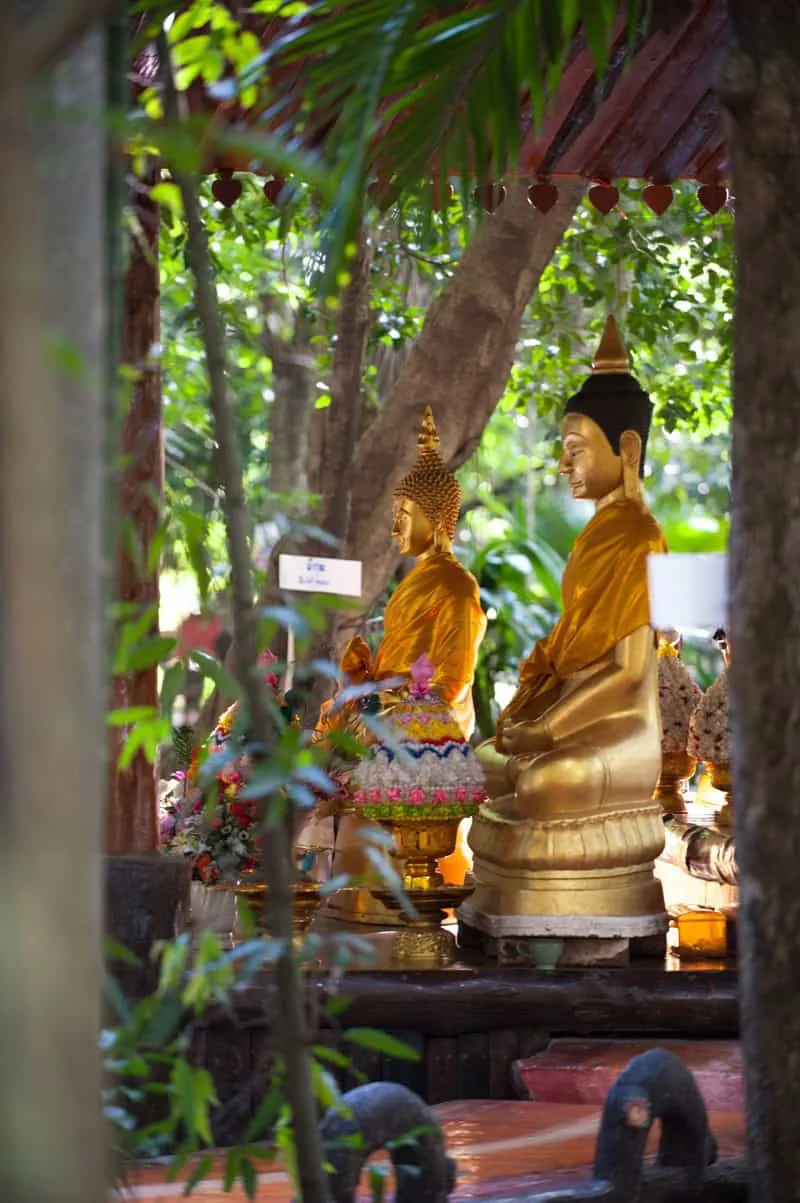
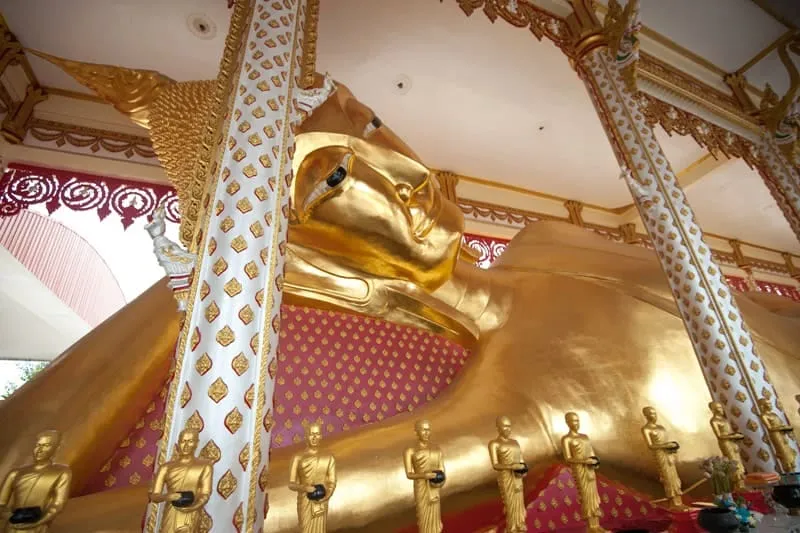
Its most-visited Buddha image is Luang Pho To, seated in the Pang Pa Lelai pose, the forest-retreat posture flanked by an elephant and a monkey making offerings. Local belief connects the image to another Taksin legend — that he blessed seawater into fresh water here during his campaign — and visitors still come to pray for the image’s blessing over water and safe travel, though this is folk tradition rather than documented history.
Insider Tip: Wat Sao Thong Hin gets a fraction of the visitors that central Bangkok’s riverside temples do, which makes it a genuinely quiet stop if you’re already in Bang Yai for the MRT Purple Line terminus or the nearby Central Westgate mall.
Watch out: There’s no dedicated visitor centre or English signage, so a Thai-speaking companion or a translation app helps if you want the history explained on-site rather than looked up afterwards.
Getting there from central Bangkok means the MRT Purple Line to Bang Yai station, then a short taxi or motorcycle-taxi ride to the temple grounds on the canal. Dress modestly, remove shoes before entering the main hall, and keep to normal temple etiquette — no loud conversation, no pointing feet at Buddha images.
- Entry fee: Free
- Founded: Circa 1767, late Ayutthaya period
- Original name: Wat Sak
- Main Buddha image: Luang Pho To, Pang Pa Lelai pose
- Getting there: MRT Purple Line to Bang Yai, then a short taxi ride
Nonthaburi’s Bang Yai district has several smaller neighbourhood temples worth a stop if you’re touring by car — Wat Suan Kaeo and Wat Amphawan are both a short drive away — and Nonthaburi itself makes an easy half-day trip from central Bangkok.
Location & Directions
Bang Yai, Nonthaburi
Nonthaburi, Thailand
Show your taxi or Grab driver
วัดเสาธงหิน
Within Walking Distance




Frequently Asked Questions
Why is it called Wat Sao Thong Hin?
What was Wat Sao Thong Hin called before?
Is Wat Sao Thong Hin free to visit?
How do I get to Wat Sao Thong Hin?
What is the significance of the Luang Pho To Buddha image?
Spotted something out of date or incorrect? Let us know
Tours visiting Wat Sao Thong Hin

Stay Near Wat Sao Thong Hin
Compare places to stay in Nonthaburi, or open the map for options closest to the attraction.