




Wat Amphawan
วัดอัมพวัน
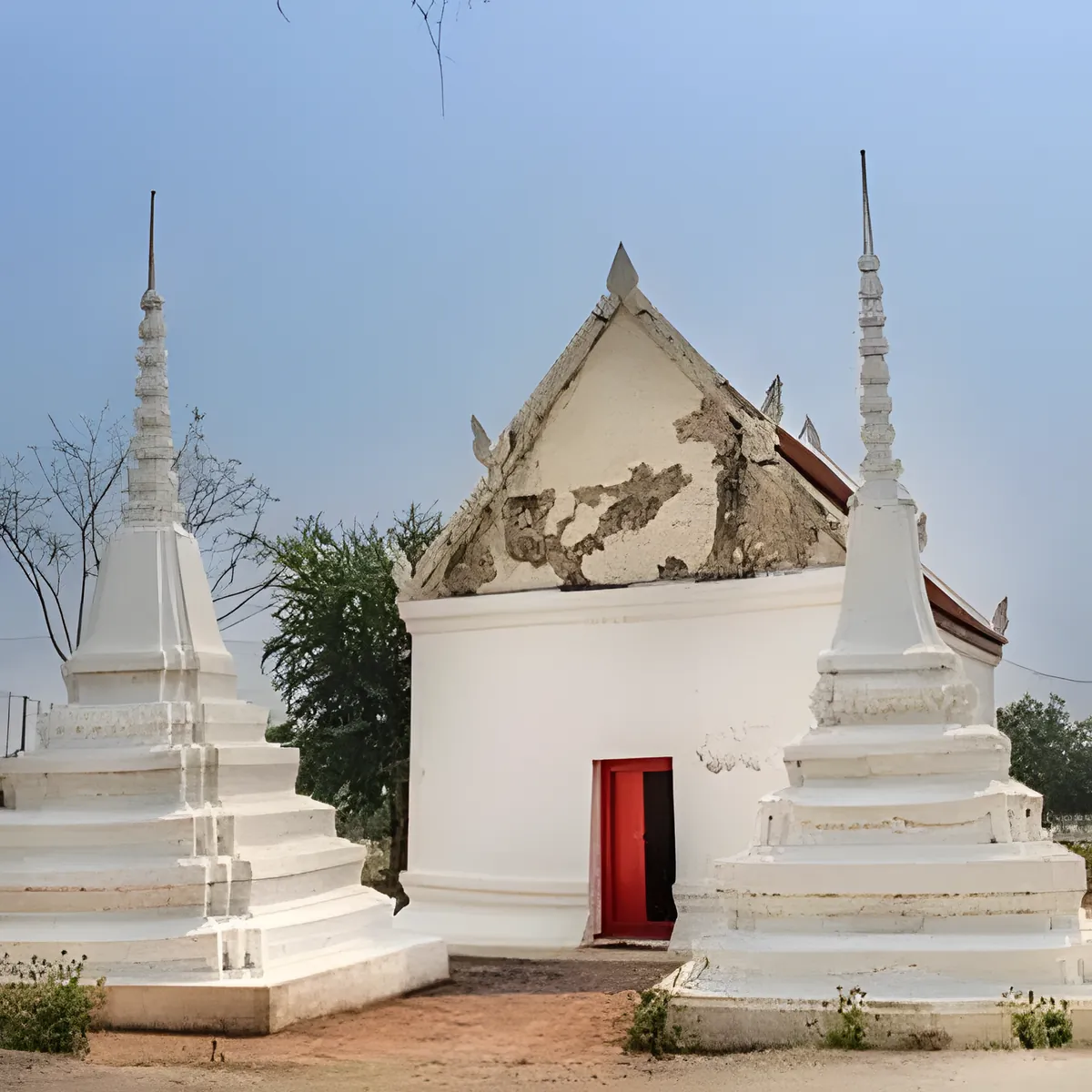
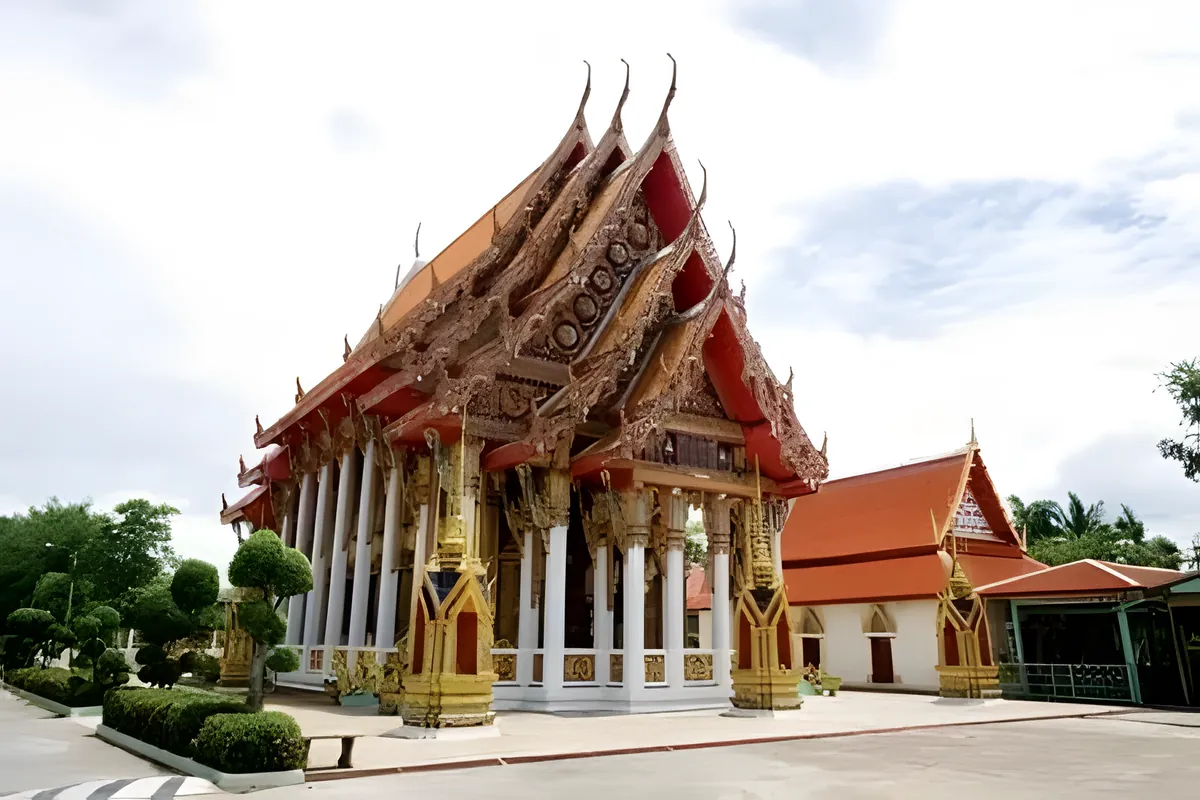
Wat Amphawan in Bang Yai, on Nonthaburi’s western edge, dates to 1632, built during the reign of King Prasat Thong in the closing decades of the Ayutthaya period. It was originally called Wat Bang Muang after the surrounding area, and the name it carries now is thought to come from the mango groves — amphawan — that once covered this stretch of land along Khlong Mae Nam Om, a former channel of the Chao Phraya River.
The reason to visit is the Haw Trai Klang Nam, a scripture repository built on wooden stilts in the middle of a pond, a design meant to protect the temple’s manuscripts from insects and rising damp rather than a decorative flourish. It’s a two-room wooden structure under a two-tiered clay-tile roof, and the carving on it is genuinely dense: entrance doors gilded in gold leaf, window mullions cut into flower and gourd shapes, carved birds above the doorways, and sun-and-moon motifs worked into the gables. This is late-Ayutthaya craftsmanship surviving almost four centuries, still standing in its original setting rather than relocated to a museum.
The temple functions as an ordinary working monastery around this centrepiece — a modern ordination hall, resident monks, the usual rhythm of morning almsgiving — but the wooden pavilion is what separates Wat Amphawan from the dozens of other district temples scattered across Nonthaburi.
Insider Tip: Ask a monk or temple caretaker before walking out onto the pond’s walkway to view the Haw Trai Klang Nam up close — the structure is old, and access sometimes depends on water levels and maintenance work.
Watch out: The temple sits away from Nonthaburi’s more visited riverside sights, so build in extra travel time if you’re combining it with a day around central Nonthaburi.
Pair the visit with the Museum of Nonthaburi for context on the province’s history before Bang Yai became a Bangkok commuter district.
- Entry: Free
- Hours: Daily 08:00–16:30
- Built: 1632, reign of King Prasat Thong
- Standout feature: Haw Trai Klang Nam, a carved wooden scripture hall on stilts in a pond
- Location: Tambon Bang Muang, Bang Yai district, Nonthaburi
See more of Nonthaburi beyond its riverside market strip.
Location & Directions
1
Nonthaburi, Thailand
Show your taxi or Grab driver
วัดอัมพวัน
Within Walking Distance




Frequently Asked Questions
Is this the famous Wat Amphawan in Sing Buri?
What's the temple's standout feature?
How old is Wat Amphawan?
Is there an entry fee?
How do I get there?
Spotted something out of date or incorrect? Let us know
Stay Near Wat Amphawan
Compare places to stay in Nonthaburi, or open the map for options closest to the attraction.