




Wat Thep Charoen (Tham Rup Ro Cave)
วัดเทพเจริญ (ถ้ำรับร่อ)
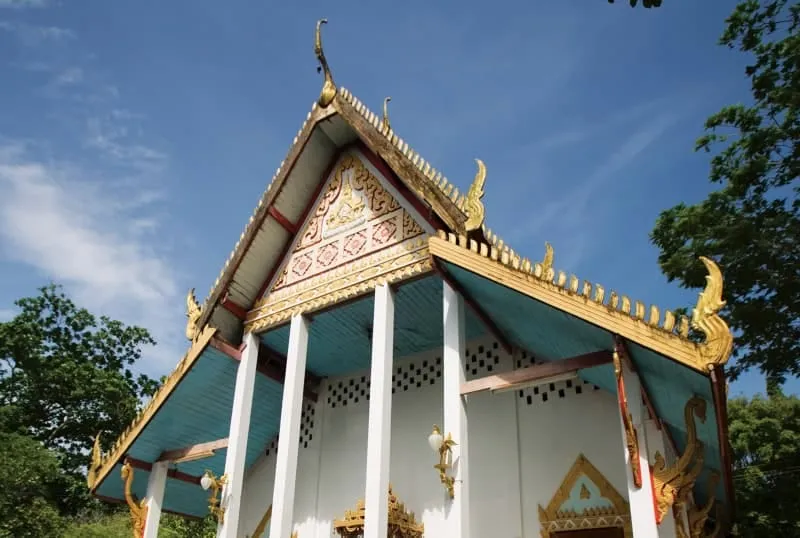
Wat Thep Charoen sits inside Tham Rup Ro, a limestone hill in Tha Kham subdistrict, Tha Sae district — about 60 Moo 4 on Ratsadamnoen Road, roughly 20 minutes from Tha Sae town. The temple has stood here since 1927, and monks still use the cave chambers for daily worship. Entry is free, open 08:30-15:30 daily, in Chumphon province.
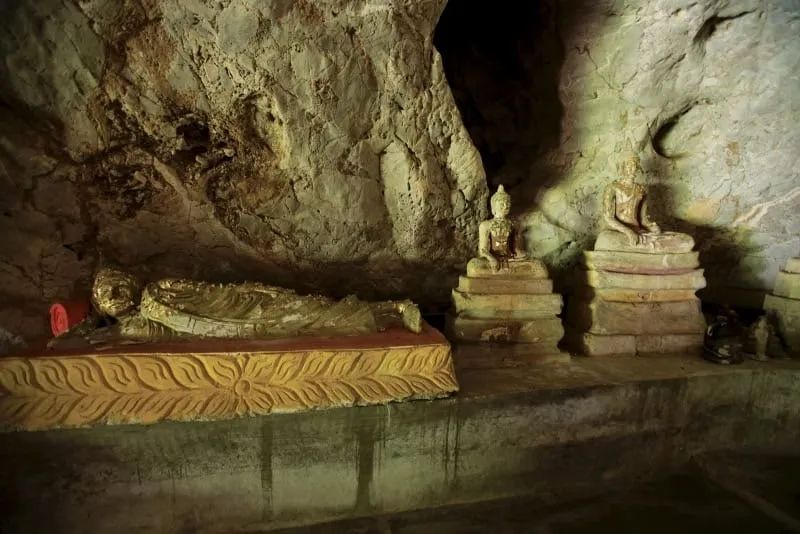
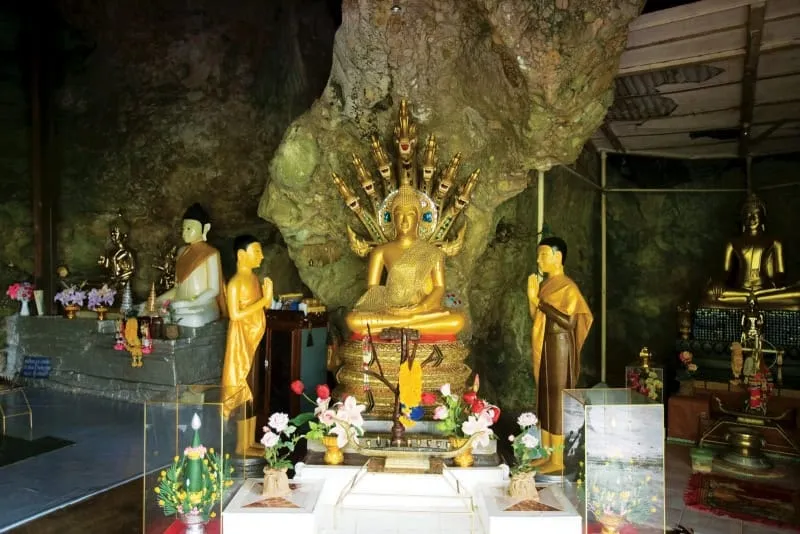
The hill holds more than eight cave chambers, though only three are set up for visitors: Tham Ai Toei, Tham Phra and Tham Sai. Tham Phra is the main cavern — an estimated 577 Buddha images line its walls and recesses, most donated over decades rather than commissioned as a single set, which is why the styles and sizes vary chamber to chamber. One sandstone slab carved with 108 auspicious symbols, representing a Buddha footprint, sits inside the main chamber and draws as much attention from Thai pilgrims as the statues do. A second cave, sometimes called Tham Ai Tae, has been adapted specifically for meditation retreats rather than general viewing.
The temple’s small museum grew out of a 1989 disaster rather than a planning decision. Typhoon Gay tore through Chumphon that year and damaged the old abbot’s residence on the grounds; when locals cleared the wreckage they found roughly 300 stored artifacts — ceramics, brassware, old weapons, administrative documents — that nobody had catalogued. Those pieces became the basis of a community museum, formally established in 2000, that now sits alongside the cave temple. It’s a modest, single-room collection rather than a curated national museum, but it gives the site a second reason to stop beyond the caves themselves.
Inside the caves, expect uneven stone floors, patchy electric lighting and genuine drips from the ceiling — this isn’t a show cave with handrails and spotlights. Bats roost in the upper recesses of the less-visited chambers, and their smell is more noticeable than their presence. Morning is the better time to visit: monks perform chanting rituals then, and the cave holds the cool of the night air for a few hours after sunrise. By midday the limestone traps heat from outside and the chambers feel close.
Insider Tip: Bring a phone flashlight or small torch. The temple provides basic lighting in the main chamber, but the side passages toward Tham Sai are genuinely dark, and that’s where most of the older wall carvings are.
Watch out: The unpaved approach road floods after heavy rain during the June-October wet season, and there’s no all-weather shelter near the entrance — check conditions with the subdistrict office (0 7754 7056) if rain looks likely.
Two other Tha Sae-area caves make an easy pairing with Wat Thep Charoen: Khao Kriap Cave and Tham Khao Plu hot spring, both within the same district.
- Entry fee: Free
- Hours: Daily 08:30-15:30
- Main caves: Tham Ai Toei, Tham Phra (577 Buddha images), Tham Sai
- Founded: 1927 as a temple; community museum added 2000
- Getting there: ~20 minutes by motorbike/car from Tha Sae town, off the road to Tha Kham
Location & Directions
Tha Sae, Chumphon
Chumphon, Thailand
Show your taxi or Grab driver
วัดเทพเจริญ (ถ้ำรับร่อ)
Frequently Asked Questions
Is Wat Thep Charoen (Tham Rup Ro Cave) free to enter?
How many Buddha images are inside the cave?
Is this the same place as the Tham Rup Ro museum?
What should I wear to visit?
How do I get to Wat Thep Charoen from Tha Sae?
Spotted something out of date or incorrect? Let us know
Stay Near Wat Thep Charoen (Tham Rup Ro Cave)
Live prices for places closest to Wat Thep Charoen (Tham Rup Ro Cave) — tap a pin to compare.