




Wat Umong
วัดอุโมงค์ (สวนพุทธธรรม)
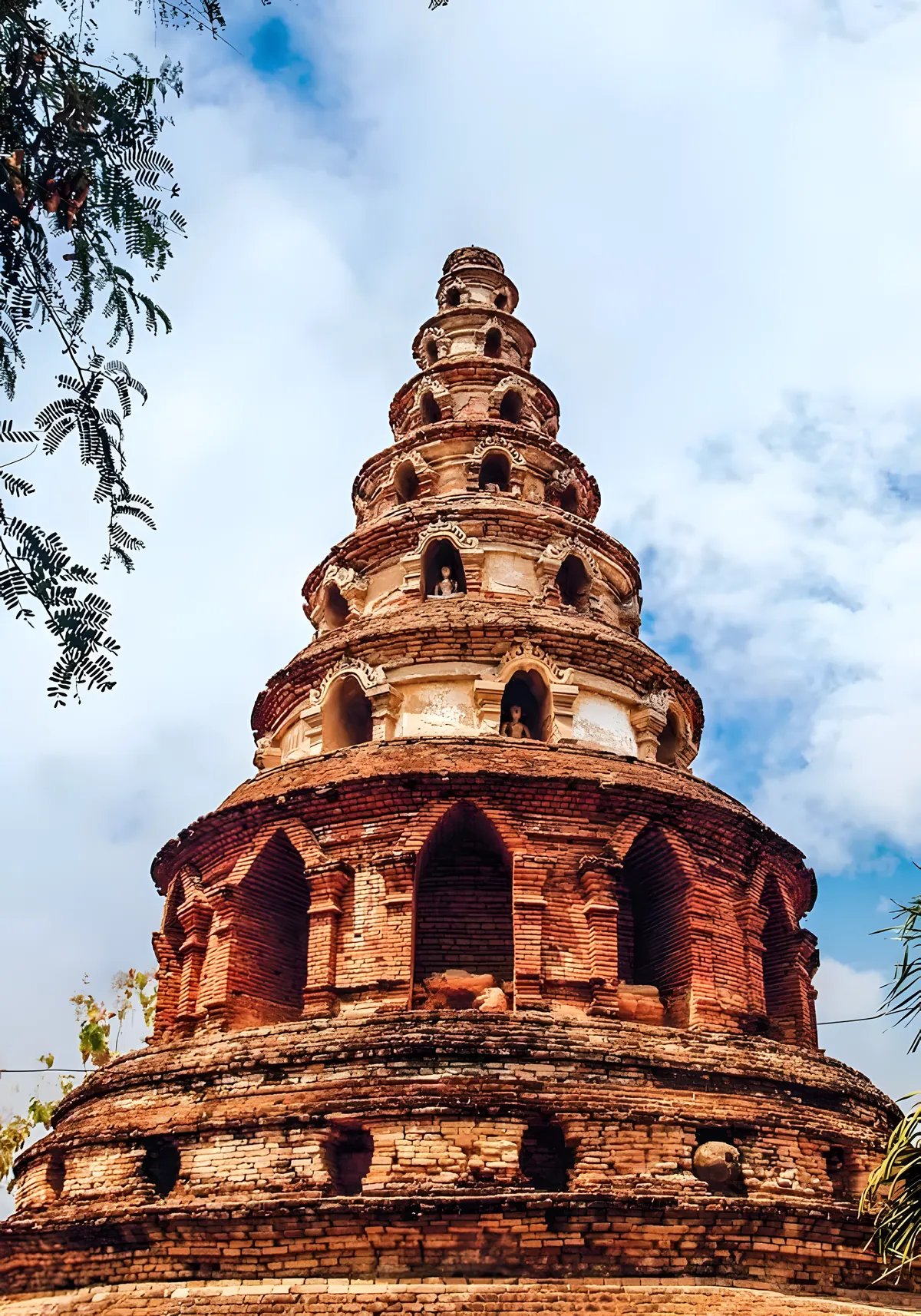
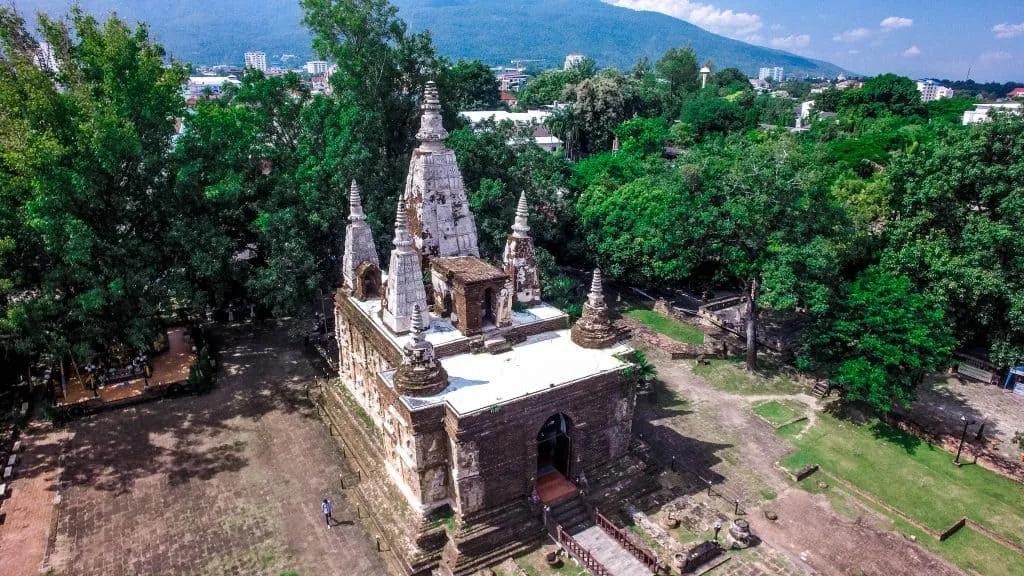
Wat Umong Suan Phutthatham is Chiang Mai’s tunnel temple: brick passages dug into a mound on the western edge of the city, lined with Buddha-image alcoves, still free to enter and open daily. King Mangrai founded the site around 1297 as Wat Welukadtharam (“temple of the eleven bamboo clumps”), a forest residence for monks he’d invited from Sri Lanka. Local legend holds that the tunnels themselves were later cut into the mound at his order so the monk Thera Chan, who was losing his concentration to the noise of the growing city, could meditate somewhere quiet. The name that stuck, Wat Umong, simply means “tunnel temple.”
The tunnels are still the reason to come: low brick corridors, lit mostly by whatever daylight filters through gaps in the mound, with small shrine niches holding Buddha images along the way. Above ground, the temple’s second defining feature is a field of broken Buddha statues gathered from other temples over the decades, cracked torsos and solitary heads set among the trees rather than repaired or discarded, a deliberate reminder of impermanence rather than neglect. A path toward the temple’s lake is strung with “talking trees”: small signboards bearing Buddhist proverbs in Thai and English, hung from branches as prompts for walking meditation. The lake itself holds catfish, turtles, and ducks that visitors feed for merit.
Wat Umong’s modern character dates to 1949, when the layman Chao Chuen Siroros revived the site as a meditation centre modelled explicitly on Buddhadasa Bhikkhu’s forest monastery Suan Mokkh in Chumphon, and renamed it Wat Umong Suan Phutthatham: “tunnel temple, garden of Buddha-dhamma.” Buddhadasa’s influence is still visible in the plain, undecorated buildings and the deliberate use of forest rather than gilding; monks hold English-language Dhamma discussions most Sunday afternoons at a pavilion by the pond, generally in the 3-6 PM window, open to anyone who wants to sit in and ask questions.
Insider Tip: Go before 9 AM. Wat Umong sees a steady stream of day-tour minivans by mid-morning, and the tunnels and broken-Buddha field are atmospheric largely because they’re quiet. That disappears once a group of thirty is filing through with a guide’s microphone.
Watch out: The tunnel interiors have almost no artificial lighting, so the alcoves and older frescoes are genuinely dim. A phone flashlight helps more than you’d expect. The uneven brick floor and low clearances in places also make this a poor fit for anyone unsteady on their feet.
- Founded: c. 1297, by King Mangrai, as Wat Welukadtharam
- Modern name / revival: 1949, as Wat Umong Suan Phutthatham, inspired by Buddhadasa Bhikkhu’s Suan Mokkh
- Entry fee: Free (donations welcome)
- Hours: Daily, 08:00-17:00
- Location: Suthep subdistrict, about 15 minutes southwest of the old city walls, near Chiang Mai University
Dress modestly (covered shoulders and knees) since this remains an active monastery, not a museum. It’s reachable by songthaew, taxi, or motorbike from the old city; there’s no direct songthaew line, so a ride-hailing app or a red songthaew willing to detour is the practical option. Pair the visit with nearby Wat Suandok or Wat Phra That Doi Suthep if you’re building a temple-focused half-day in western Chiang Mai.
Location & Directions
135/10 Moo 10, Ratchaphakhinai Road
Chiang Mai, Thailand
Show your taxi or Grab driver
วัดอุโมงค์ (สวนพุทธธรรม)
Frequently Asked Questions
Is Wat Umong free to enter?
What are the tunnels at Wat Umong?
What is the Buddhadasa connection?
What are the "talking trees" at Wat Umong?
Are there English-language Dhamma talks?
How do I get to Wat Umong from Chiang Mai old city?
Spotted something out of date or incorrect? Let us know
Tours visiting Wat Umong



Stay Near Wat Umong
Live prices for places closest to Wat Umong: tap a pin to compare.