



Chao Por Chang Puek Shrine
ศาลเจ้าพ่อช้างเผือก
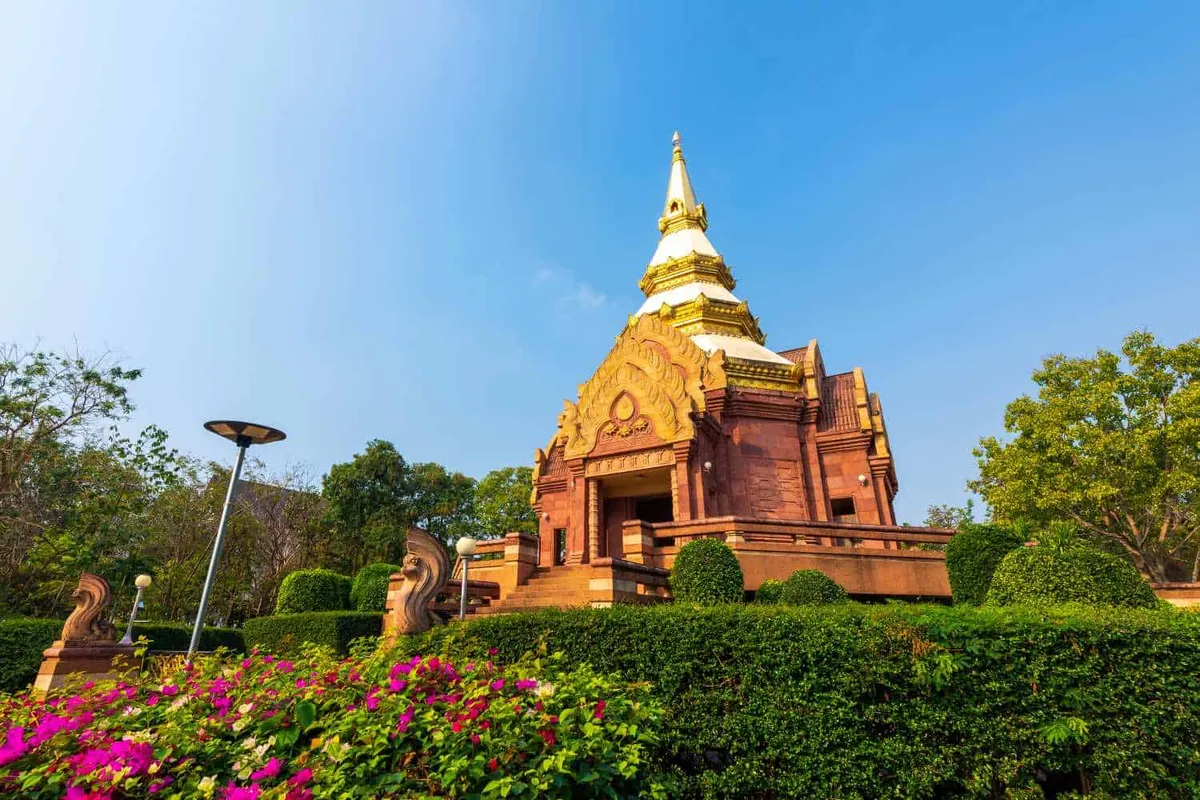
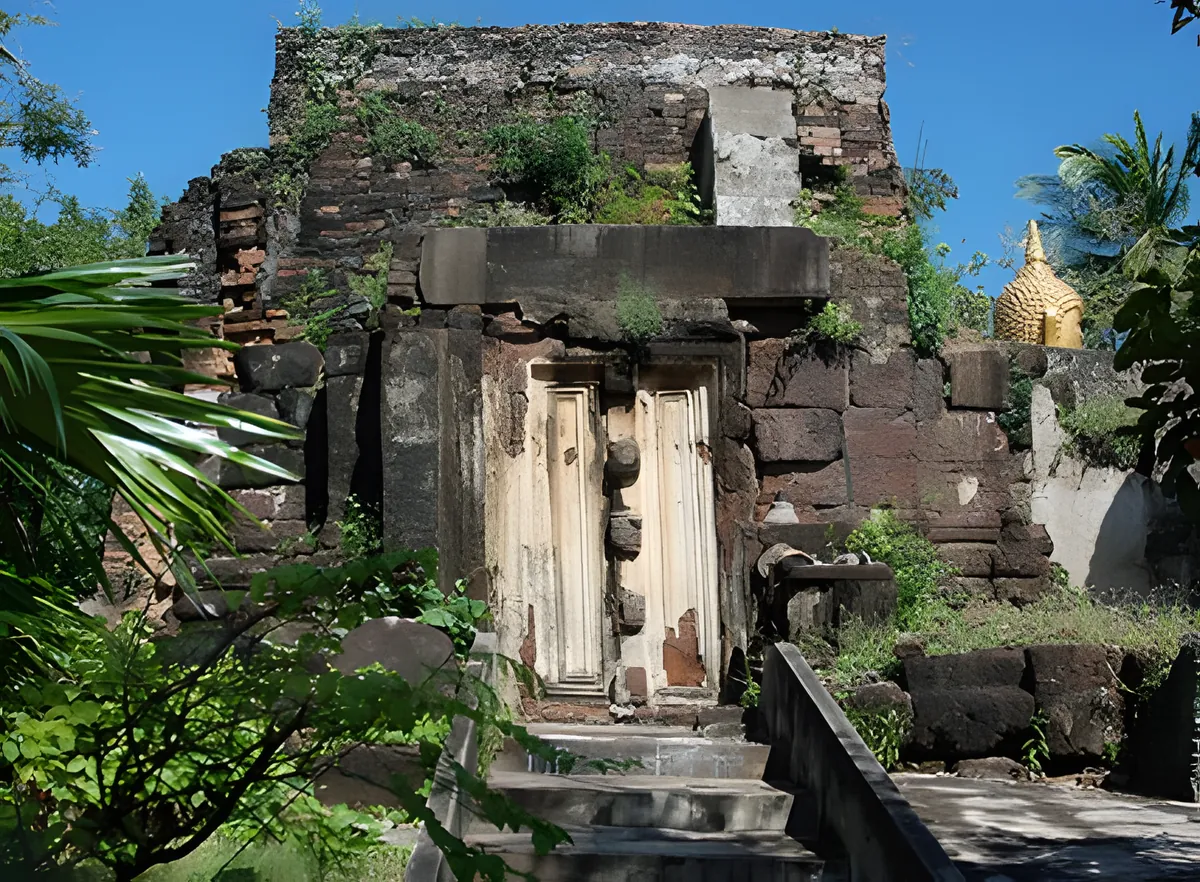
Chao Por Chang Puek Shrine is a small municipal shrine on the north moat of Nakhon Ratchasima (Korat) city, built around a wooden post with a genuinely unusual history: it’s the tethering post used for two royal white elephants during the reign of King Rama I (1782–1809). Entry is free, and a visit takes ten to fifteen minutes.
The story behind it is specific rather than mythological. Two female white elephants were captured near Phu Khiao, then a district under Nakhon Ratchasima’s administration, and brought to the city to be presented as tribute to the King in Bangkok. While royal officials inspected the animals, they were tied to a wooden post on the city’s northern edge, outside the moat. Both elephants passed inspection and were formally accepted into royal service, receiving the titles Phra Inthra Aiyara and Phra Thep Kunchon — genuine honours reserved for animals considered auspicious to the monarchy. After the elephants left for Bangkok, the post they’d been tied to remained, and locals began treating it as a site worth paying respects to, tying strips of cloth around it as offerings. For years it sat under nothing more than a corrugated zinc roof, not a formal shrine building.
The post’s location has changed once: around 1961, when Mittraphap Road was widened in front of Suranaree School, the post had to be removed, and a relocation ceremony moved it roughly 100 metres to its current spot at the corner of Manat and Phon Saen roads, where it still stands today. A nearby road, Chang Phueak Road, takes its name from the shrine. The site itself stays modest — the original post at the centre, cloth offerings tied around its base, incense left by regular visitors — rather than the large statue-filled compound its name might suggest.
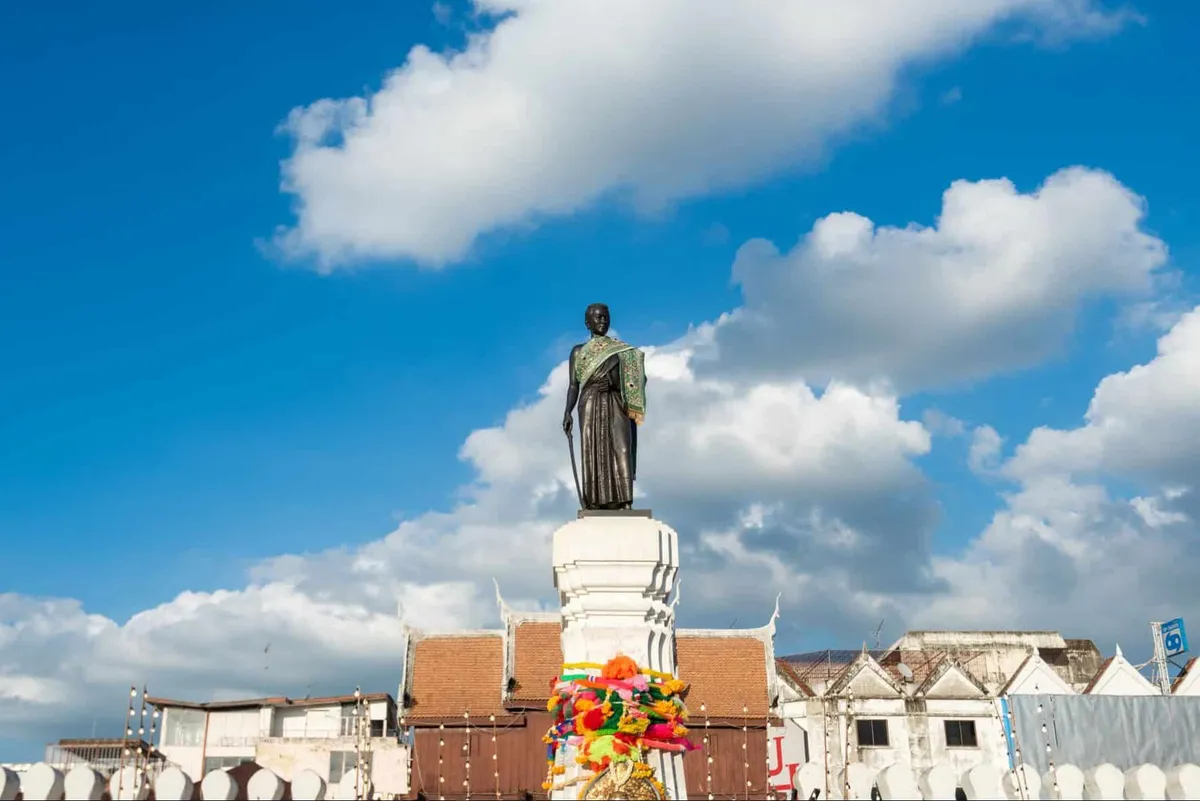
Insider Tip: This is a five-minute add-on to a walk around Korat’s north moat park, not a standalone destination — pair it with the nearby Thao Suranari Monument or a loop of the old city walls rather than making a special trip just for the shrine.
Watch out: There’s minimal English signage at the shrine itself; the history here is worth knowing before you arrive; a plaque alone won’t explain why a roadside post gets fresh cloth offerings.
- Entry fee: Free
- Location: North moat, corner of Manat and Phon Saen roads, Nai Mueang subdistrict
- Origin: Tethering post for two royal white elephants during King Rama I’s reign
- Relocated: c. 1961, when Mittraphap Road was widened
- Typical visit length: 10–15 minutes
The shrine sits within easy walking distance of central Korat’s old town, so it’s best combined with other nearby sights — Thao Suranari Monument or a stroll along the moat — rather than visited on its own. No special dress code applies, though modest clothing is respectful given its devotional use, and photography of the post and offerings is fine.
Location & Directions
Mueang Nakhon Ratchasima, Nakhon Ratchasima
Korat (Nakhon Ratchasima), Thailand
Show your taxi or Grab driver
ศาลเจ้าพ่อช้างเผือก
Within Walking Distance




Frequently Asked Questions
What is Chao Por Chang Puek Shrine actually a shrine to?
Why is a tethering post considered sacred?
Has the shrine always stood in its current spot?
Is there an entrance fee?
What do visitors actually do there?
Spotted something out of date or incorrect? Let us know
Stay Near Chao Por Chang Puek Shrine
Compare places to stay in Korat (Nakhon Ratchasima), or open the map for options closest to the attraction.