

Ganesh Shrine
เทวสถานองค์พระพิฆเนศ
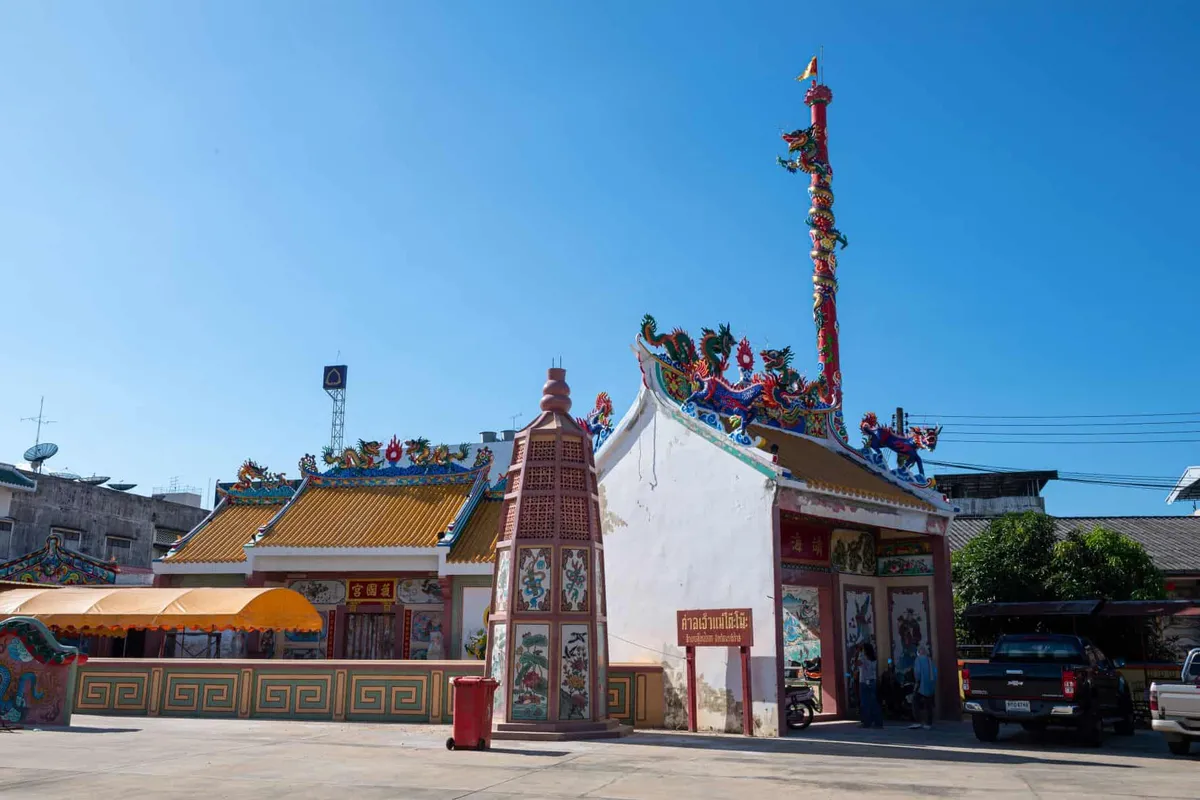
The stucco Ganesh image on Narathiwat’s Khao Mongkhon Phiphit hill stands 16 metres high with a 7-metre lap width, seated in the Lalitasana posture — left leg folded, right leg resting down — on a lotus base, wearing a Sirapon-style crown. It’s free to visit, open daily 08:00–18:00, and stands immediately beside the older Kow Leng Jee Shrine, sharing the same hilltop site in Mueang Narathiwat.
The four-armed figure carries Ganesh’s standard attributes: a lotus flower in the upper right hand, a blessing gesture in the lower right, a weapon in the upper left, and a modak — the sweet dumpling associated with the god — in the lower left. Ganesh is worshipped across Hindu and Thai-Buddhist tradition alike as the remover of obstacles and a patron of prosperity and success, which is why the statue draws a steady stream of Thai visitors making offerings rather than only the town’s small Hindu community.
A Narathiwat clothing-shop owner, Di Wanpanich, a longtime devotee of Ganesh, initiated the statue’s construction. Locally, its scale and setting on the hill overlooking the town are often described as intended partly as a gesture of hope for peace in Thailand’s three southern border provinces — a context worth knowing given the region’s recent history. Ganesh worship in Thailand reaches well beyond any single ethnic community: students and creative professionals visit shrines like this one nationwide before exams or big projects, treating the deity as a remover of obstacles rather than a figure tied to one specific faith.
Watch out: Narathiwat is one of four deep-south provinces under an active separatist insurgency, and most Western governments advise against all but essential travel to the province. That said, the shrine sits in Mueang Narathiwat’s town centre, a relatively calm and frequently visited part of the province — check current travel advisories and see the Narathiwat guide for full safety context before planning a trip, and expect military or police checkpoints on the roads in.
Insider Tip: Visit in the late afternoon — the hill catches a breeze off the Gulf of Thailand that the town centre below doesn’t get, and the statue’s scale is easier to appreciate with the sun lower and off the stucco’s white surface.
Dress modestly for the visit — shoulders and knees covered, sarongs sometimes available at the entrance — and remove your shoes before stepping onto the shrine platform. Bring flowers, fruit, or incense if you want to make an offering, and keep noise down around worshippers who are there to pray rather than sightsee.
- Entry fee: Free
- Hours: Daily, 08:00–18:00
- Statue size: 16m high, 7m lap width, stucco
- Location: Khao Mongkhon Phiphit hill, Mueang Narathiwat, beside Kow Leng Jee Shrine
- Dress code: Shoulders and knees covered; remove shoes on the platform
Location & Directions
Located on Phadung Aram Road nearby Kow Leng Jee Shrine
Narathiwat, Thailand
Show your taxi or Grab driver
เทวสถานองค์พระพิฆเนศ
Frequently Asked Questions
How tall is the Ganesh statue in Narathiwat?
Is the shrine free to visit?
What do the four hands of the statue represent?
Who built the shrine?
Is it safe to visit Narathiwat to see the shrine?
Spotted something out of date or incorrect? Let us know
Stay Near Ganesh Shrine
Live prices for places closest to Ganesh Shrine — tap a pin to compare.