Phra Phutthathaksin Ming Mongkhon (Khao Kong Buddhist Park)
พระพุทธทักษิณมิ่งมงคล (พุทธอุทยานเขากง)
Phra Phutthathaksin Ming Mongkhon sits on top of Khao Kong hill on the edge of Narathiwat town, its gold-mosaic surface visible for kilometres across the flat surrounding rice country. At roughly 24 metres from lotus base to crown, it’s the largest seated Buddha image in southern Thailand, built between 1966 and 1969, with King Bhumibol Adulyadej attending the ceremony to seal relics inside the statue in 1970. Entry is free, and the park gates open 06:30-17:30 daily.
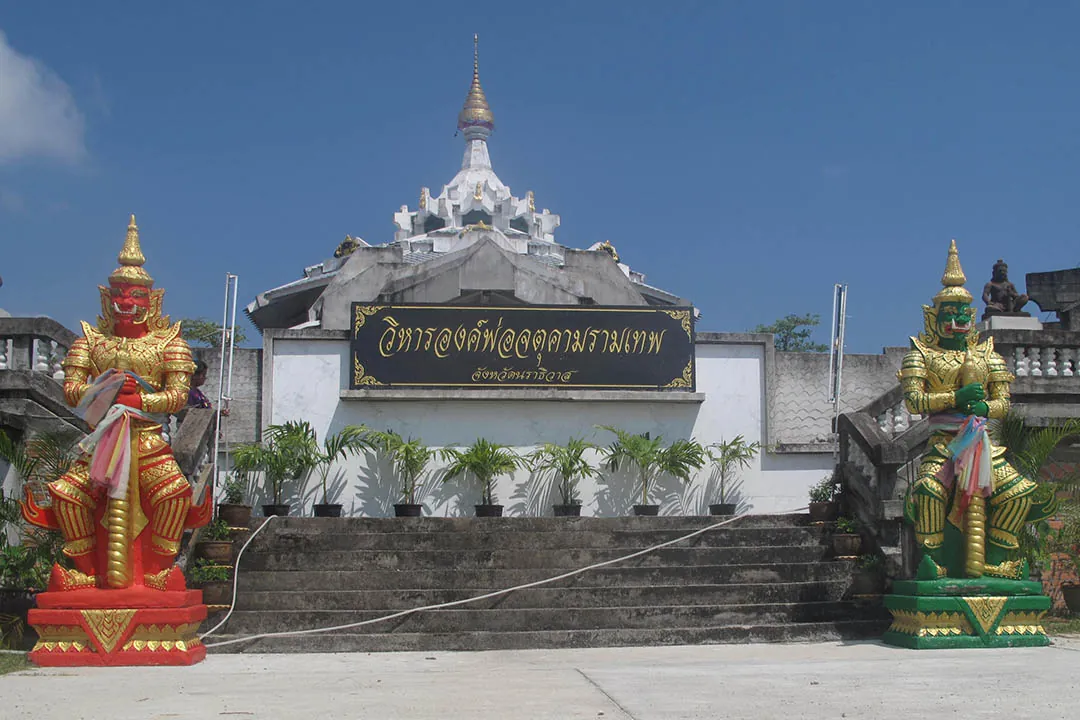
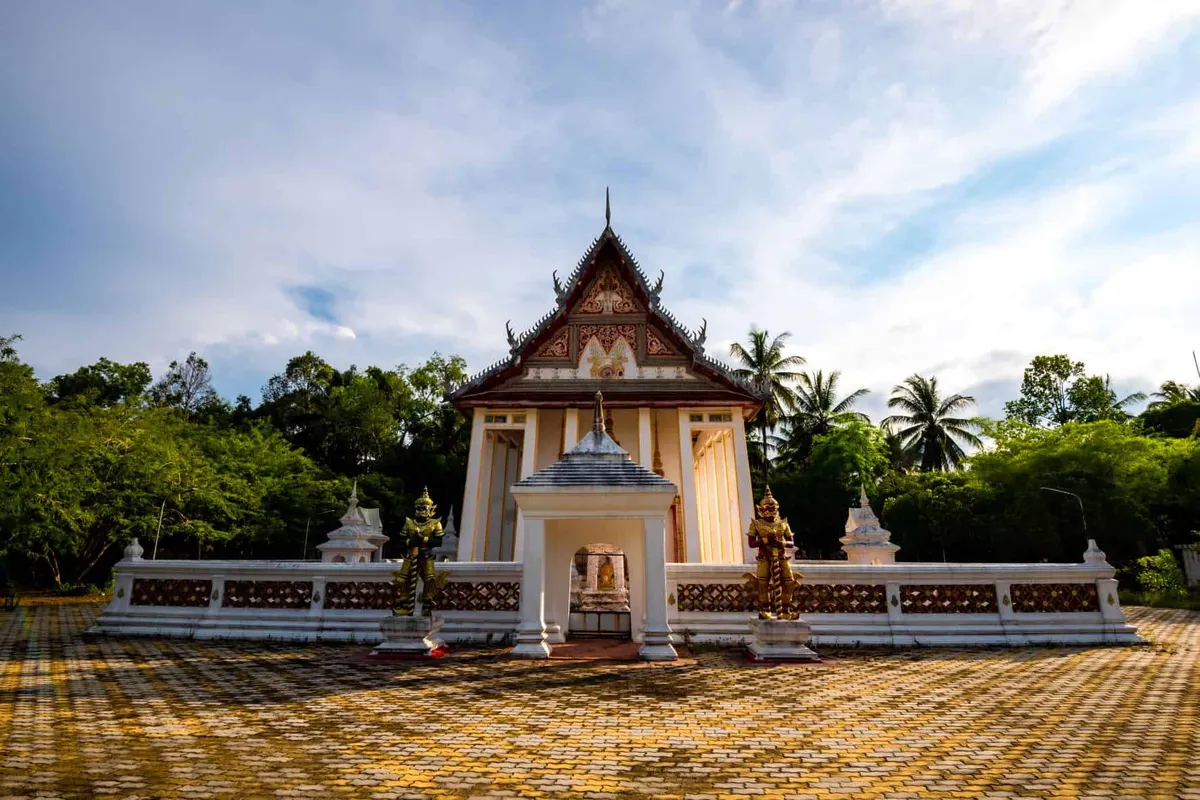
A short flight of steps and a paved path lead up from the car park to the terrace at the statue’s base, where the scale only really registers once you’re standing beside it. The lap alone is wider than most single-storey houses. The seated figure faces the Bang Nara river valley, hands in the classic teaching mudra, decorated head to base in small gold mosaic tiles that catch the light hard around midday. A viharn (prayer hall) and a scatter of smaller shrines sit at ground level near the base of the hill, where locals stop to light incense on their way up. Songthaew and motorbike-taxi drivers from Narathiwat town know the site well; it’s a regular stop for Thai Buddhist pilgrims travelling through the Deep South, not just an overseas-tourist attraction.
Insider Tip: Go before 9am. Heat builds fast on the exposed terrace once the sun clears the treeline, and the gold surface reflects it straight back at you. There’s little shade at the top.
Watch out: Dress modestly (shoulders and knees covered). This is an active place of worship, and no rental sarongs are sold on site, so bring your own or wear long trousers from the start.
Safety Tip: Narathiwat sits within Thailand’s three southernmost “Deep South” provinces (Narathiwat, Pattani, Yala), where a long-running separatist insurgency has led several Western governments to maintain travel advisories. Unrest has concentrated mostly in specific inland districts rather than Narathiwat town itself, and Khao Kong remains a well-visited pilgrimage site for Thai Buddhists, but check your government’s current advisory before travelling, stick to daylight hours, and avoid isolated roads after dark as a general precaution.
The hill gives a clear view over Narathiwat town and out toward the coast, and it’s an easy add-on to a morning at Hat Narathat beach or the Buddhist park at Phutthamonthon Narathiwat, both a short drive away in the same district. If you have half a day, Ao Manao-Khao Tanyong National Park on the coast makes a natural follow-on stop.
- Entry fee: Free
- Hours: Daily 06:30-17:30
- Statue height: Roughly 24m base to crown, 17m lap width
- Built: 1966-1969, relics enshrined 1970
- Getting there: Songthaew or motorbike taxi from Narathiwat town
Location & Directions
Mu 3 Narathiwat-Ra Ngae Road
Narathiwat, Thailand
Show your taxi or Grab driver
พระพุทธทักษิณมิ่งมงคล (พุทธอุทยานเขากง)
Frequently Asked Questions
How tall is the Khao Kong Buddha?
Is it free to visit?
When was the statue built?
Is Narathiwat safe to visit?
What else is on the hill besides the Buddha?
Spotted something out of date or incorrect? Let us know
Stay Near Phra Phutthathaksin Ming Mongkhon (Khao Kong Buddhist Park)
Live prices for places closest to Phra Phutthathaksin Ming Mongkhon (Khao Kong Buddhist Park): tap a pin to compare.