
Kow Leng Jee Shrine
ศาลเจ้าโก้วเล้งจี่
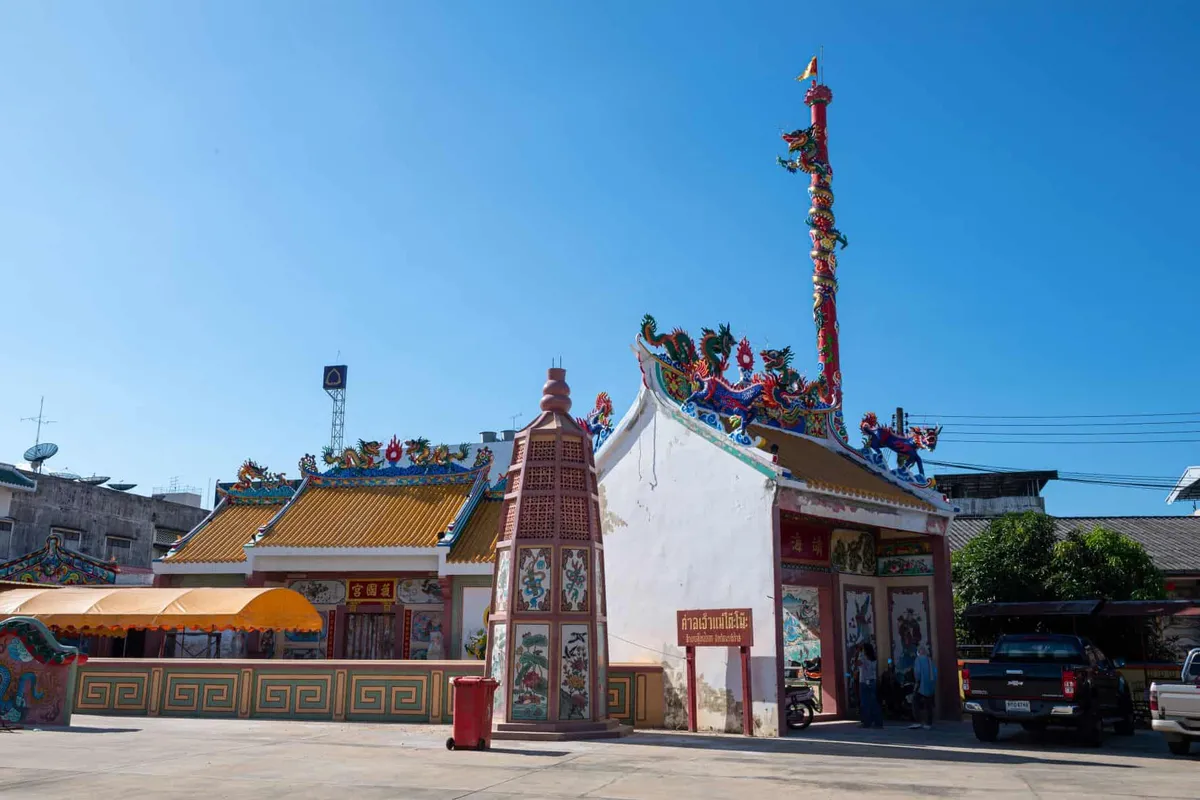
Kow Leng Jee Shrine sits on Khao Mongkol Phiphit hill in central Mueang Narathiwat, a Chinese-Thai shrine rebuilt in its current stone form in the early 20th century — replacing an older wooden shrine on the same spot — following feng shui principles so that its dragon-head guardian faces the sea. Entry is free, daily 08:00–18:00, and the Ganesh Shrine shares the same small hilltop only a few dozen metres away.
The shrine’s guardian spirit takes the form of a dragon holding a pearl in its mouth rather than the lion or tiger guardians found at most Chinese shrines in Thailand — the detail that gives it its distinct look. Inside, it holds a rare replica of Luang Pu Tuad “stepping on fresh seawater,” consecrated by Luang Pu Tim of Wat Chang Hai, alongside statues of Guan Yu, the Tiger God, Ji Gong the “mad monk” arhat, and Guan Yin. The exterior walls carry hand-stucco relief work depicting Chinese legends and festival scenes — lion dances, trading processions, auspicious symbols — the work of Chinese craftsmen, including a rare hand-stuccoed dragon pillar not repeated at other shrines in the deep south.
Insider Tip: Combine the visit with the Ganesh Shrine next door and the Chatukam Ramathep Sanctuary about 1.5 km away — three Chinese-Thai devotional sites within a short drive of each other on the same side of Mueang Narathiwat town.
Most days it’s a quiet, local place of worship — Thai-Chinese devotees rather than tour groups, incense smoke drifting between the stucco pillars. The one exception is each July, when the shrine holds a procession parading its Buddha images through the surrounding streets, the busiest day of its calendar.
Watch out: Narathiwat is one of Thailand’s three southernmost provinces, and several governments’ travel advisories flag rural districts outside the main towns. The shrine itself sits in the middle of Mueang Narathiwat, the provincial capital, where daily life carries on as normal — but check your government’s current advisory before heading into outlying districts, and avoid driving after dark outside town. See our Narathiwat guide for more context on getting around the province.
Dress modestly — shoulders and knees covered — and keep your voice down near the altar statues, as at any active shrine. The shrine is on Phiphit Khiri Road, opposite Narathiwat Kindergarten, an easy walk or short tuk-tuk ride from the town centre.
- Entry fee: Free
- Hours: Daily 08:00–18:00
- Address: Phiphit Khiri Road, opposite Narathiwat Kindergarten, Mueang Narathiwat
- Nearby: Ganesh Shrine (same hill), Chatukam Ramathep Sanctuary (~1.5 km)
- Main event: Annual Buddha-image procession each July
Location & Directions
Located on Phiphit Khiri Road opposite Narathiwat Kindergarten
Narathiwat, Thailand
Show your taxi or Grab driver
ศาลเจ้าโก้วเล้งจี่
Frequently Asked Questions
Is Kow Leng Jee Shrine free to visit?
What makes this shrine different from other Chinese shrines in Thailand?
Are there other shrines nearby?
Is it safe to visit Narathiwat?
When is the shrine's main festival?
Spotted something out of date or incorrect? Let us know
Stay Near Kow Leng Jee Shrine
Live prices for places closest to Kow Leng Jee Shrine — tap a pin to compare.