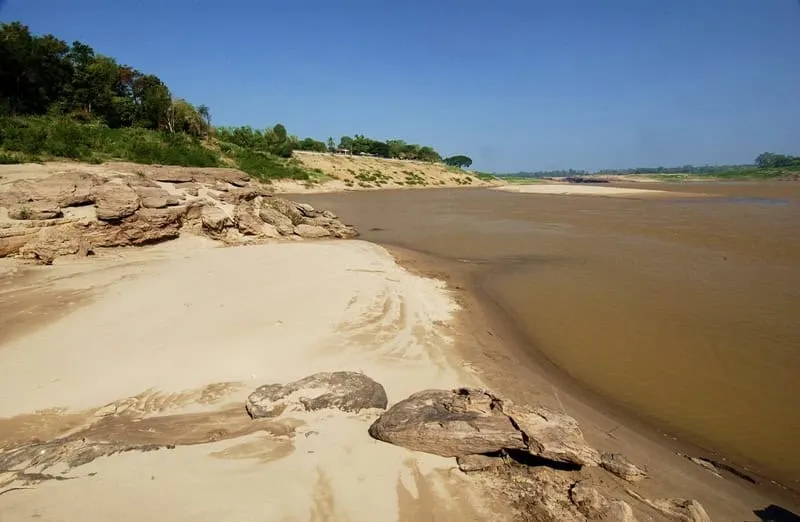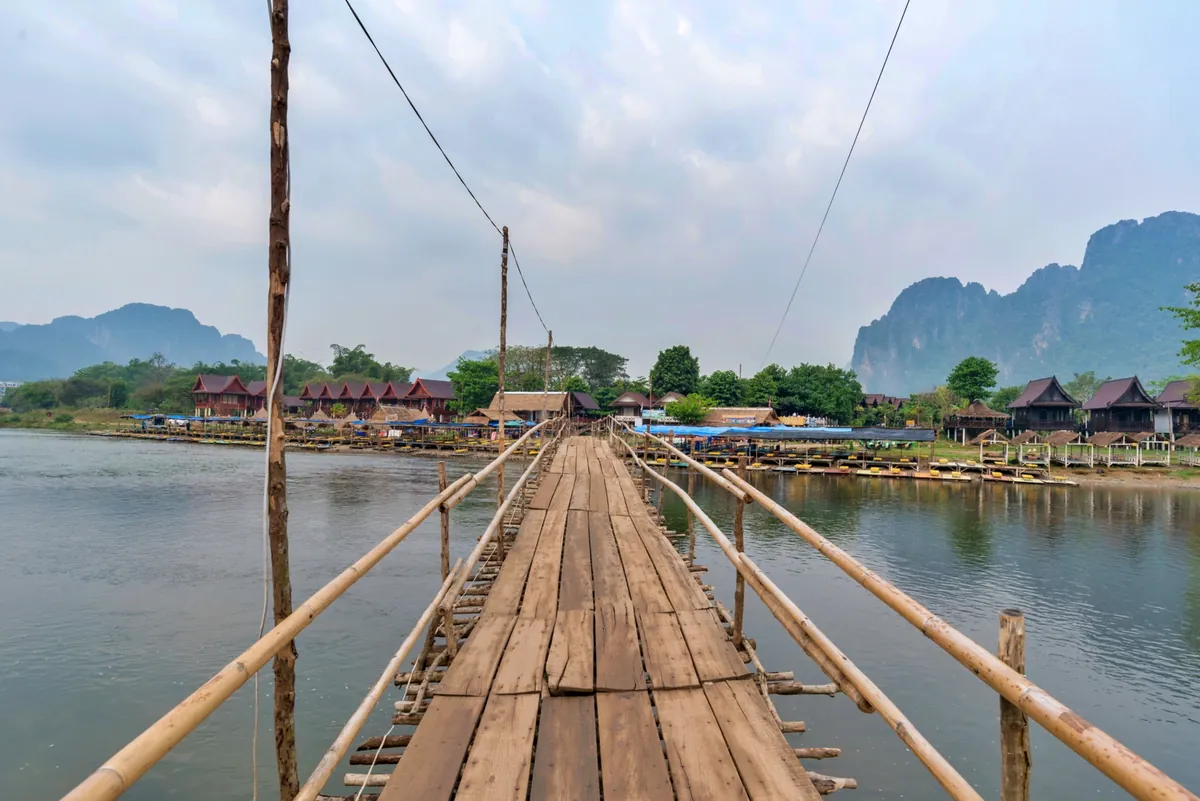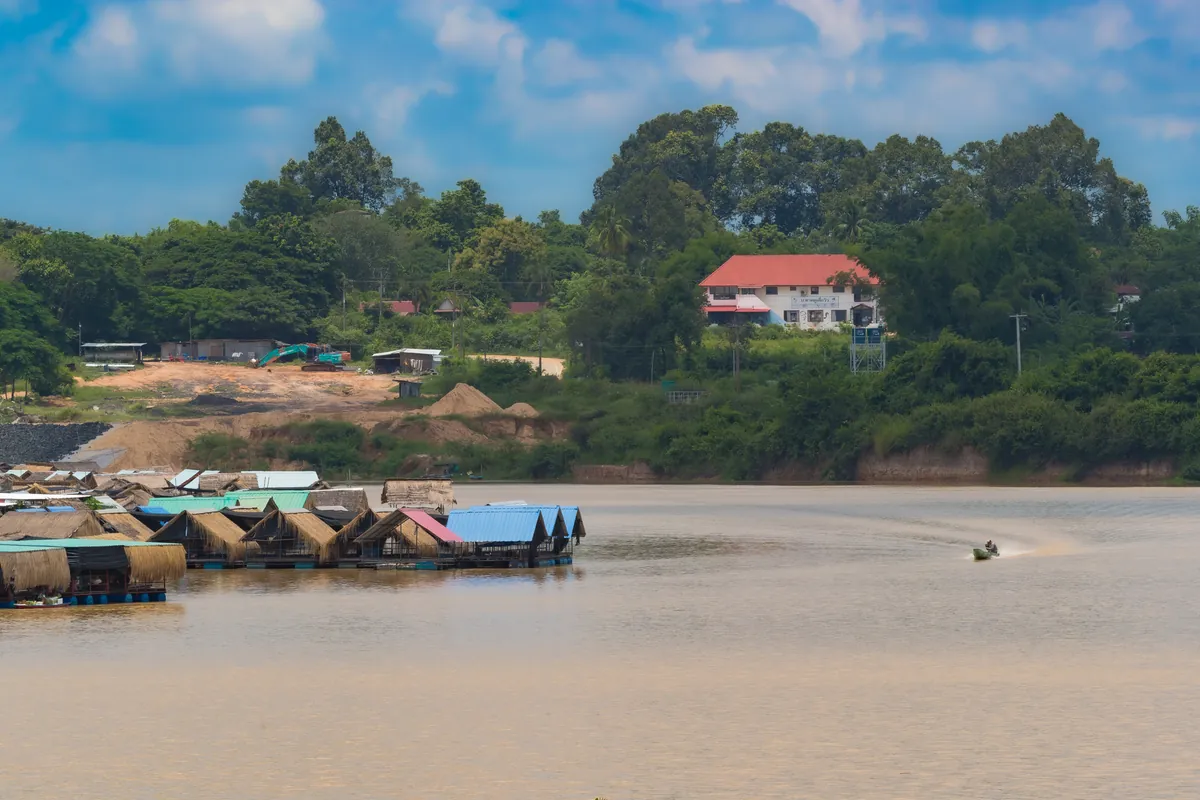





Hat Sai Sung is a seasonal sand beach on the Mekong River at Ban Lat Charoen in Khemarat district, Ubon Ratchathani — not a permanent stretch of coast, but a sandbar that surfaces when the river drops during the dry season, roughly January to May, and peaks in size and colour March to May. Outside that window the water covers it and there’s nothing to see, so timing the visit matters more here than at almost any other beach on the site.
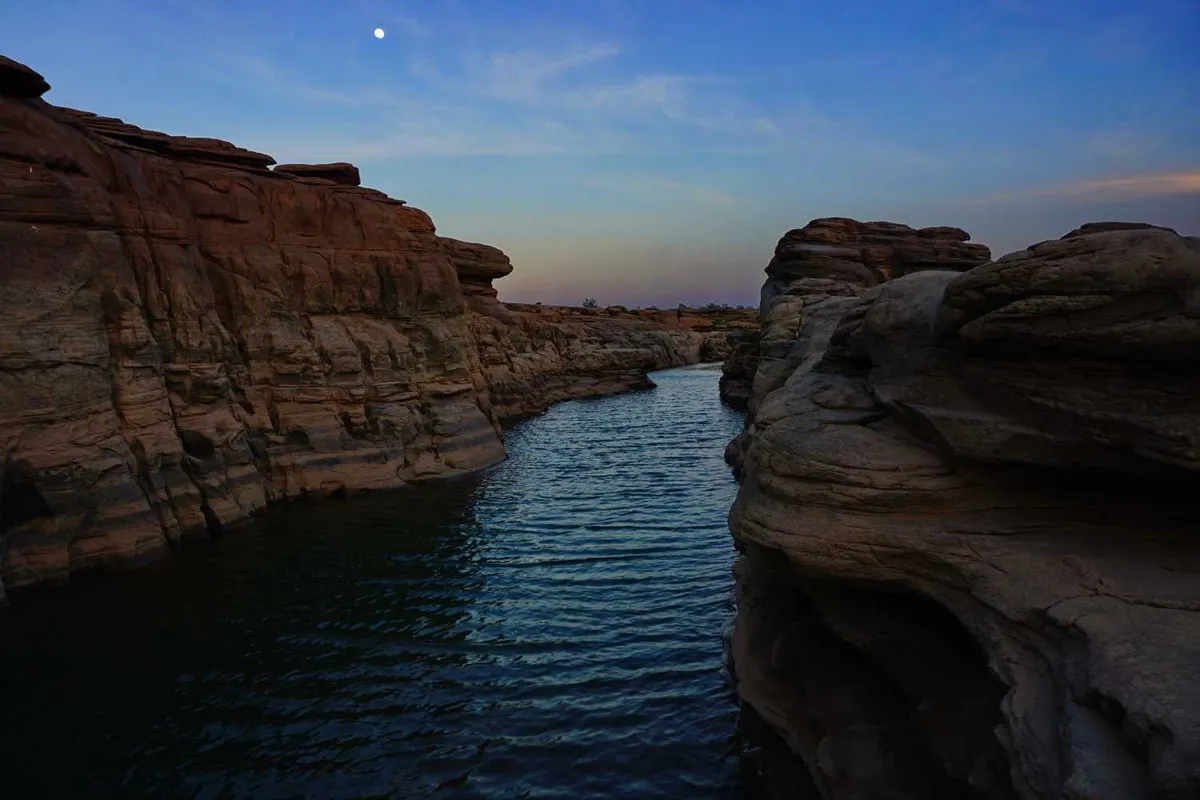
When the river’s low, the exposed sand forms dunes and ridges that locals and photographers compare to a small desert landscape, with reddish sandstone outcrops shaped by seasonal flooding rising out of the sand. It’s become a spot for photo shoots and casual sightseeing rather than a swimming destination — the water is a working river, not a beach resort, and currents shift with the season. During the accessible months, small food and drink stalls set up on the sand, giving the place a modest riverside-market feel for a few months a year before it vanishes again.
Across the water sits Laos, and the open sightline over the river and the hills beyond is much of the draw — this is border country, quieter and far less developed than Thailand’s coastal beaches.
Insider Tip: Go in April if you can. The dunes are at their widest, the light off the sand is best in early morning and late afternoon, and it avoids the crowds of the Songkran holiday period further along the road.
Watch out: Outside the dry season (roughly June to December) the sandbar is underwater — check recent photos or ask locally before making a special trip, since the “beach” simply isn’t there for most of the year.
- Entry: Free
- When it’s accessible: Roughly January-May, best March-May, as the Mekong’s water level drops
- What it is: A seasonal river sandbar and sandstone outcrop, not a permanent beach
- Location: Ban Lat Charoen, Na Waeng subdistrict, Khemarat district, Ubon Ratchathani
- Access: Own vehicle recommended; limited local transport to Moo 10
It’s often paired with Kaeng Sam Phan Bok and Hat Chom Dao or Kaeng Chom Dao, the two other seasonal Mekong sand-and-rock stops along the same stretch of Ubon Ratchathani’s river border with Laos.
Location & Directions
Moo 10
Ubon Ratchathani, Thailand
Show your taxi or Grab driver
หาดทรายสูง
Frequently Asked Questions
Is Hat Sai Sung a real beach year-round?
When's the best time to visit?
Is there an entry fee?
What can you actually do there?
How does it compare to Sam Phan Bok?
Spotted something out of date or incorrect? Let us know
Stay Near Hat Sai Sung
Compare places to stay in Ubon Ratchathani, or open the map for options closest to the attraction.