




Krayo Pastry-making Village
หมู่บ้านทำแผ่นกระยอ
Krayo pastry isn’t a dessert — it’s a thin, dried rice-flour sheet, closer to Vietnamese rice paper than to Thai sweets, and this small production village in Tha Bo district, Nong Khai province, is one of the last places still making it entirely by hand. The sheets wrap popia (spring rolls) and naem nueang (grilled pork served in lettuce-and-herb wraps) — dishes that trace back to the Vietnamese community that settled along the Mekong in this part of Isan generations ago.
Household producers mix rice-flour batter and steam it in thin layers over cloth-covered pots, peeling off each translucent sheet by hand before laying it out to dry in the sun on bamboo racks. The work happens outdoors, in yards and along the roadside, and the smell of steamed rice batter carries down the street through the morning. Peeling a sheet without tearing it takes a practised hand — most makers have done this since childhood, taught the same way by their parents.
Insider Tip: Go before 9 AM. Production slows once the day heats up, and the drying racks — the best photo opportunity in the village — are only full in the early hours.
The pace here is unhurried. Neighbours trade tips over the steaming pots, and children help stack finished sheets while their parents work. It’s a working village, not a staged demonstration — there’s no ticket booth and no set tour route. Visitors are welcome to walk the street, watch, buy directly from a household, or ask politely to see the process up close.
Watch out: This is a residential production street, not a tourist facility — there’s no café, shop, or restroom set up for visitors, so plan around that if you’re stopping for more than half an hour.
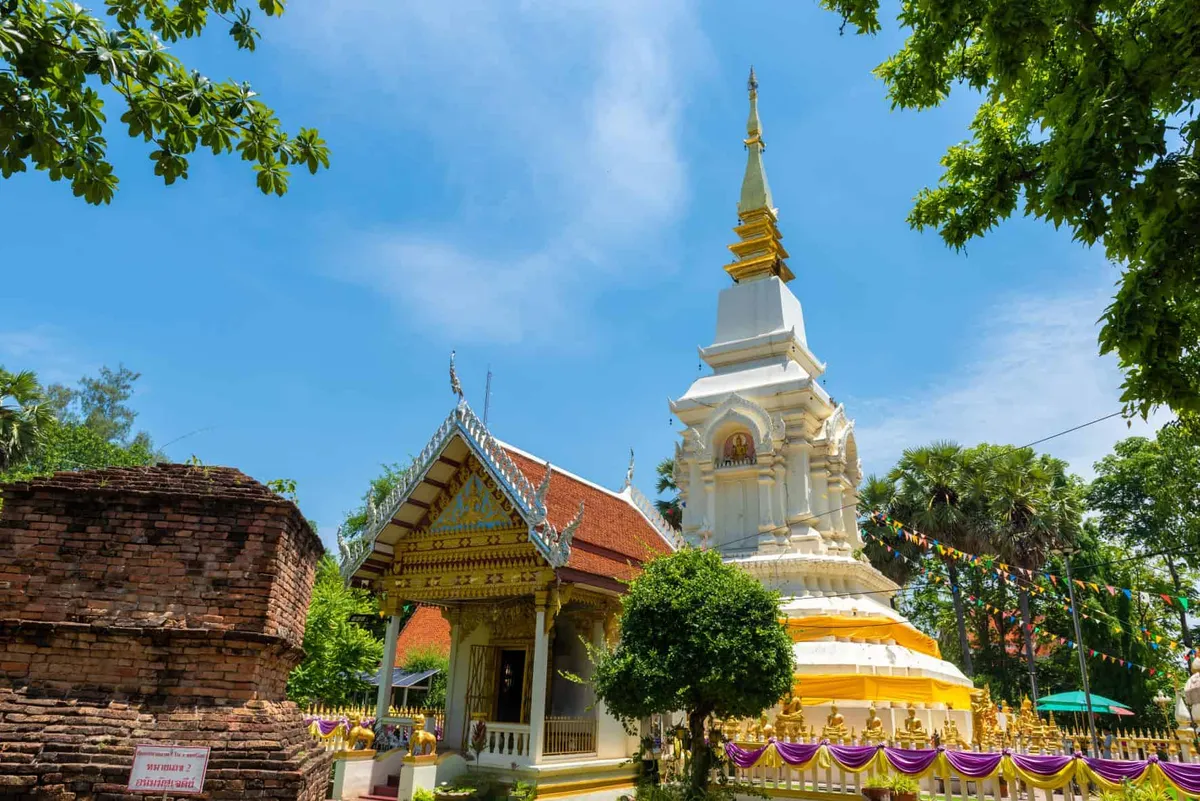
The village sits about 31 km from Nong Khai town via Highway 211 toward Tha Bo; look for the turn-off near the Km 31 marker, then follow the signposted side road roughly 1 km to the temple. There’s no public transport to the door — a rented car, motorbike, or a taxi arranged from Nong Khai town is the realistic way in.
- Entry: Free
- Distance: ~31 km from Nong Khai town via Highway 211
- What it is: Hand-made krayo (dried rice-flour sheets) for Vietnamese-style popia and naem nueang
- Best time: Morning, before production slows in the heat
- Getting there: Own vehicle — no public transport
Pair it with a stop at Wat Pho Chai or the riverside stalls at Tha Sadet Market back in Nong Khai town, both about half an hour’s drive away.
Location & Directions
Tha Bo, Nong Khai
Nong Khai, Thailand
Show your taxi or Grab driver
หมู่บ้านทำแผ่นกระยอ
Frequently Asked Questions
What is krayo pastry?
Is it free to visit?
How far is the village from Nong Khai town?
What's the best time to see production in progress?
Can I buy krayo pastry to take home?
Spotted something out of date or incorrect? Let us know
Stay Near Krayo Pastry-making Village
Compare places to stay in Nong Khai, or open the map for options closest to the attraction.