




Phrathat Bang Phuan
พระธาตุบังพวน
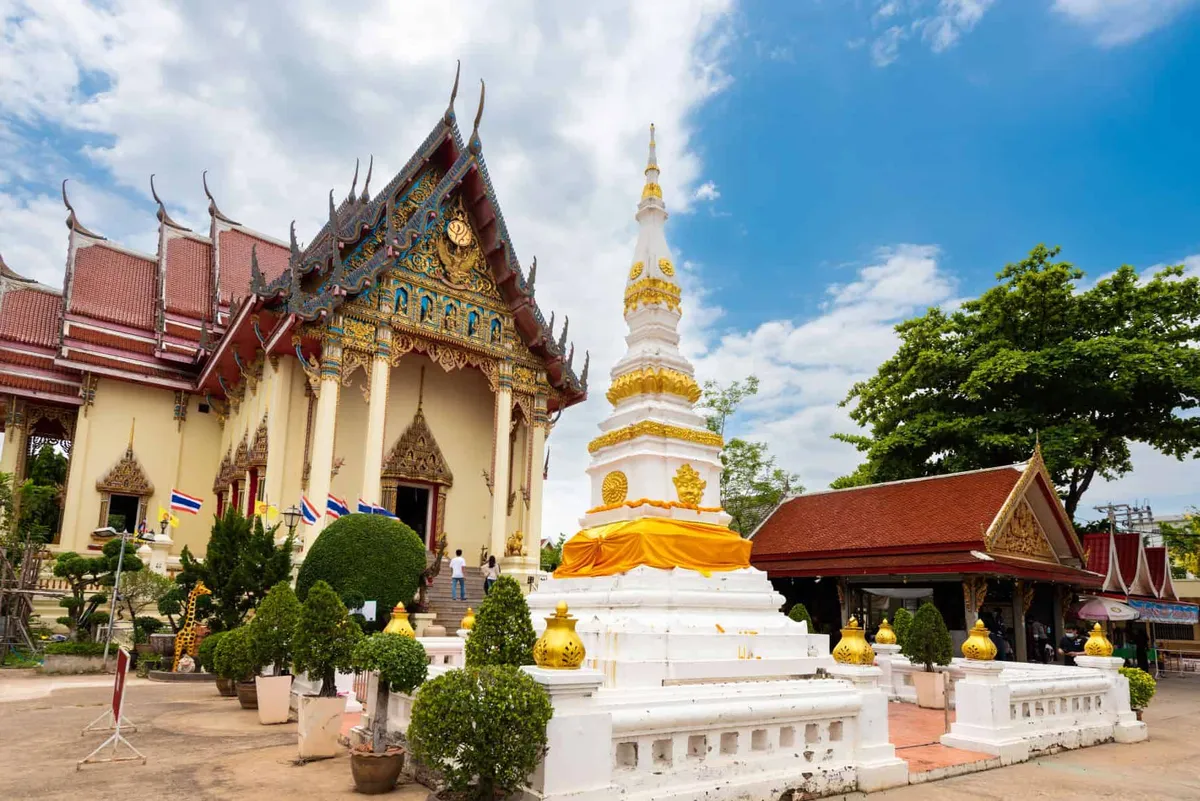
The chedi standing at Phrathat Bang Phuan today isn’t the original — the historic stupa collapsed in June 1970 when its foundation subsided, and what visitors see now was rebuilt between 1976 and 1978 on a five-tier base, 17.2 m wide and rising 34.25 m from the ground. The square, prang-style body tapering to a bell-shaped top follows the outline of the collapsed original, on the same site near the Mekong River bank in Mueang Nong Khai district.
The temple’s founding legend reaches back roughly two thousand years, when arhats spreading Buddhism into the region are said to have brought a relic of the Buddha to this spot; the chedi itself was recorded as built around 1657. Around the base, carved stone Buddha images sit in small alcoves, and the grounds include a Sattamahasathan — a set of seven reconstructed sites representing the seven weeks the Buddha spent near the Bodhi tree after his enlightenment, a grouping local guides describe as the only complete set of its kind in Thailand.
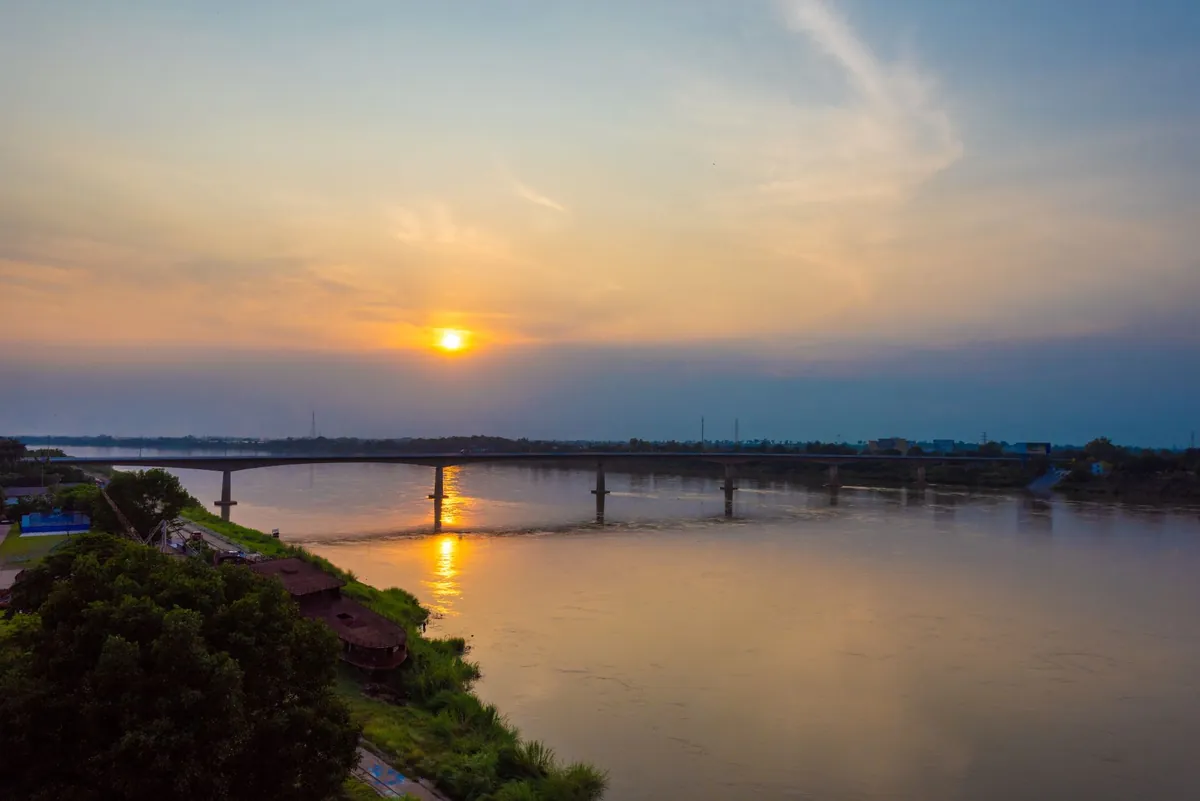
Traditional wooden sala pavilions on the grounds are used by local devotees for ceremonies and quiet visits rather than staged for tourists, and the riverside setting means the Mekong is visible from parts of the compound. Entry is free, open daily 08:00-17:00.
Insider Tip: Go for the Sattamahasathan as much as the chedi itself — it’s the more unusual feature of the site and easy to miss if you only photograph the main stupa and leave.
Watch out: As with any Thai temple, cover shoulders and knees and expect to remove your shoes before entering any of the sala buildings.
- Current structure: Rebuilt 1976-1978 after the original collapsed in June 1970
- Size: 17.2 m wide, 34.25 m tall, five-tier base
- Founding legend: ~2,000 years old; chedi recorded as built around 1657
- Feature: Sattamahasathan — seven sites of the Buddha’s post-enlightenment weeks
- Entry: Free, daily 08:00-17:00
The site is reached by car or motorbike from central Nong Khai via riverside roads. If you want to combine it with the province’s best-known Buddha image, Wat Pho Chai and its gold-headed Luang Pho Phra Sai sit inside Nong Khai town itself, making an easy second stop on the same day.
Location & Directions
Mueang Nong Khai, Nong Khai
Nong Khai, Thailand
Show your taxi or Grab driver
พระธาตุบังพวน
Frequently Asked Questions
Is the chedi standing today the original structure?
How old is Phrathat Bang Phuan's history?
What is the Sattamahasathan at the site?
Is there an entry fee?
How do I get there from Nong Khai town?
Spotted something out of date or incorrect? Let us know
Stay Near Phrathat Bang Phuan
Compare places to stay in Nong Khai, or open the map for options closest to the attraction.