


Lim Ko Niao Shrine or Leng Ju Kiang Shrine
ศาลเจ้าแม่ลิ้มกอเหนี่ยว (ศาลเจ้าเล่งจูเกียง)
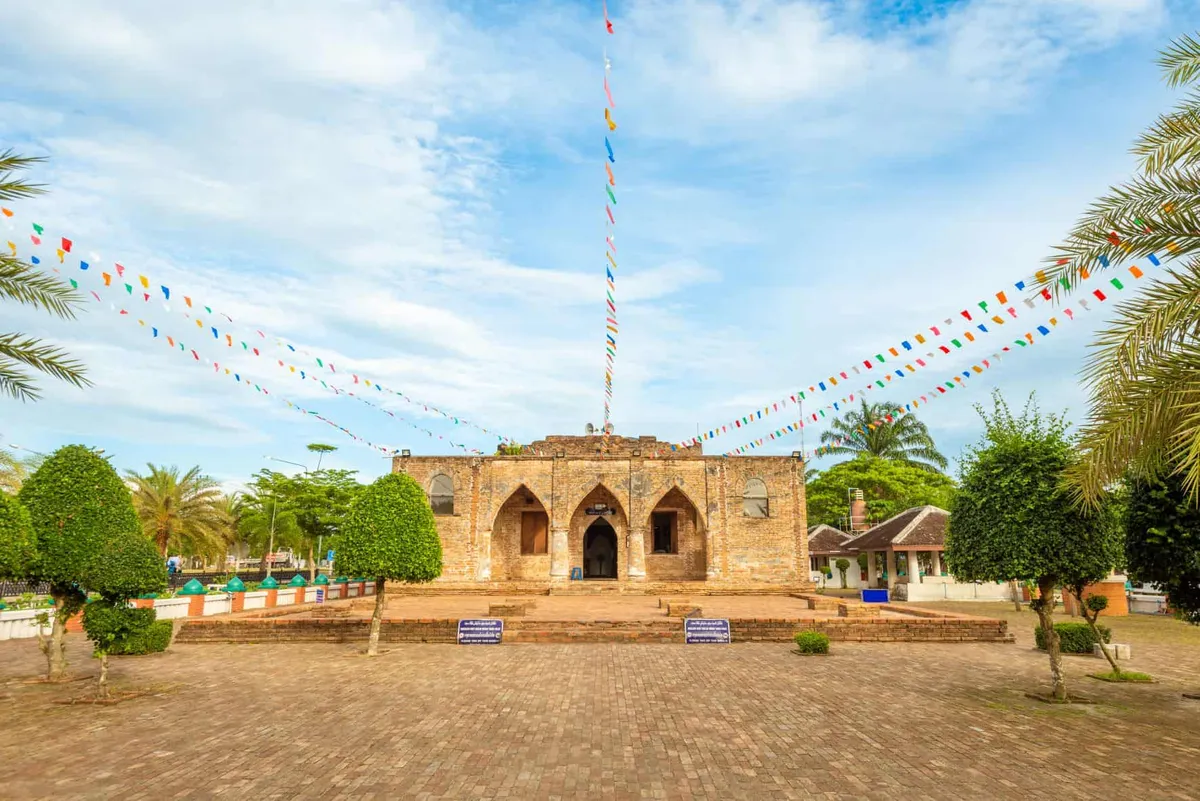
The Lim Ko Niao Shrine, also called Leng Ju Kiang Shrine, has stood on Anoru Road in Pattani’s old town since 1574, in the reign of Ayutthaya’s King Maha Thammaracha, making it one of the oldest Chinese shrines still in active use in Thailand. It sits in the old Kuedachina quarter, a short walk from the Krue Se Mosque ruins that are woven into its founding legend.
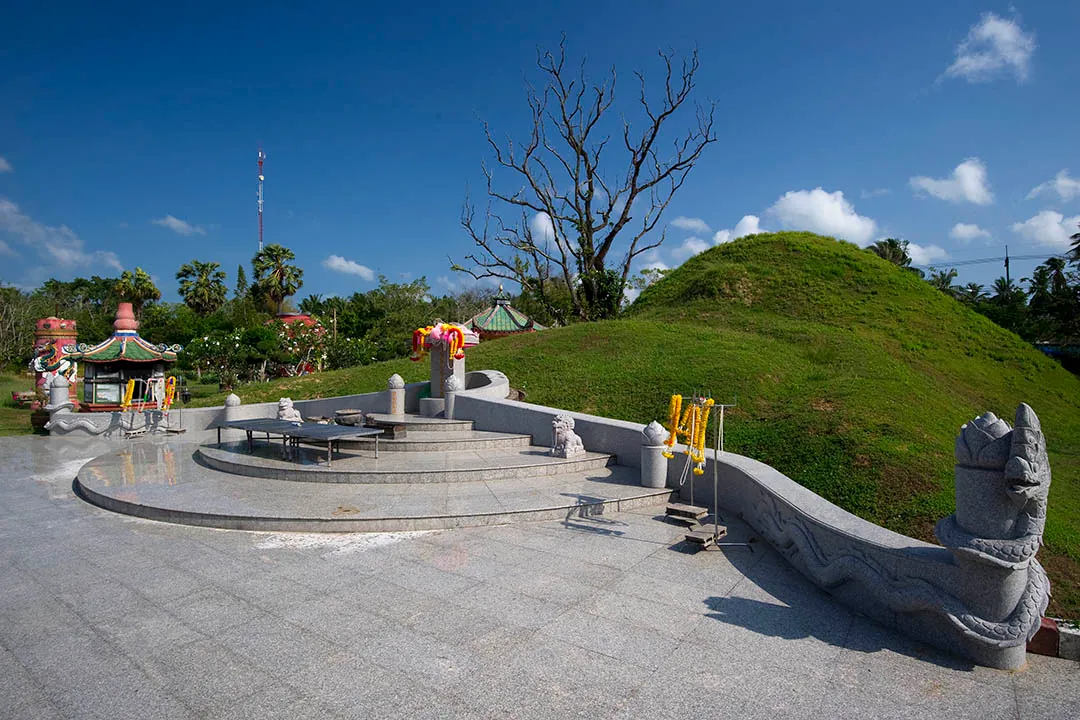
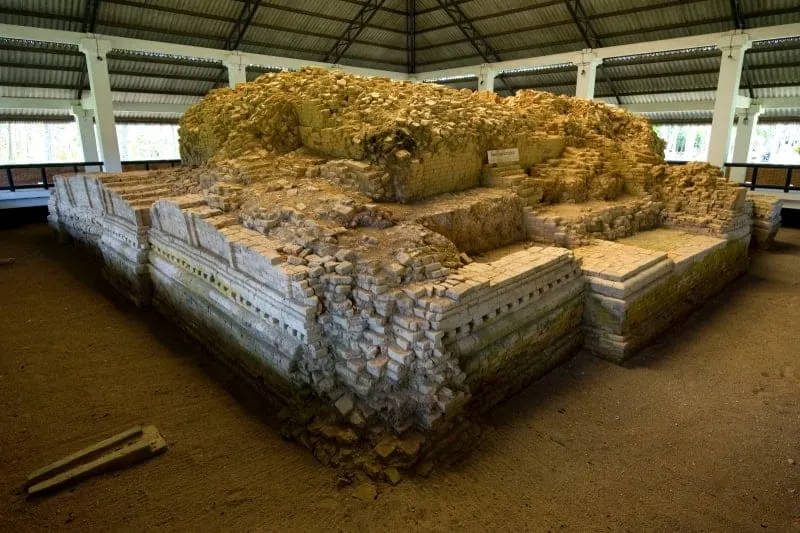
The shrine is dedicated to Lim Ko Niao, sister of the Chinese trader Lim To Khiam, who settled in Pattani and, according to the story, began building what became Krue Se Mosque. Sent by their mother to bring him home to China, Lim Ko Niao found him refusing to leave. Unable to persuade him and unwilling to return without him, she hanged herself under a cashew tree in protest. The tree and her grave, at Ban Krue Se on the edge of town, are preserved today as the Chao Mae Lim Ko Niao Graveyard. She’s since been worshipped as a guardian deity of Pattani’s Chinese community, one of the few Chinese deities whose legend is set entirely within Thailand rather than imported from China.
Inside, red-and-gold altars, carved wooden dragon beams, and guardian lion statues fill a space thick with incense smoke. Devotees come daily to seek blessings for business, health, and family matters, dropping to their knees before the main altar rather than standing at a distance. The atmosphere is markedly more hands-on than a Buddhist wat: worshippers shake fortune sticks, burn paper offerings, and consult resident mediums, especially around Chinese New Year.
Insider Tip: Time a visit to the third lunar month, usually late February or March, for the shrine’s biggest event: a multi-day festival culminating in a firewalking ceremony in front of the shrine and a river-crossing rite at the Pattani River near Dechanuchit Bridge, where Lim Ko Niao’s statue is carried through the streets on one of Thailand’s largest ceremonial palanquins.
Safety Tip: Pattani sits in Thailand’s deep south, where the Thai government has maintained a long-running travel advisory due to sporadic unrest. Check current conditions before a trip, stick to well-populated areas like the old town and the shrine itself, and avoid travel after dark in unfamiliar districts. The annual festival draws large, well-managed crowds and heavy local security without incident most years.
Outside festival season, the shrine is a quiet, everyday stop: locals dropping in before work, incense smoke curling through the courtyard, no entry fee and no set dress code beyond basic modesty. Photography is fine if you’re discreet and let devotees finish their rituals undisturbed.
- Entry fee: Free
- Hours: Daily 06:00–17:00
- Founded: 1574, reign of King Maha Thammaracha
- Big event: Third lunar month festival: palanquin procession, firewalking, river-crossing rite
- Nearby: Chao Mae Lim Ko Niao Graveyard (the legend’s burial site), Krue Se Mosque
Location & Directions
Anoru Road in Pattani's old town community, Anoru Subdistrict
Pattani, Thailand
Show your taxi or Grab driver
ศาลเจ้าแม่ลิ้มกอเหนี่ยว (ศาลเจ้าเล่งจูเกียง)
Frequently Asked Questions
What is the legend behind Lim Ko Niao Shrine?
When is the Lim Ko Niao festival held?
Is it safe to visit Pattani's old town?
Is there an entry fee for Lim Ko Niao Shrine?
How old is Lim Ko Niao Shrine?
Spotted something out of date or incorrect? Let us know
Stay Near Lim Ko Niao Shrine or Leng Ju Kiang Shrine
Live prices for places closest to Lim Ko Niao Shrine or Leng Ju Kiang Shrine: tap a pin to compare.