

Mettatham Potiyarn Temple
วัดเมตตาธรรมโพธิญาณ
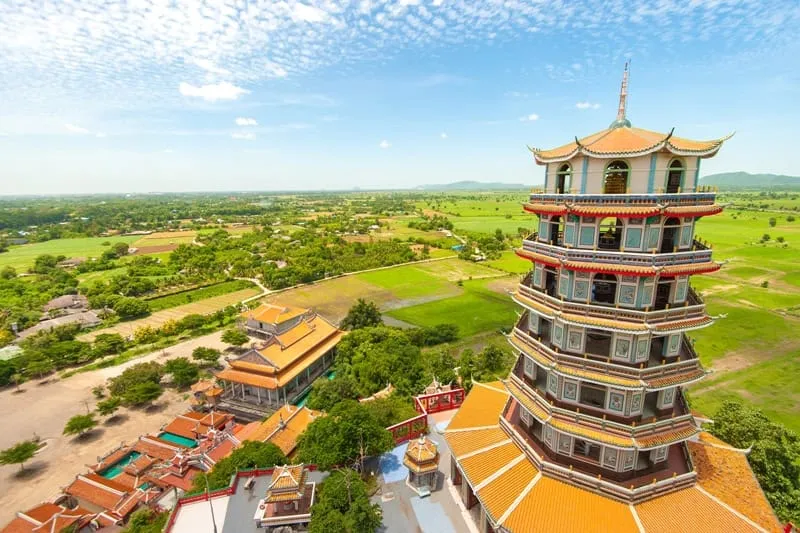
Mettatham Potiyarn Temple is a Chinese Mahayana temple tucked into a quiet valley outside Kanchanaburi town, built almost entirely from wood and centred on a 12-metre carved statue of Guanyin, the Bodhisattva of Mercy. Entry is free and the temple opens daily from 8am to 6pm. Unlike the Theravada wats that dominate the rest of the province, the rituals, iconography, and architecture here follow Chinese Mahayana practice, a distinction worth knowing before you arrive, since nothing at the gate spells it out.
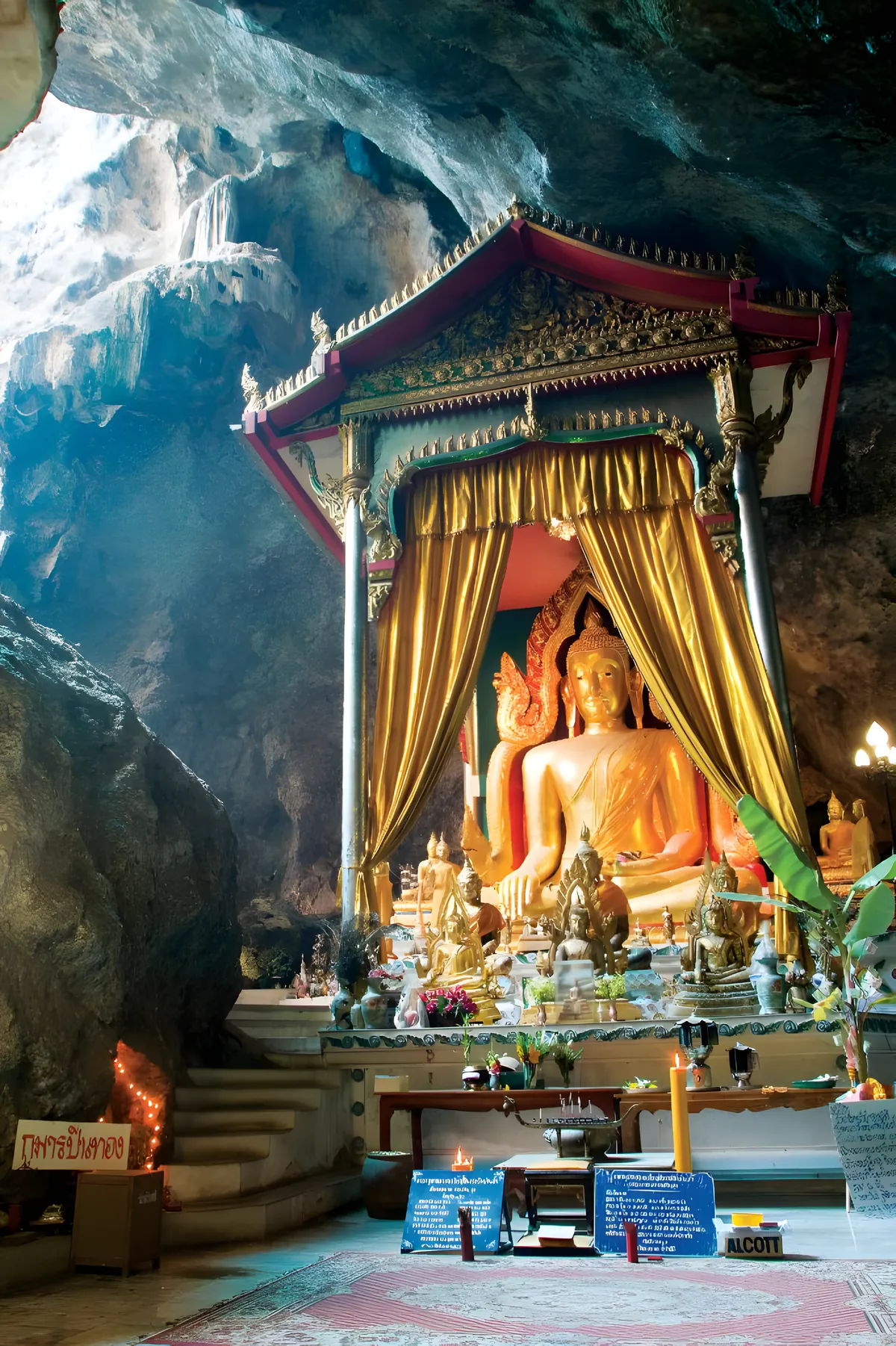
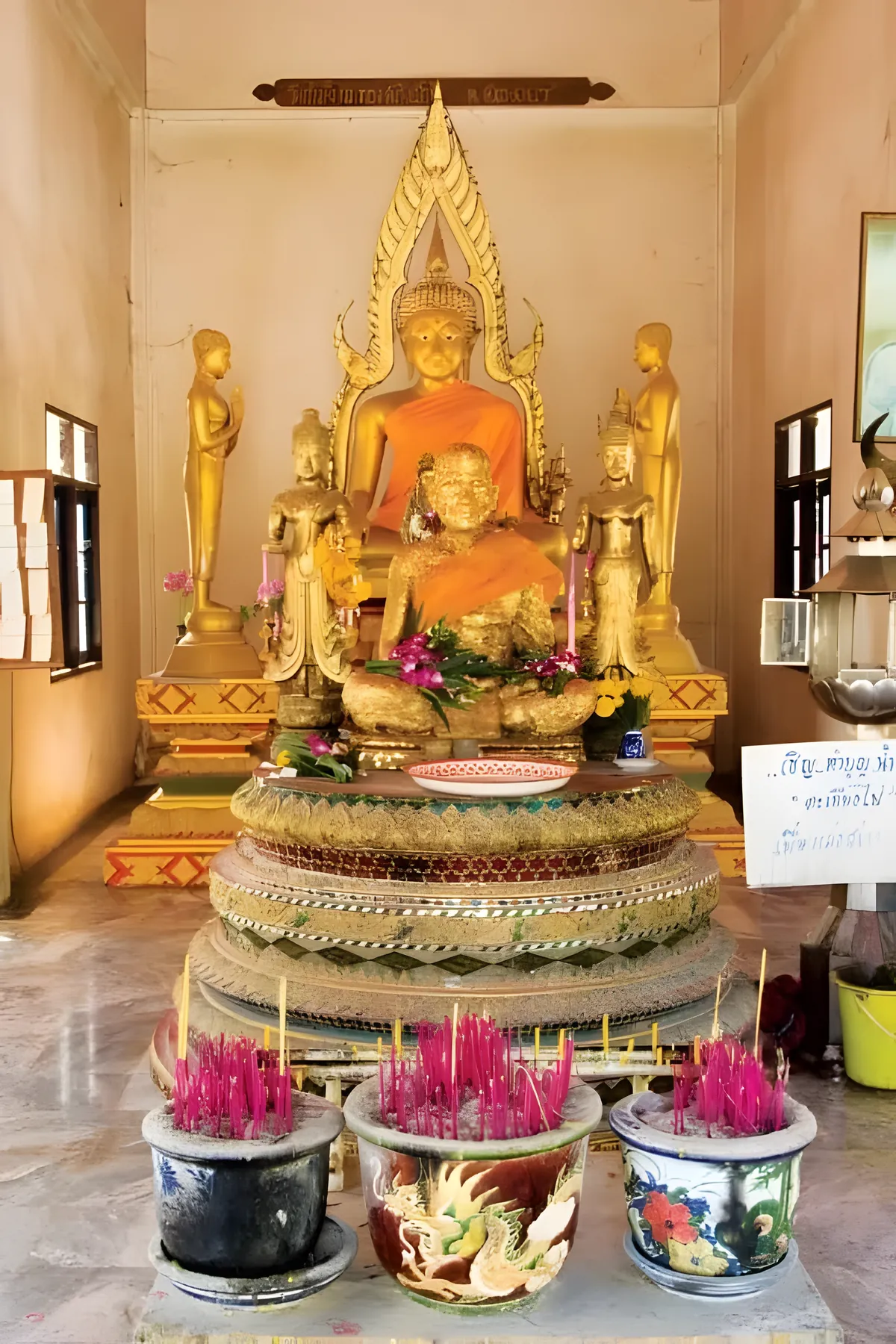
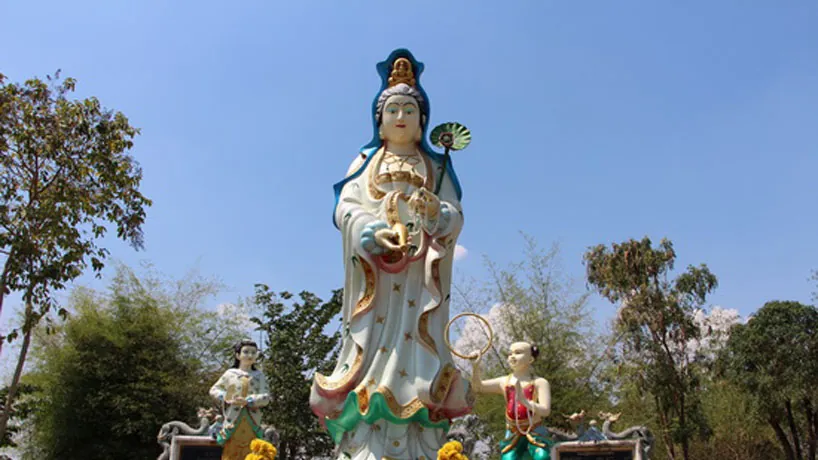
The 12-metre Guanyin dominates the main hall, carved from a single trunk and left in natural wood tones rather than gilded, unusual among Thailand’s Buddhist statuary, where gold leaf is the default finish. Surrounding her stand more than 100 smaller Guanyin figures, each carved from fragrant wood in a different pose: seated, standing, and several in the many-armed form devotees know as the Thousand-Armed Guanyin. The building itself is timber throughout, walls included, rather than the concrete and stucco typical of Thai temple halls, and the wood grain shows through even where sections have been painted. Coiled incense spirals hang from the ceiling, burning slowly over days rather than the single sticks lit at Thai wats.
Local Chinese-Thai families come specifically to pray to Guanyin over health and family matters, a different devotional register from the merit-making at nearby Theravada temples. Weekday mornings are quiet enough to hear the timber creak; weekend afternoons bring visitors making offerings of fruit and flowers at the smaller shrines ringing the main hall. The valley setting keeps the temple noticeably cooler than central Kanchanaburi, and birdsong replaces traffic noise within a couple of minutes of turning off the main road.
Insider Tip: Go on a weekday morning if you want to see the wood-carved figures without a crowd blocking the light. The natural (unpainted) tones photograph best in indirect morning sun rather than the flat glare of midday.
Watch out: There’s no English signage explaining the Mahayana background, so first-time visitors sometimes assume it’s a standard Thai wat and miss what actually makes the place distinctive. Read up on Guanyin before you go if the iconography interests you.
The temple sits in Nong Ya subdistrict, reachable by songthaew or taxi from Kanchanaburi town centre, though the rural setting makes your own transport more reliable than waiting for shared transit. Dress modestly (covered shoulders, long trousers) and remove shoes before entering the main hall. A small donation toward the temple’s upkeep is appreciated but not expected.
- Entry: Free
- Hours: Daily 08:00–18:00
- Main feature: 12-metre wood-carved Guanyin plus 100+ smaller carved figures
- Tradition: Chinese Mahayana Buddhism, not Theravada
- Location: Nong Ya subdistrict, Mueang Kanchanaburi district
Kanchanaburi’s other Chinese-Buddhist site, the Kuan Yin Statue at Wat Tung Samor in Phanom Thuan district, makes a natural pairing if the devotional carving style interests you. For a broader look at the province’s heritage sites, the Ancient Town of Kanchanaburi covers the old city’s Thai and colonial-era history.
Location & Directions
Mueang Kanchanaburi, Kanchanaburi
Kanchanaburi, Thailand
Show your taxi or Grab driver
วัดเมตตาธรรมโพธิญาณ
Frequently Asked Questions
Is Mettatham Potiyarn Temple a Thai or Chinese temple?
What is the giant statue at the temple?
Is Mettatham Potiyarn Temple free to enter?
How do I get to Mettatham Potiyarn Temple from Kanchanaburi town?
Can I take photos inside the temple?
Spotted something out of date or incorrect? Let us know
Popular tours in Kanchanaburi




Stay Near Mettatham Potiyarn Temple
Live prices for places closest to Mettatham Potiyarn Temple: tap a pin to compare.