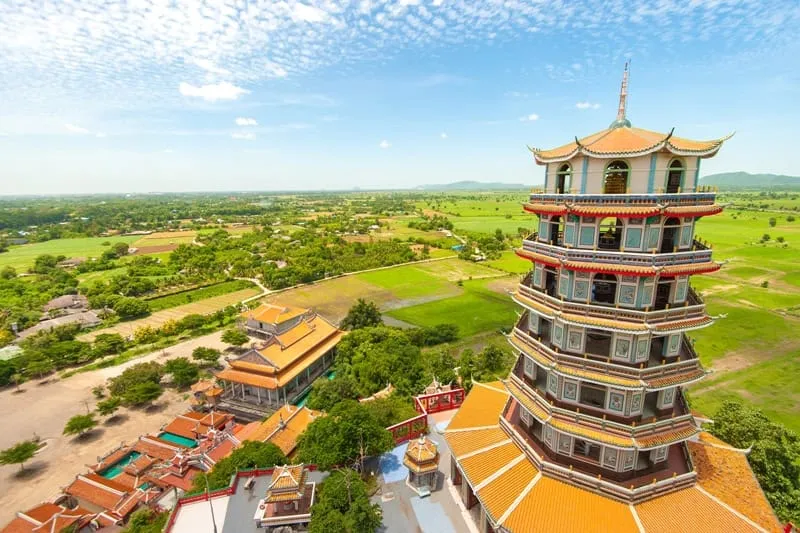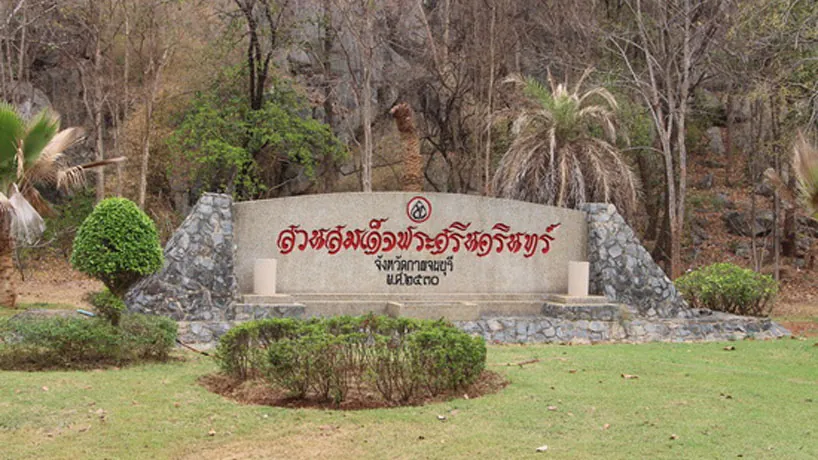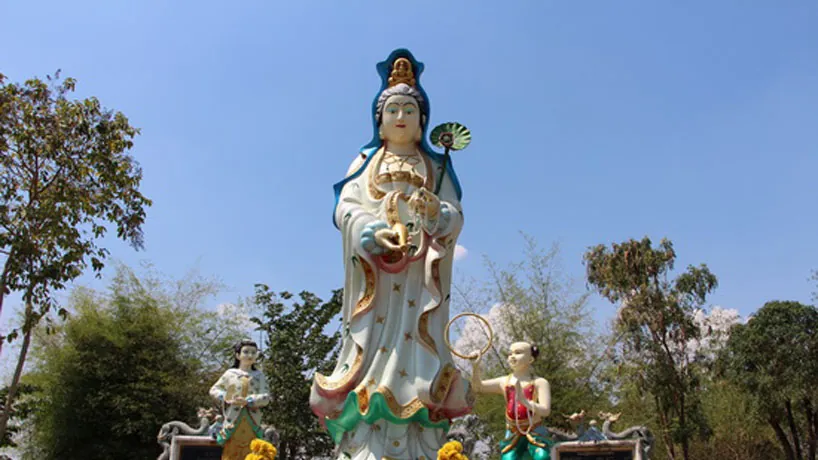




A dragon’s open mouth is the way into Wat Ban Tham’s main cave shrine — a staircase built with red steps as the tongue and green, scale-patterned railings on either side, climbing 269 steps in total (114 from the dragon’s head to its mouth, another 105 from mouth to tail) before a final 50 steps drop into the cave chamber itself. Locals call the cave Kuha Mangkorn Sawan, the Dragon Abode Heaven Cave, and the effect at the top is real: you walk through the dragon’s jaws and emerge inside the mountain.
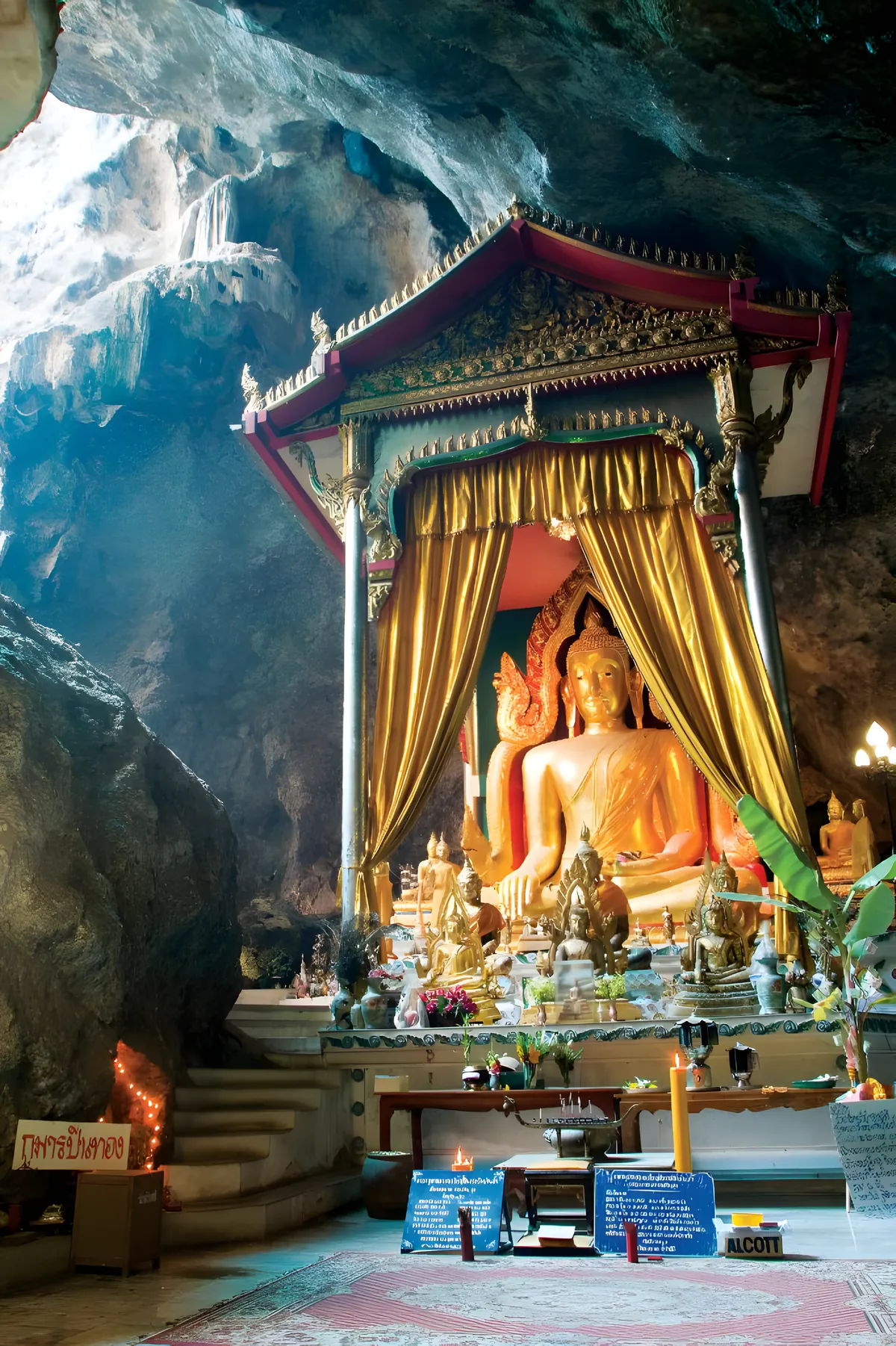
Inside, the principal Buddha image — Luang Pho Yai Chinnarat — sits in the Maravijaya posture (the Buddha touching the earth to call it as witness against Mara’s temptations), a Sukhothai-era work with a chest reportedly around 8 cubits wide, roughly 4 metres across. It’s a seated image, not reclining, despite what older write-ups of the temple sometimes claim. A natural skylight opening in the cave ceiling lets daylight and air circulate through the chamber, and the limestone mountain housing it rises about 200 metres behind the temple buildings — with the Mae Klong River running along the front, not the Khwae Noi further west.
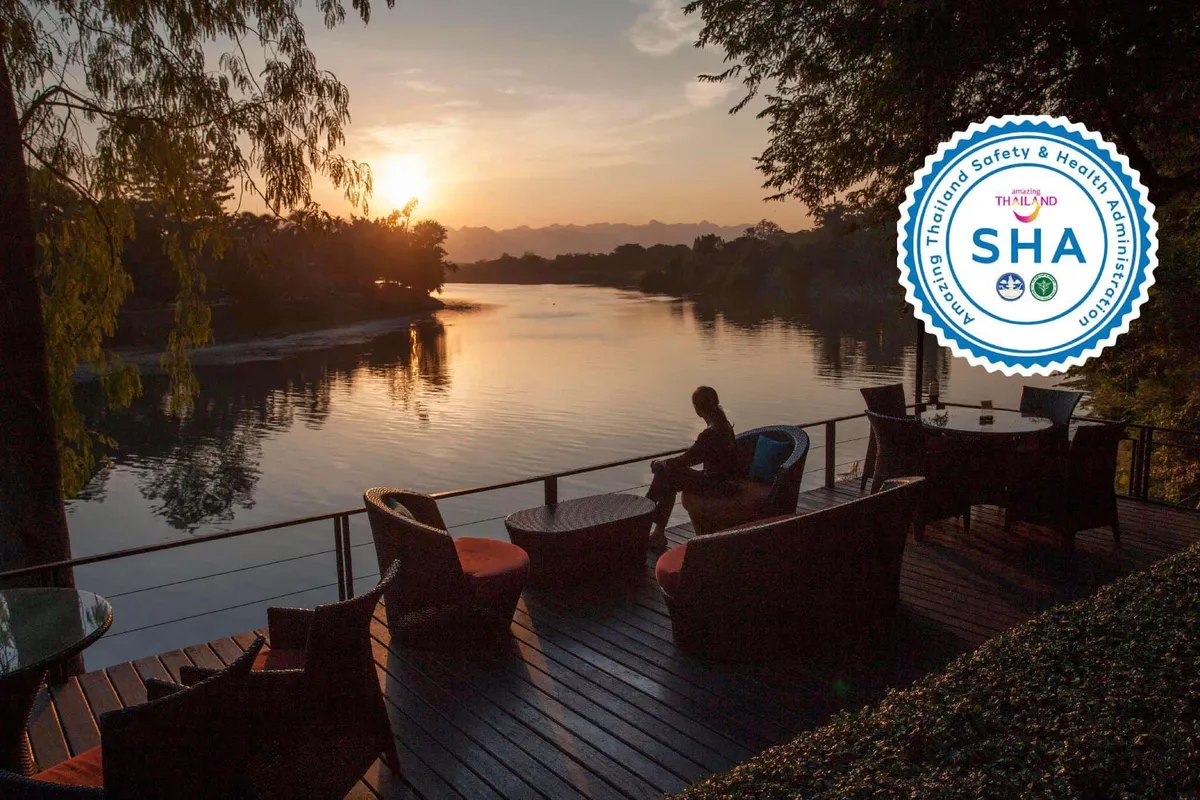
The temple’s name — Wat Ban Tham, “cave village temple” — reflects how closely daily life here has always sat against the karst: the mountain and river together define the site more than any single building does. Outside the cave, standard Thai temple structures with red-tiled roofs sit at the base, and the riverside stretch in front makes a natural spot to rest before or after the climb.
- Entry fee: Free
- Hours: Daily 07:30–17:00
- Steps to the cave: 269 (114 head-to-mouth, 105 mouth-to-tail, 50 down into the cave)
- Main image: Luang Pho Yai Chinnarat, seated Maravijaya posture, Sukhothai era
- Setting: Limestone mountain (~200m) backing onto the Mae Klong River
Insider Tip: The dragon-mouth staircase gets full sun through the middle of the day — climb before 9am or after 4pm if the heat, not the steps, is what’s likely to slow you down.
Watch out: 269 steps with no shade for long stretches is a real climb, not a stroll — pace it, especially in the hot season, and skip it if mobility on uneven stone stairs is a concern.
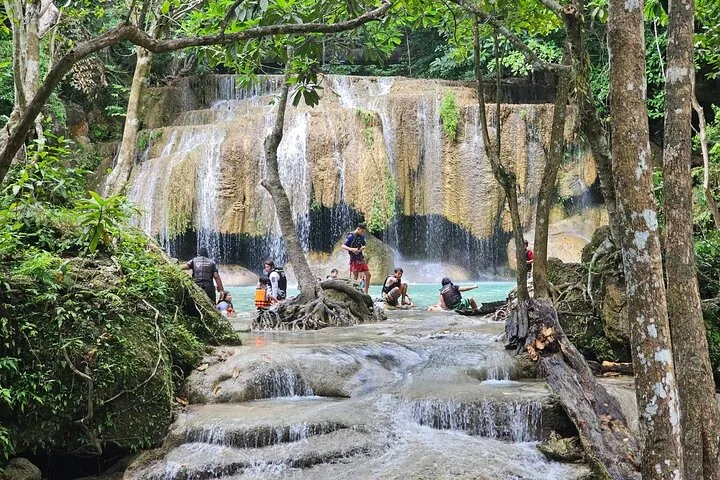
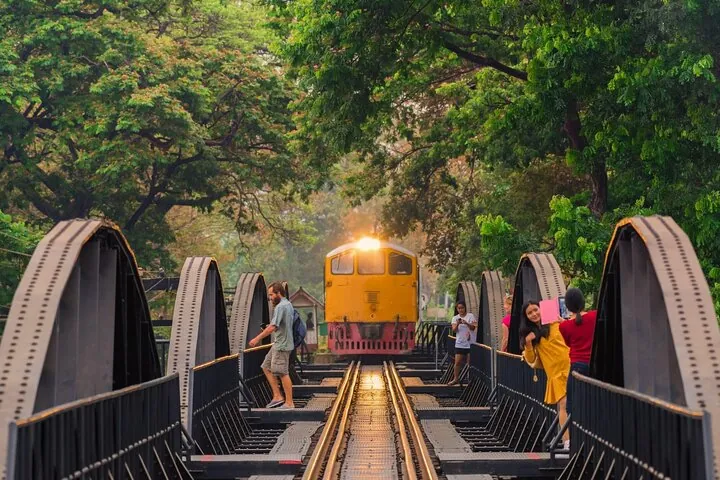
Wat Ban Tham fits well into a day that also covers Kanchanaburi’s river-town sights — the Death Railway Bridge and Erawan or Sai Yok waterfalls are both within reasonable driving distance, and the temple works better as a mid-route stop than a dedicated half-day trip on its own. Dress modestly (shoulders and knees covered) before starting the climb, since there’s no changing area at the base, and remove shoes before entering the cave chamber itself.
Location & Directions
Tha Muang, Kanchanaburi
Kanchanaburi, Thailand
Show your taxi or Grab driver
วัดบ้านถ้ำ
Frequently Asked Questions
Is the main Buddha image at Wat Ban Tham reclining or seated?
How many steps are there to the cave?
Why is the staircase shaped like a dragon?
What river does the temple face?
How do I get there from Kanchanaburi town?
Spotted something out of date or incorrect? Let us know
Popular tours in Kanchanaburi

![Erawan Waterfall and Kanchanaburi Private Tour [Optional Luxury]](https://images.thaiholidayguide.com/images/tours/erawan-waterfall-and-kanchanaburi-private-tour-optional-luxury.webp)



Stay Near Wat Ban Tham
Compare places to stay in Kanchanaburi, or open the map for options closest to the attraction.