

National Museum
พิพิธภัณฑสถานแห่งชาติ พระนคร
Thailand’s largest museum sits on Na Phrathat Road opposite Sanam Luang in Bangkok’s Rattanakosin old town — nine connected exhibition halls covering prehistory through the Rattanakosin era, inside the former Front Palace of the deputy king. Entry is 200 THB for foreigners, 30 THB for Thai nationals, and the museum is open Wednesday to Sunday, 09:00-16:00.
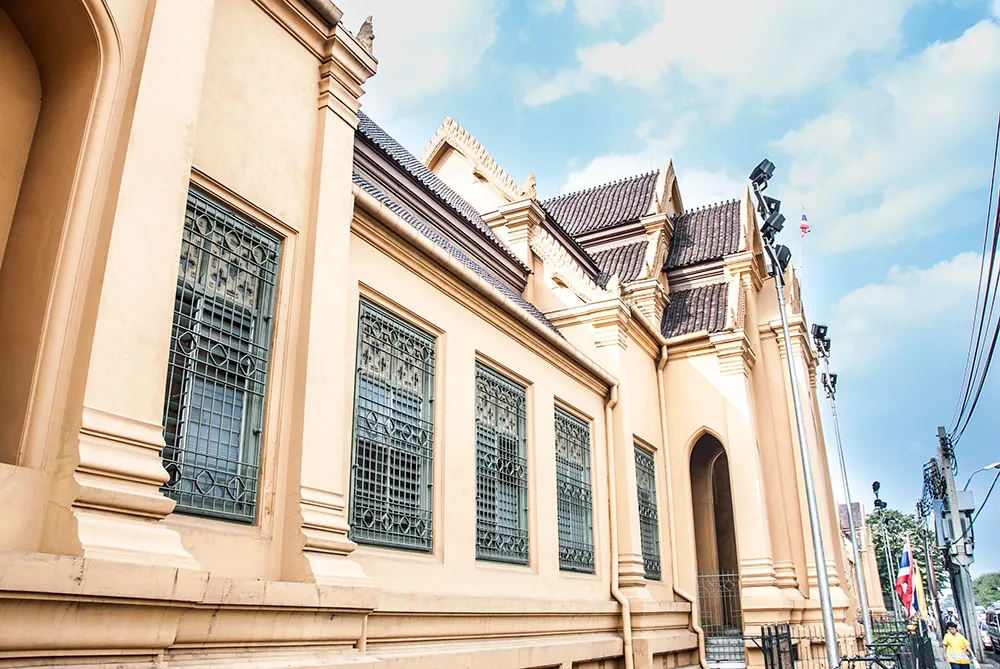
King Rama IV first kept a private royal collection at the Grand Palace. His son, King Rama V, opened it to the public in 1874, and in 1887 the growing collection moved to its current site: the Wang Na, or Front Palace, originally built in 1782 as the residence of the deputy king (the “Front Palace” title and its holders were abolished in 1887, freeing up the buildings). That royal residence — a cluster of Early Rattanakosin-era halls, not one purpose-built museum block — is why the visit feels like moving through a small palace complex rather than a single modern gallery.
The Thai History Gallery, in the Siwamokhaphiman Hall at the front of the complex, walks through the country’s story from the Sukhothai and Ayutthaya kingdoms to the founding of Bangkok. Behind it, the Prehistorical Gallery covers finds that predate written Thai history by thousands of years. The two Historical Period buildings — Mahasurasinghanat and Prapatphiphitthaphan — arrange Buddhist and Hindu sculpture chronologically: Dvaravati and Srivijaya first, then Lopburi, then the long run from Sukhothai through Ayutthaya to Rattanakosin. It’s the clearest single-site introduction to how Thai art style actually changed over a thousand years, and it’s the reason art history students get sent here before anywhere else in the country.
The building most people remember afterward is the Buddhaisawan Chapel, a 1795 royal temple inside the museum grounds that still functions as consecrated space — shoes off, no photography of the main image. It houses the Phra Phuttha Sihing, one of Thailand’s three most revered Buddha images (after the Emerald Buddha and Phra Phuttha Chinnarat), and its walls carry some of the best-preserved Rattanakosin-period murals in the country. Nearby, the Cremation Chariot Hall holds the royal funeral chariots used to carry Thai monarchs to their cremation grounds — the largest, the Phra Maha Phichai Ratcharot (Great Victory Chariot), was built in 1795, weighs 13.7 tonnes, and carried King Bhumibol’s royal urn through Sanam Luang during his 2017 cremation procession.
- Entry fee: 200 THB (foreigners), 30 THB (Thai nationals)
- Hours: Wed-Sun 09:00-16:00, last entry ~15:30. Closed Mon-Tue
- Getting there: MRT Sanam Chai (10-15 min walk) or Chao Phraya Express Boat to Tha Chang pier
- Dress code: Shoulders and knees covered — the Buddhaisawan Chapel is an active religious space
- Duration: 2-3 hours for the main halls
Insider Tip: English-language guided tours run on Wednesday and Thursday mornings at 09:30, free with your entry ticket — worth timing a visit around if you want context on the funeral chariots and Buddhaisawan murals rather than reading every label yourself.
Watch out: The museum has no air conditioning in several of the older halls, particularly the Decorative Arts wing. Visit in the cooler morning hours if you’re doing the full circuit — by early afternoon the un-air-conditioned buildings get uncomfortable.
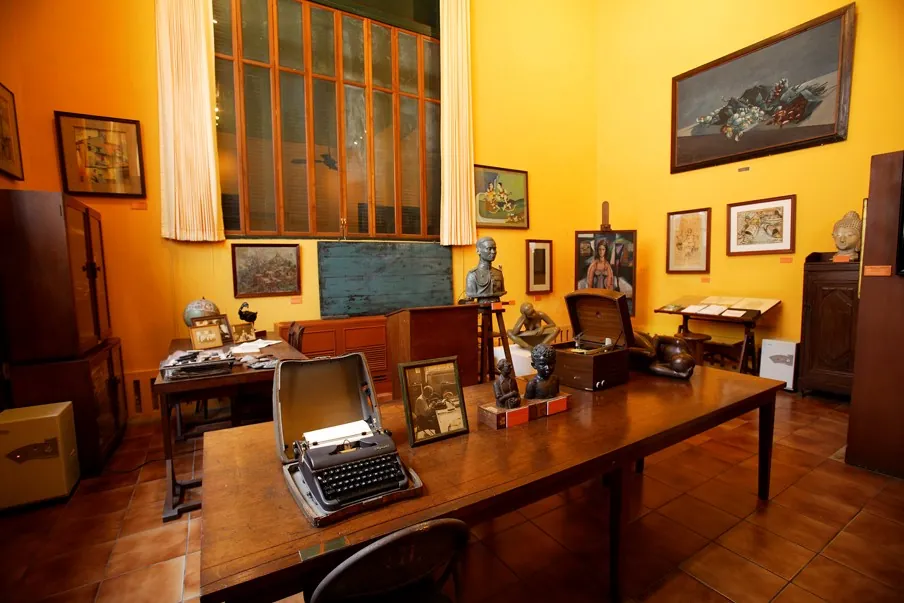
The Decorative Arts and Ethnological Collection, in the old central palace buildings, is worth the extra time if you’ve got it: gold royal regalia, mother-of-pearl inlay, court costume and textiles, carved ivory, antique weapons, Khon mask sets, and shadow puppets. This is also where the museum’s scope narrows correctly — it’s a Bangkok museum about Thai national history, not a venue for provincial or regional collections, which have their own dedicated museums around the country.
Location & Directions
4 Na Phrathat Road
Bangkok, Thailand
Show your taxi or Grab driver
พิพิธภัณฑสถานแห่งชาติ พระนคร
Frequently Asked Questions
How much does the Bangkok National Museum cost to enter?
What are the opening hours?
Is this the same museum as the Grand Palace?
How long do you need to see it properly?
How do you get there?
Spotted something out of date or incorrect? Let us know
Popular tours in Bangkok




Stay Near National Museum
Live prices for places closest to National Museum — tap a pin to compare.