




Pattani City Pillar Shrine
ศาลหลักเมือง
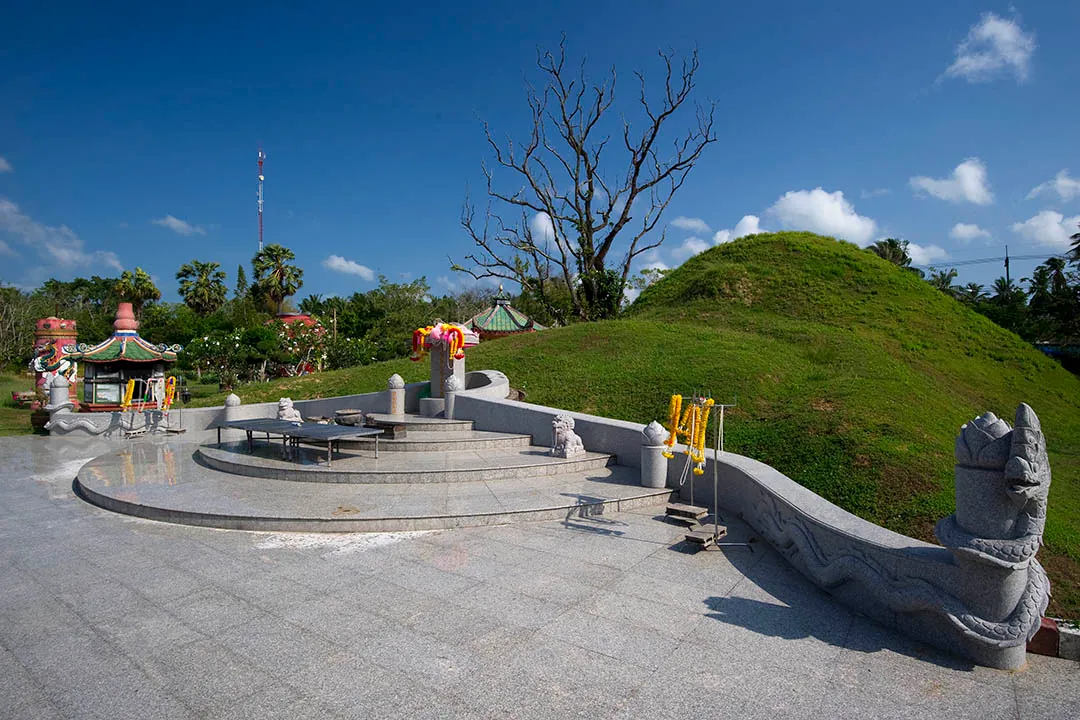
Pattani’s City Pillar Shrine (San Lak Mueang) holds the lak mueang — the ceremonial foundation pillar believed to anchor the city’s fortune — in a small pavilion on Yarang Road, in the Sak Senee area of Sabarang subdistrict next to Benchamrachuthis School. It’s a Hindu-Brahmin tradition rather than a Buddhist one: nearly every Thai provincial capital has an equivalent shrine, and Pattani’s was built on 13 May 1951 under governor Phraya Rattana Phakdi, with the city’s auspicious name given by the Supreme Patriarch of Wat Saket in Bangkok. Entry is free, daily from 07:00 to 18:00.
The pavilion itself is built in Srivijaya architectural style, reflecting the maritime trading-kingdom influence that shaped much of the historic Malay peninsula, rather than the Lanna or Rattanakosin styles more familiar from central and northern Thailand. Locals come to pay respects to the pillar and to mark civic occasions rather than for daily merit-making — there’s no image hall, no resident monks, and no chanting schedule. It functions as a quiet civic-spiritual landmark rather than a working monastery, which makes for a shorter, more low-key visit than a major wat.
Watch out: Don’t expect the scale or crowds of Bangkok’s Lak Mueang shrine — this is a modest provincial pavilion, and a visit realistically takes 15-20 minutes rather than a half-day outing.
Safety Tip: Pattani is one of Thailand’s three southernmost “Deep South” provinces, where a long-running separatist insurgency has led most Western governments to issue travel advisories, generally urging caution and awareness of the situation in Yala, Pattani, and Narathiwat. Mueang Pattani, the district that holds the provincial capital and this shrine, sees markedly less unrest than some outlying districts, but check your government’s current travel advice before visiting, avoid isolated areas after dark, and travel during daylight hours as a general precaution.
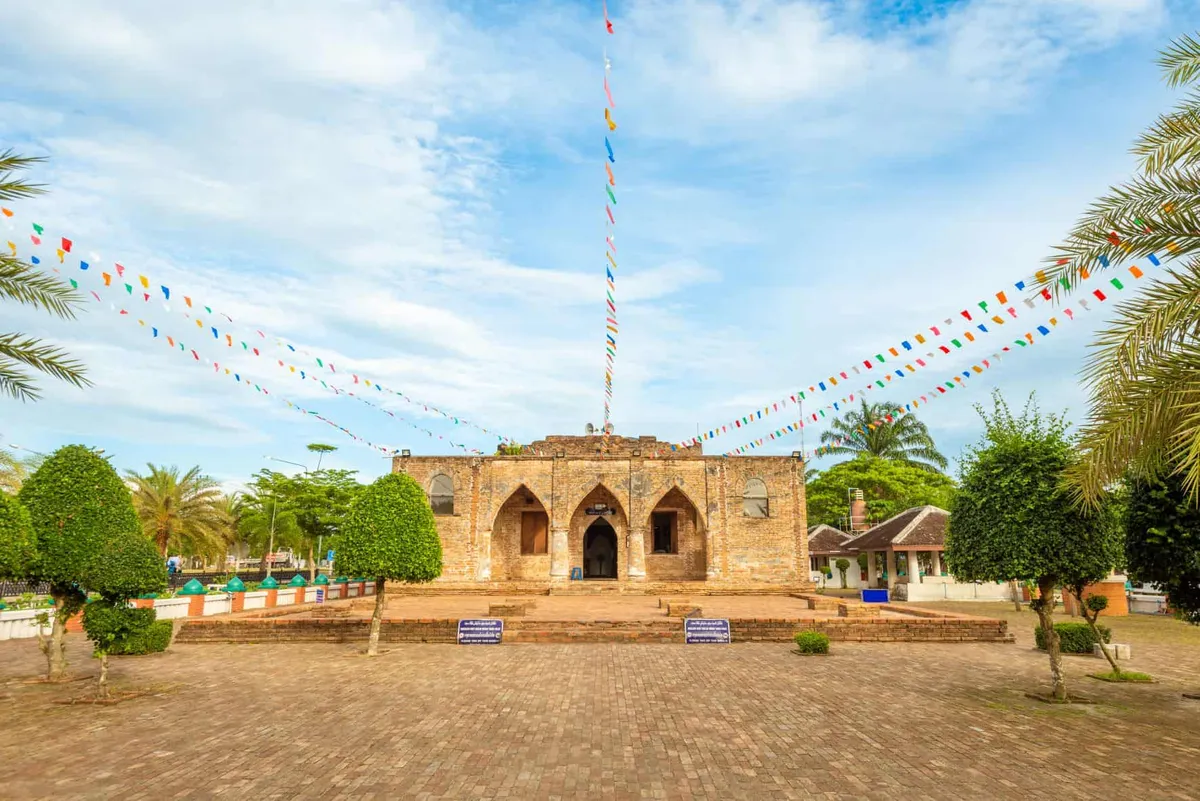
The shrine sits a short distance from Krue Se Mosque, one of Pattani’s oldest and most storied religious sites, and from the Lim Ko Niao Shrine, a Chinese shrine with its own centuries-old founding legend — together they give a fair cross-section of the layered Malay-Muslim, Chinese, and Thai-Buddhist heritage that defines Pattani city.
- Entry fee: Free
- Hours: Daily 07:00-18:00
- Built: 13 May 1951 (2494 BE)
- Style: Srivijaya architecture, Hindu-Brahmin lak mueang tradition
- Nearby: Krue Se Mosque, Lim Ko Niao Shrine
Location & Directions
Yarang Road
Pattani, Thailand
Show your taxi or Grab driver
ศาลหลักเมือง
Frequently Asked Questions
Is the City Pillar Shrine a Buddhist temple?
When was it built and why?
Is it free to visit?
What should visitors wear or do?
Is Pattani safe to visit right now?
Spotted something out of date or incorrect? Let us know
Stay Near Pattani City Pillar Shrine
Live prices for places closest to Pattani City Pillar Shrine — tap a pin to compare.