
Sanam Chandra Palace
พระราชวังสนามจันทร์
Sanam Chandra Palace is closed to sightseeing. King Vajiravudh’s 1907-1911 retreat has been under a phased, royal-supervised restoration since January 2022 (the current phase covers 40 buildings and runs to around June 2027) and the residences, the Ya Lae dog statue area, and the Ganesha shrine all sit behind restoration fencing. What remains open, free, are the outer grounds, in two daily exercise-walk windows (roughly 05:00-08:30 and 16:00-20:00) via a side gate. No reopening date for the palace itself has been announced; local sources expect visits to resume in 2028.
What’s happening to the palace
The restoration is a serious, long-arc project rather than routine maintenance: phase one covered 18 buildings between January 2022 and August 2024, and the current phase covers 40 more through mid-2027, coordinated by the Chulabhorn Research Institute with the Fine Arts Department, the Department of Public Works, the Ministry of Interior, and Silpakorn University. The palace has been administered by Nakhon Pathom Province since 2018, when the land deed passed back from the Bureau of the Royal Household, so the province’s own announcements are the ones to watch for a reopening date.
Before planning any visit, check the current status: aggregator listings still showing 50 THB tickets and 09:00-16:00 hours describe the pre-2022 visiting regime and are stale.
Why it will be worth the wait
King Vajiravudh (Rama VI) built Sanam Chandra between 1907 and 1911 as a personal retreat outside Bangkok, and it shows a more domestic side of the monarchy than the Grand Palace does. He bought roughly 888 rai (about 350 acres) around Noen Prasart hill and used the finished palace as his personal quarters, study, and audience chamber, and as a training ground for the Wild Tiger Corps, the paramilitary volunteer unit he founded. The name comes from a pond on the grounds, “Sa Nam Chand” (Moon Pond), and the king reportedly planned the complex to double as a fortified retreat in a national emergency.
Vajiravudh was Thailand’s most literary king, and Sanam Chandra is where much of that output happened: he wrote the play Thao Saen Pom and a Thai translation of Romeo and Juliet here, working from an upstairs office kept specifically to escape court duties in Bangkok.
The architectural draw is the mix of styles. The Bhimarn Prathom Residence is brick-and-cement in a Western style adapted for the Thai climate: deep eaves, elevated floors, cross-ventilation. The standout is the Chaliemongkolasana Residence, built in 1908 in a blend of French Renaissance and English half-timber styles, often described as a small European castle dropped into a Thai royal compound. It was first named Phra Tamnak Lae after Ya Lae, the king’s dog, then renamed in 1915 for the protagonist of My Friend Jarlet, the same play the dog was named after. The bronze Ya Lae statue the king had cast after the dog’s death still stands in front of it, inside the restoration zone.
Watch out: Don’t arrive expecting even exterior photography of the main residences. The restoration fencing encloses the building zone, and access is limited to the outer grounds during the exercise windows.
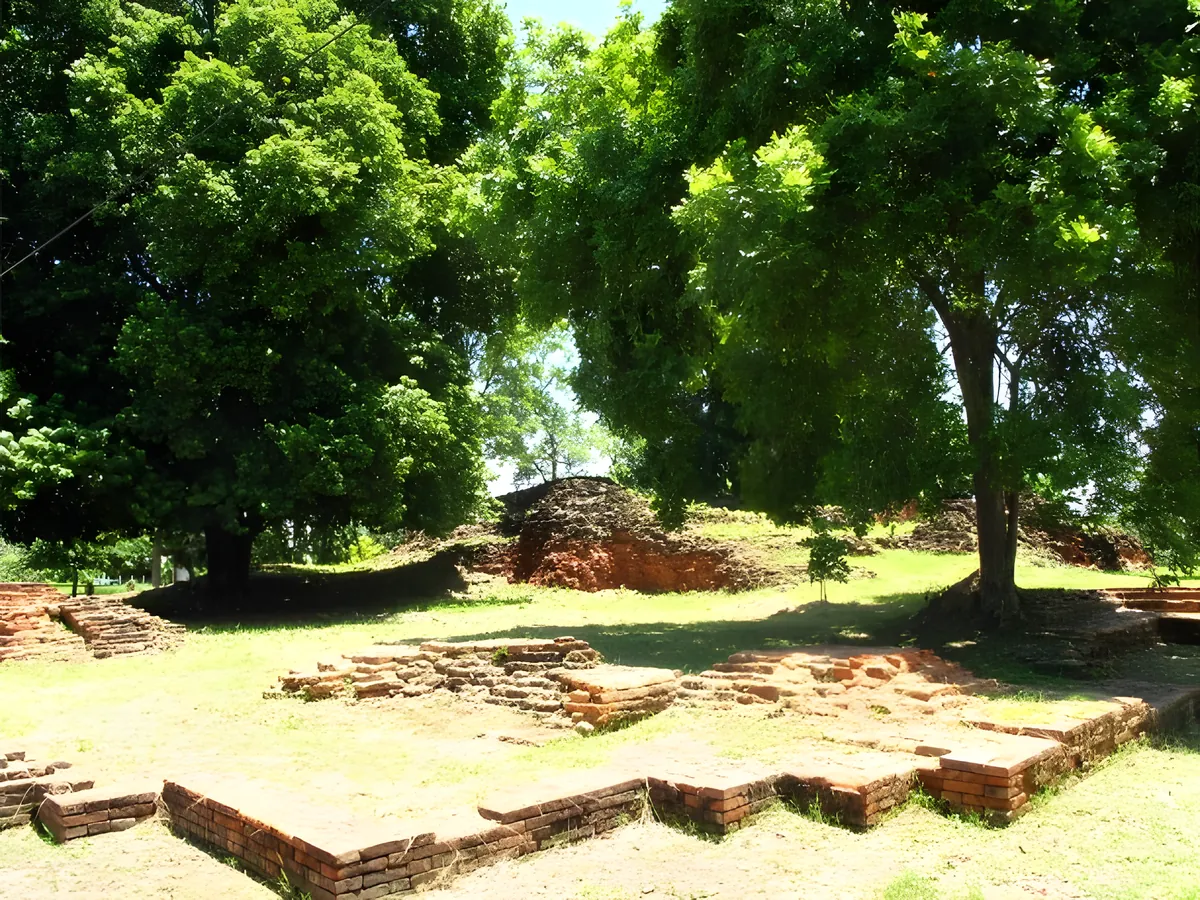
Insider Tip: If you’re in Nakhon Pathom at dawn or in the late afternoon anyway, the free exercise window is a pleasant, shaded walk among mature trees with the town’s runners and walkers. Just treat it as a park, not a palace visit.
Practical information
The palace sits in Mueang Nakhon Pathom, a short distance from Nakhon Pathom town’s real open anchor, Phra Pathom Chedi (Thailand’s tallest stupa) which still justifies the day trip from Bangkok by train, minivan, or car (around 56 km west of the capital) on its own. The Western Thai Culture Institute, a small Silpakorn University museum on the university side of the palace grounds, stays reachable on weekdays.
- Status: Closed for restoration. Current phase (40 buildings) runs to ~June 2027; no reopening date announced (locally expected 2028)
- Grounds: Open free for exercise walks, roughly 05:00-08:30 and 16:00-20:00 daily, via a side gate
- Built: 1907-1911, under King Vajiravudh (Rama VI)
- Architectural mix: Thai royal halls alongside French Renaissance/English half-timber (Chaliemongkolasana Residence)
- Getting there: ~56 km west of Bangkok, near Phra Pathom Chedi
Location & Directions
Mueang Nakhon Pathom, Nakhon Pathom
Nakhon Pathom, Thailand
Show your taxi or Grab driver
พระราชวังสนามจันทร์
Frequently Asked Questions
Is Sanam Chandra Palace open to visitors?
When will the palace reopen?
Can I still walk the grounds?
What's the story behind the dog statue?
Is anything similar open nearby?
Spotted something out of date or incorrect? Let us know
Stay Near Sanam Chandra Palace
Live prices for places closest to Sanam Chandra Palace: tap a pin to compare.