




Noen Dhamma Sala
เนินธรรมศาลา
Noen Dhamma Sala is a Dvaravati-era mound on the grounds of Wat Thammasala in Nakhon Pathom, one of a cluster of brick ruins scattered through the district from the same archaeological period. Records place it as contemporary with Noen Phra (Noen Yai Hom) and Phra Prathon Chedi - both roughly 6th- to 8th-century structures - making this one part of a small trail of early Buddhist sites rather than an isolated ruin.
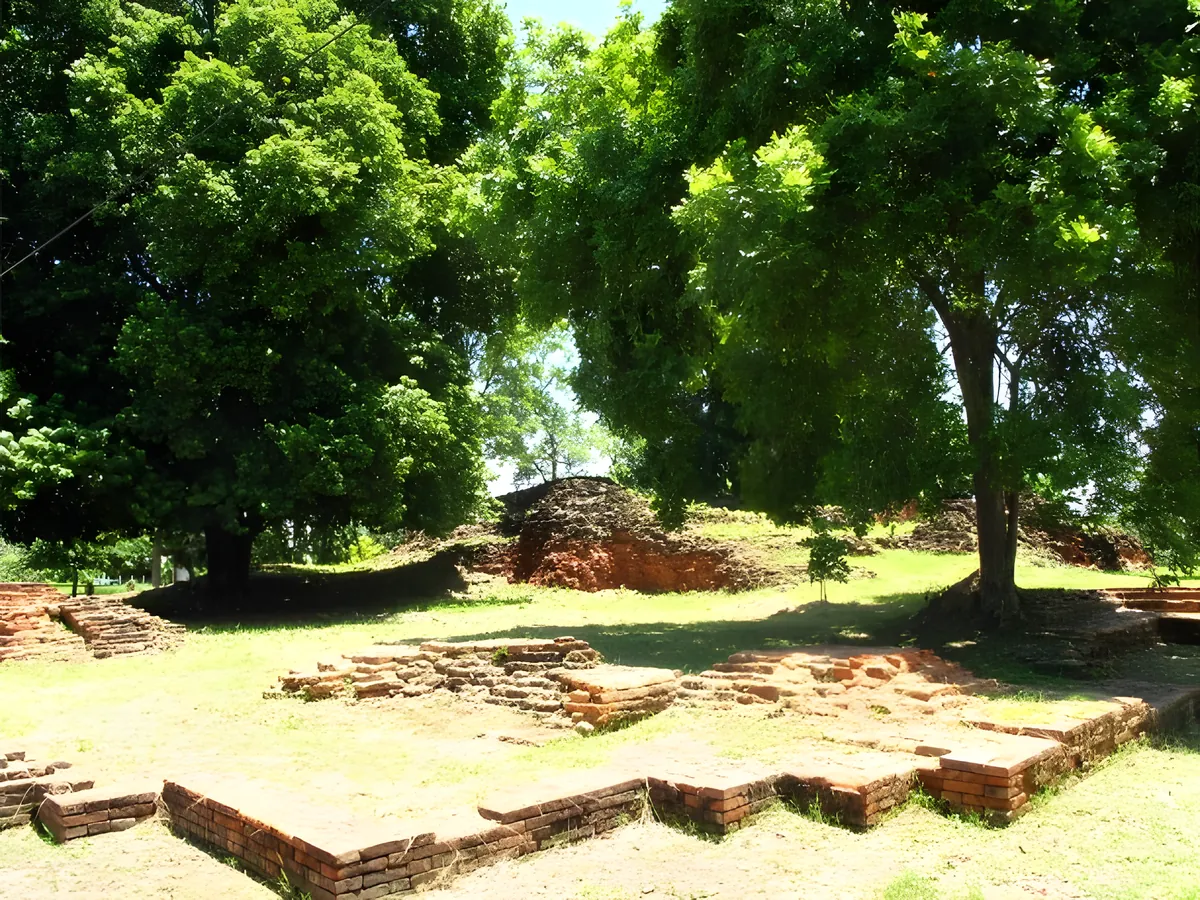
What survives is modest: raised earthen mounds and scattered fragments of broken brick trace the outline of a structure built from brick, mortar, and laterite, with stucco decoration once applied at its base. At the front of the mound, a deep, cave-like hollow exposes more of the buried brickwork below - past surveys found stucco fragments here depicting deity or Buddha figures among the debris. There’s no reconstructed building or visitor centre; this is a genuine, unrestored ruin rather than a polished monument, so go in with that expectation.
The site’s name comes from “Thammasala,” meaning dharma hall, and it appears in the traditional legend of Phra Pathom Chedi - a detail that ties it into Nakhon Pathom’s wider mythology around the province’s most famous stupa. As with similar legends attached to other mounds nearby, treat the story as local tradition rather than settled history; the more solid evidence is the Dvaravati-period brickwork itself.
French archaeologist Pierre Dupont carried out an early survey of the ruins, and Thailand’s Fine Arts Department later documented and restored sections, including work recorded in 1964. The site wasn’t formally excavated until 2012, which is recent by the standards of Nakhon Pathom’s Dvaravati sites and suggests there’s more here that hasn’t been fully studied.
Insider Tip: This is a site for people already curious about Dvaravati archaeology rather than a standalone attraction - pair it with Noen Phra and Phra Prathon Chedi for a short loop through the same period rather than making a special trip for this mound alone.
The grounds sit within Wat Thammasala, so treat it with the same basic respect as any active temple site - modest dress and quiet conduct are appropriate even though the ruins themselves see few visitors. There’s little shade over the excavated area, so bring water and sun protection, particularly around midday.
- Entry fee: Free
- Hours: Daily 06:00-18:00 (temple grounds)
- What survives: Earthen mounds, broken brick, and a hollow exposing further brick and stucco fragments below
- Period: Dvaravati era, roughly 6th-8th century CE
- Contemporary sites: Noen Phra (Noen Yai Hom) and Phra Prathon Chedi, both elsewhere in Nakhon Pathom district
Location & Directions
Moo 7
Nakhon Pathom, Thailand
Show your taxi or Grab driver
เนินธรรมศาลา
Frequently Asked Questions
What is Noen Dhamma Sala?
Is there an entrance fee?
What can you actually see at the site today?
Who has studied the ruins?
How does the name connect to the Phra Pathom Chedi legend?
Spotted something out of date or incorrect? Let us know
Stay Near Noen Dhamma Sala
Live prices for places closest to Noen Dhamma Sala — tap a pin to compare.