




Suthewa Hermit
อนุสาวรีย์สุเทวฤาษี
Suthewa Hermit is a statue, not a temple or cave complex — a monument to the ascetic credited in Lanna chronicles with founding Lamphun. According to the legend, the hermit Suthewa Ruesi invited Princess Chamadevi of Lopburi to cross the mountains in 661 CE and take the throne of the new city of Hariphunchai, helping her establish Theravada Buddhism in what’s now Lamphun province.
The statue depicts the hermit in classic ruesi form — bearded, seated, robed in animal skin, holding a staff — the same iconography seen at hermit shrines elsewhere in the north (Doi Suthep’s own founding legend credits a different hermit, Vasudeva, with naming that mountain). Older accounts place the statue in front of Lamphun’s provincial hall; its exact site has shifted over the decades as the town has redeveloped, and it now stands within Mueang Lamphun district. Devotees still stop to lay garlands, pour scented water, or leave small offerings at the base — particularly ahead of exams, job interviews or other undertakings where a founder’s blessing feels useful.
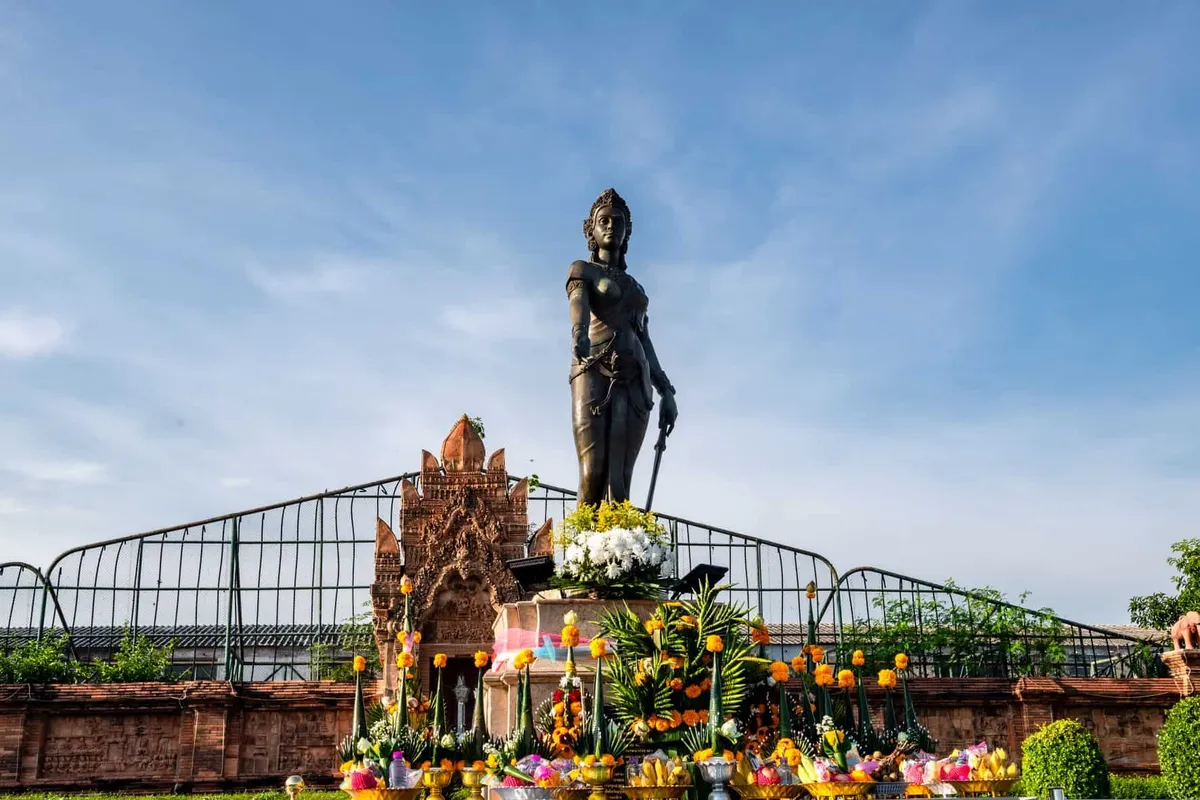
Chamadevi herself is the bigger figure in Lamphun’s civic memory — her own statue and shrine stand elsewhere in town, and she’s still credited as the queen who turned Hariphunchai into a genuine Buddhist power base in the Mon-speaking north. The hermit’s role in that story is smaller but foundational: without Suthewa Ruesi’s invitation, according to the chronicles, she never crosses the mountains from Lopburi at all. That’s the context worth knowing before you stop here — this monument rewards five minutes and a bit of backstory more than it rewards a long visit.
There’s no queue, no ticket booth, and no set visiting ritual — this is a roadside public monument you can appreciate in five minutes on the way to or from somewhere else in town. Insider Tip: pair the stop with Wat Phra That Hariphunchai and the Hariphunchai National Museum nearby — together they tell the same founding story from three angles: myth (the hermit), faith (the temple), and archaeology (the museum’s Hariphunchai-era artifacts).
Free to visit, with no fixed hours since it’s an open-air public monument. Songthaews running through Mueang Lamphun pass close by, and a tuk-tuk from the town centre is a five-minute ride. Watch out: don’t confuse this with an actual hermit cave or hillside retreat — despite the name, there’s no cliff, cave chamber or climb involved, just a statue and a small offering area at street level.
- Entry fee: Free
- Hours: Open-air public monument, no fixed hours
- What it is: A statue honouring Suthewa Ruesi, the legendary hermit credited with founding Lamphun (Hariphunchai) in 661 CE
- Nearby: Wat Phra That Hariphunchai and Hariphunchai National Museum, both a short ride away
- Getting there: Mueang Lamphun district; reachable by songthaew or tuk-tuk from town centre
Location & Directions
Moo 2
Lamphun, Thailand
Show your taxi or Grab driver
อนุสาวรีย์สุเทวฤาษี
Within Walking Distance




Frequently Asked Questions
Is Suthewa Hermit an actual cave or hillside site?
Who was Suthewa Ruesi?
Is there an entry fee?
How do I get there from Lamphun town centre?
What else should I see nearby?
Spotted something out of date or incorrect? Let us know
Stay Near Suthewa Hermit
Compare places to stay in Lamphun, or open the map for options closest to the attraction.