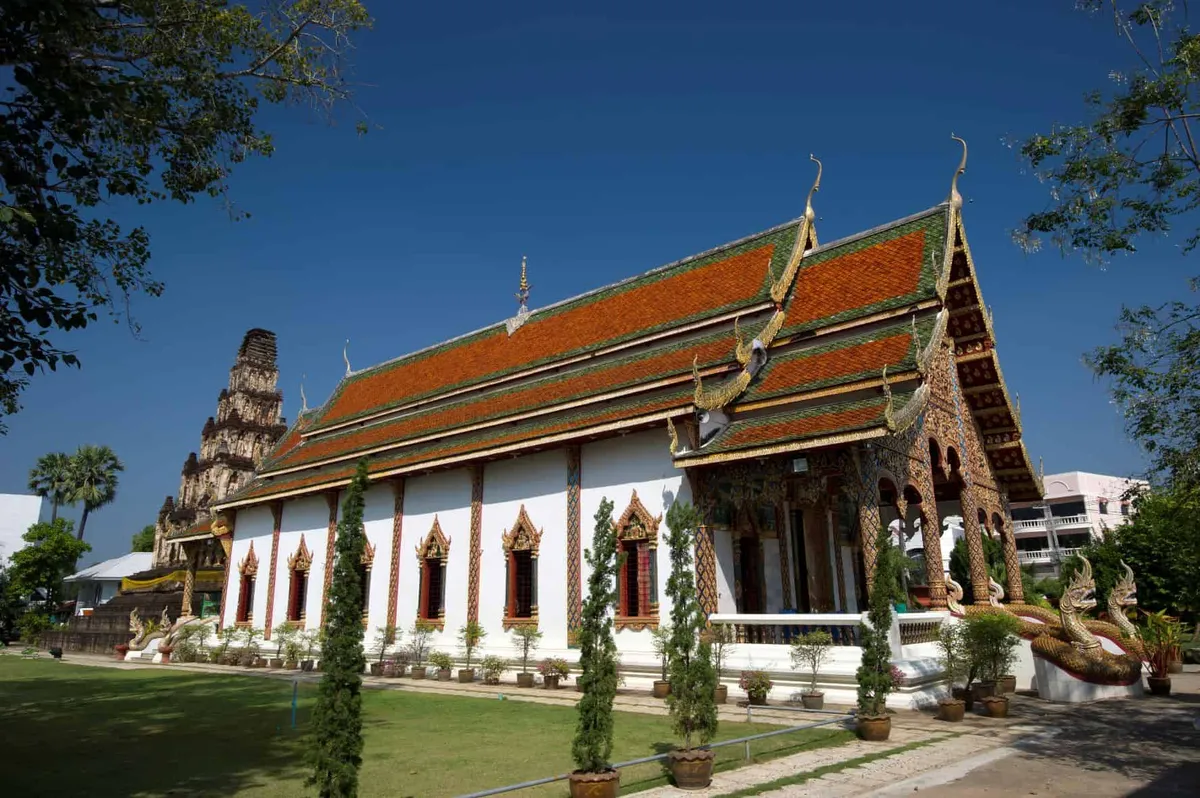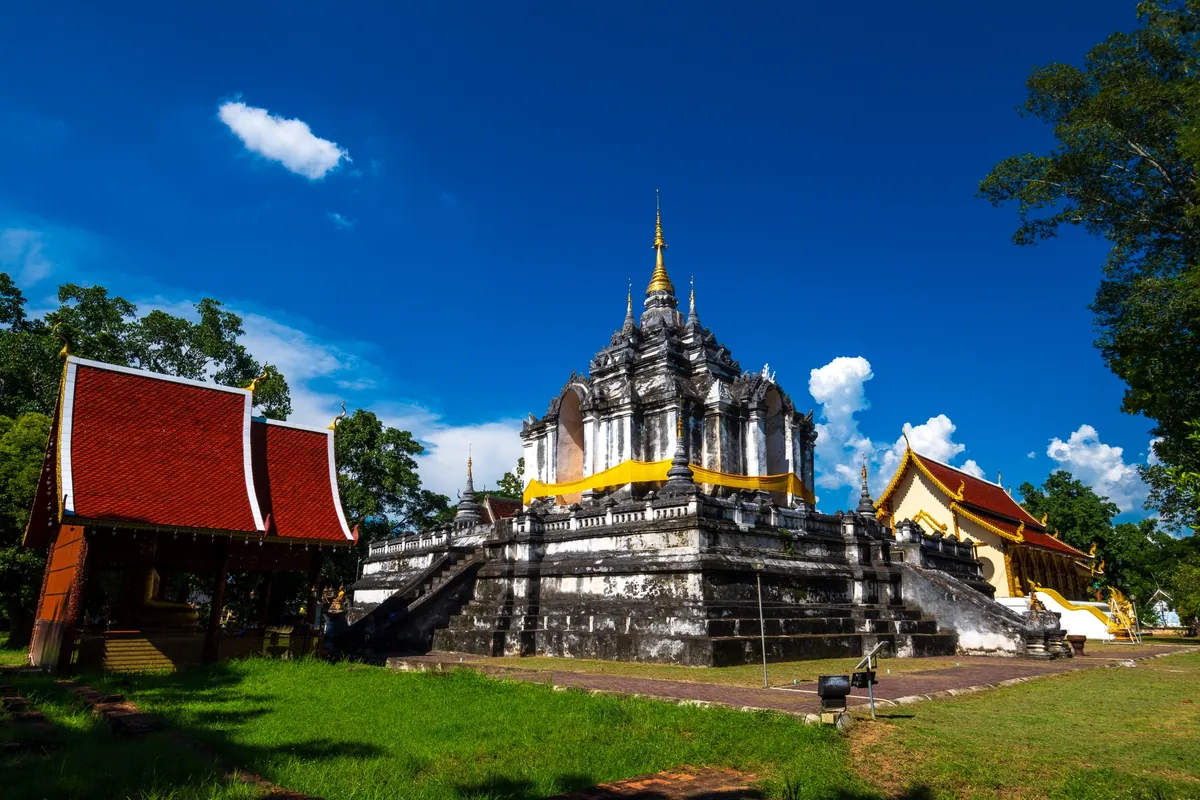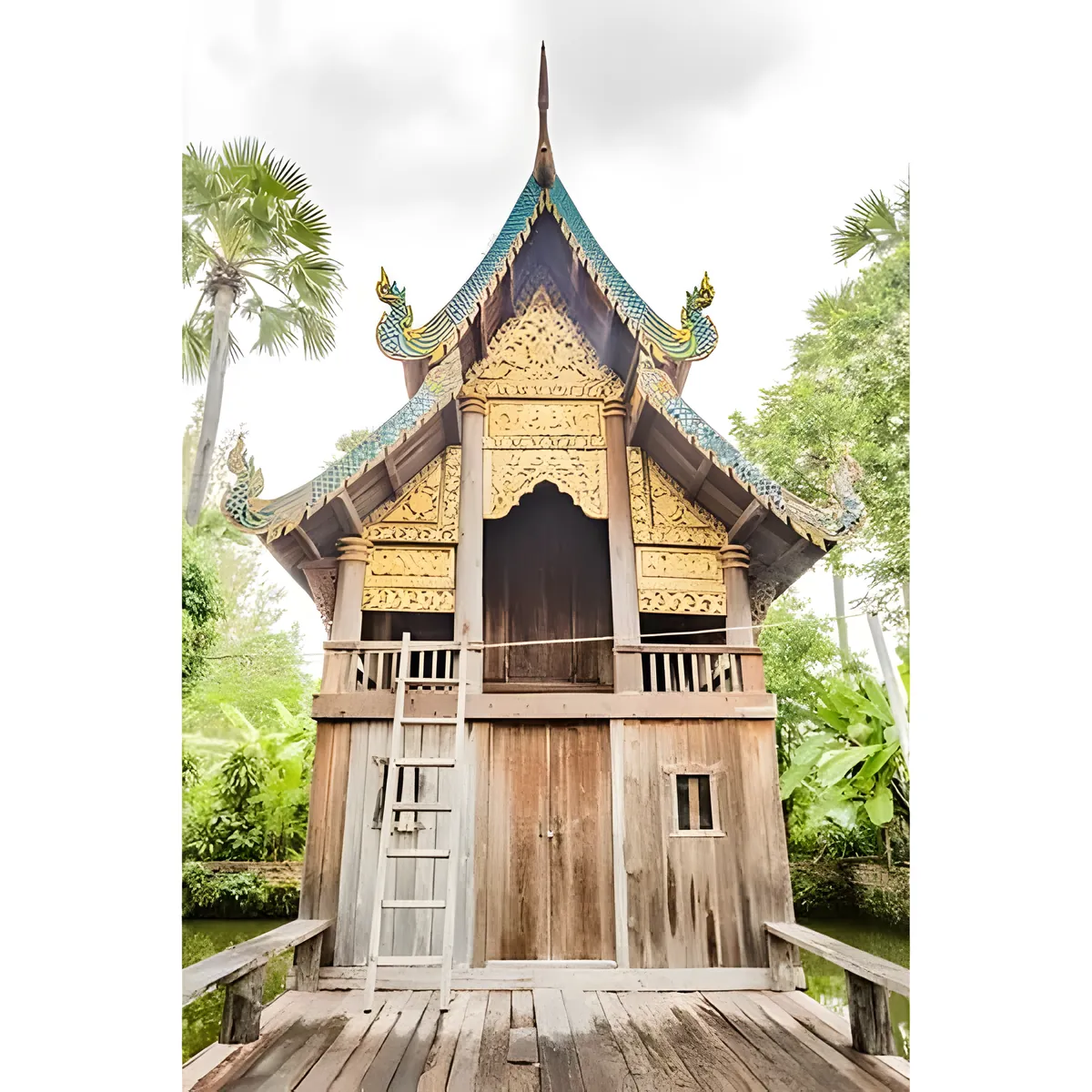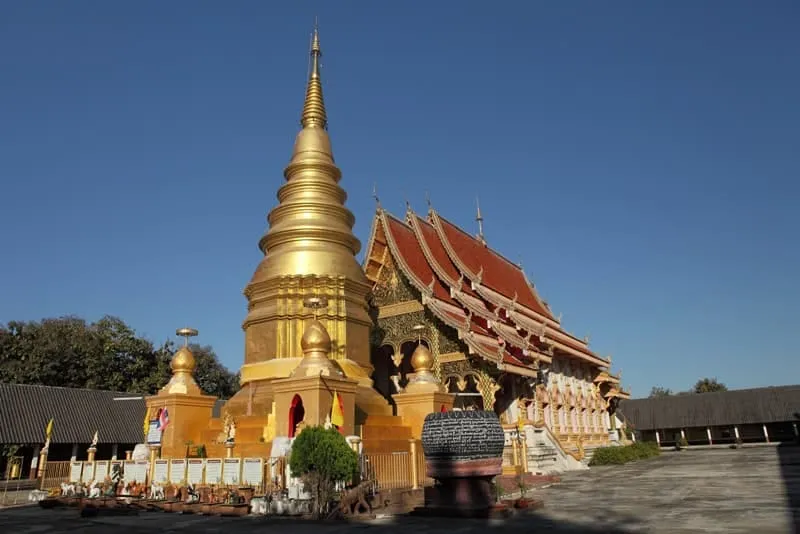


Prakong Ruesi Temple — Wat Phra Khong Ruesi — sits on the north side of Lamphun town, next to the provincial police station, and traces its origin to the reign of Queen Chamadevi, who founded the city of Hariphunchai here in the 7th century. It’s free to visit, with no fixed hours beyond ordinary daylight temple etiquette.
The temple is one of Lamphun’s four “corner temples,” a set Chamadevi is said to have founded to guard the four points of the old city: this one on the north, Wat Pratu Li to the south, Wat Don Kaew to the east, and Wat Mahawan to the west. Each corner has its own guardian hermit in local tradition — this temple’s is Sudeva (also written Vasudeva) Ruesi, the same ascetic credited elsewhere in Lamphun lore with inviting Chamadevi across the mountains from Lopburi to found the city in the first place, honoured separately at the Suthewa Hermit monument in town. Originally built as a residence for monks under the name Wat Aphatthram, the temple later took its popular name from the “Phra Khong” amulet — a small terracotta Buddha figure in the Maravijaya pose, dated to roughly the 16th-17th Buddhist century (around 1,300 years old) — excavated from the grounds. Phra Khong ranks among the most collected of Lamphun’s ancient amulet series, alongside Phra Rod and Phra Bang from the city’s other corner temples.
Insider Tip: the amulet history is the real reason to know this temple’s name — collectors and Lamphun locals recognise “Phra Khong” instantly even when the temple building itself, a modest working monastery, draws few foreign visitors.
Locals hold a lustration ceremony for the temple’s chedi shortly after Songkran each year, pouring scented water over the structure in a tradition tied to the site’s founding-era significance rather than to any modern tourist calendar. Outside that, the temple functions as an ordinary neighbourhood monastery — a working prayer hall, a handful of monks in residence, and the older chedi structure that anchors the four-corner legend.
Watch out: don’t expect a hermit statue trail or a dramatic hillside site — despite the ruesi name, this is a street-level city temple. The hermit connection is historical and legendary, not a physical exhibit you’ll find on the grounds.
The temple is a short songthaew or tuk-tuk ride from central Lamphun, with the Suthewa Hermit monument and Wat Phra That Hariphunchai both close enough to combine into one same-day loop covering the city’s founding story from three different angles. Dress modestly, covered shoulders and knees, and remove shoes before entering the prayer hall.
- Entry fee: Free
- Hours: No fixed hours — visit during daylight
- What it is: One of Lamphun’s four “corner temples,” founded during Queen Chamadevi’s reign, origin site of the Phra Khong amulet
- Original name: Wat Aphatthram
- Getting there: North side of Lamphun town, near the provincial police station
Location & Directions
Mueang Lamphun, Lamphun
Lamphun, Thailand
Show your taxi or Grab driver
วัดพระคงฤาษี
Frequently Asked Questions
What does "Prakong Ruesi" mean?
Is this one of Lamphun's "four corner temples"?
Who is the guardian hermit here?
Is there an entry fee?
What was the temple originally called?
Spotted something out of date or incorrect? Let us know
Stay Near Prakong Ruesi Temple
Live prices for places closest to Prakong Ruesi Temple — tap a pin to compare.