




Tha Chomphu Bridge
สะพานขาวทาชมภู
Tha Chomphu Bridge — known locally as the White Bridge, Saphan Khao — is a 90-metre reinforced-concrete railway arch on the Bangkok-Chiang Mai northern line, at kilometre 690+340 between the Khun Tan and Tha Chomphu stations in Mae Tha district. It’s still an active bridge: passenger trains cross it daily, right where the track emerges from the Khun Tan Tunnel.
The engineering story is the real reason to stop here. Built between 1918 and 1920, during the First World War, steel for a conventional railway bridge was scarce and expensive to import — so engineers under HRH Prince Purachatra (Chaiyakorn, Krom Phra Kamphaengphet Akkarothin, one of the architects of Thailand’s early railway network) built it from reinforced concrete instead. Railway bridges are almost always steel because it flexes with the vibration of passing trains; concrete doesn’t, and getting the calculations right for a load-bearing arch under those conditions was a genuine technical risk at the time. It’s carried trains for more than a century since, a working monument to that decision rather than a static ruin.
The bridge’s white arch, in a Western architectural style unusual for rural northern Thailand, has made it a favourite photo stop — the river valley below, rice paddies, and forested hills give it a clean backdrop, especially in early morning light. It’s popular enough locally that couples register their marriages here every 14 February. None of that changes what it fundamentally is: a live single-track railway crossing, with no pedestrian walkway built into the structure.
There are no visitor facilities at the site — no ticket booth, shop, or shade beyond what the surrounding trees offer — so this is a short stop rather than a destination to build a day around. The best views are from the riverbank below or the road nearby, not from the track bed itself.
Safety Tip: Never walk onto the bridge or track bed for photos. It carries live rail traffic on a single line with no pedestrian path — view and photograph it from the riverbank or the surrounding road instead.
Insider Tip: Early morning brings the best light and the fewest people — by mid-morning on weekends, the roadside pull-off near the bridge can fill with photographers.
- Built: 1918-1920, reinforced concrete (steel was scarce during WWI)
- Length: Roughly 87-90 metres
- Status: Active single-track railway bridge, Bangkok-Chiang Mai northern line
- Location: Km 690+340, between Khun Tan and Tha Chomphu stations, Mae Tha district
- Entry: Free, no set hours, no on-site facilities
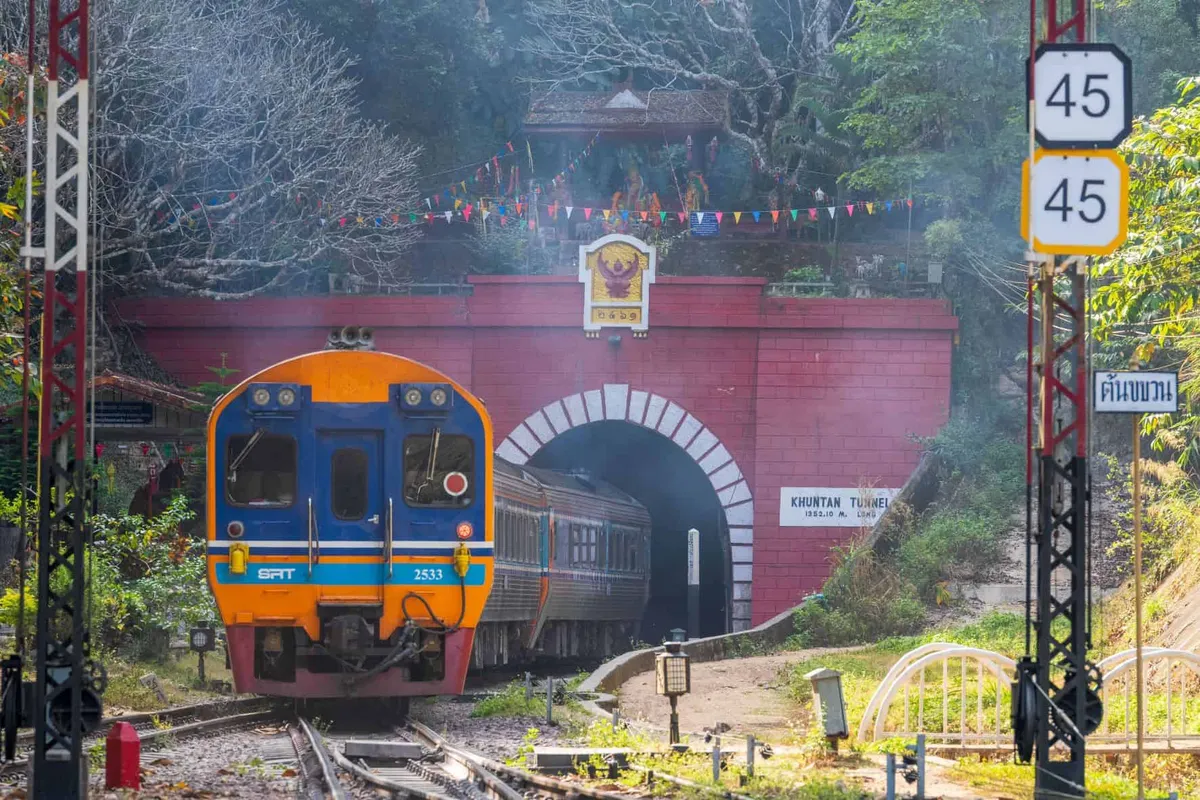
The Khun Tan Tunnel, which the railway passes through just before reaching the bridge, and Doi Khun Tan National Park are both a short distance away in the same subdistrict. See the Lamphun destination guide for the rest of the province.
Location & Directions
Mae Tha, Lamphun
Lamphun, Thailand
Show your taxi or Grab driver
สะพานขาวทาชมภู
Frequently Asked Questions
Is Tha Chomphu Bridge an active railway bridge?
Why is it built from concrete instead of steel like most railway bridges?
Is it safe to walk out onto the bridge for photos?
What river does it cross?
Is there an entry fee or set visiting hours?
Spotted something out of date or incorrect? Let us know
Stay Near Tha Chomphu Bridge
Compare places to stay in Lamphun, or open the map for options closest to the attraction.