




The City Pillar Shrine (Lukson Shrine)
ศาลหลักเมือง หรือ ศาลลูกศร
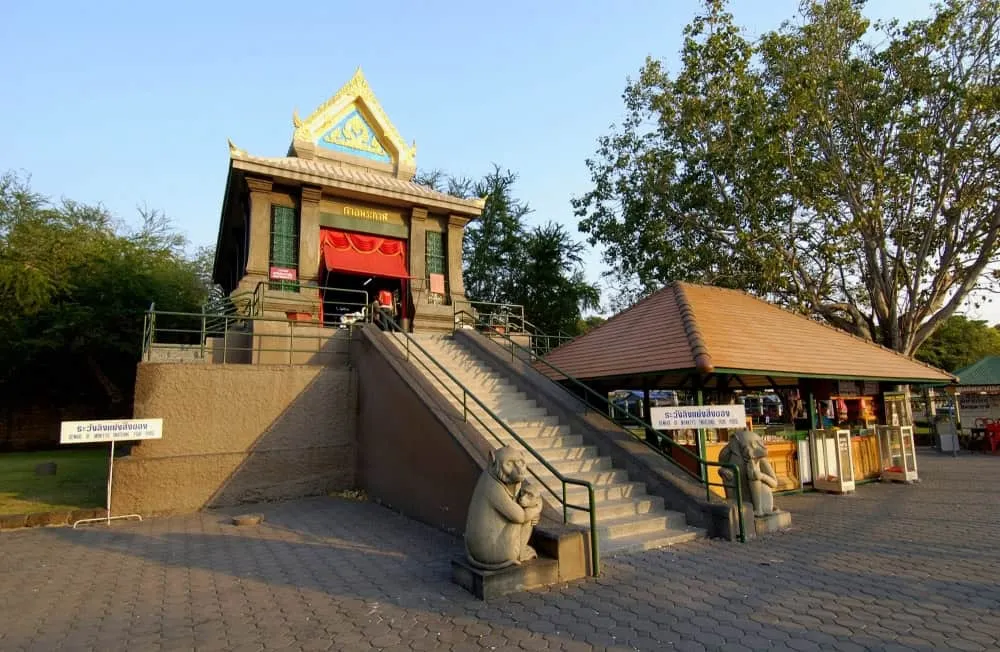
A small shrine at Tha Hin market in Lop Buri town holds a black stone protruding about a metre from the ground, kept permanently submerged in water. Local Chinese-Thai tradition identifies it as “lukson” — an arrow from Rama’s bow — and the shrine built around it in 1930 has been a registered ancient monument since 1932. It’s free to visit, with no gate or fixed hours.
- Entry fee: Free
- Built: 1930, by the Chinese community of Tha Hin market
- Protected status: Registered ancient monument No. 0000680, Royal Gazette, 2 August 1932
- Size: Small structure of about 12 square metres, housing a stone pillar protruding roughly 1 metre above ground
- Legend: Local tradition says the stone is an arrow (lukson) from Rama’s bow
A Local Legend, Not a National Landmark
Despite the grand-sounding name, this isn’t Lop Buri’s official city pillar in the sense Thai provincial capitals usually have one — it’s a community shrine, built by the Chinese merchants of Tha Hin market around a stone that predates their arrival. The name “City Pillar Shrine” (San Lak Mueang) stuck locally, but Lop Buri residents commonly call it Lukson Shrine — the arrow shrine — after the story attached to the stone. Tradition holds that this dark rock is the arrow Rama’s bow released, later lodged here; as long as the water around it stays topped up, the story warns, the town stays safe from fire. The Fine Arts Department registered the structure as an ancient monument on 2 August 1932 (Royal Gazette, Volume 53), protecting the small building rather than any grand statuary.
What’s There
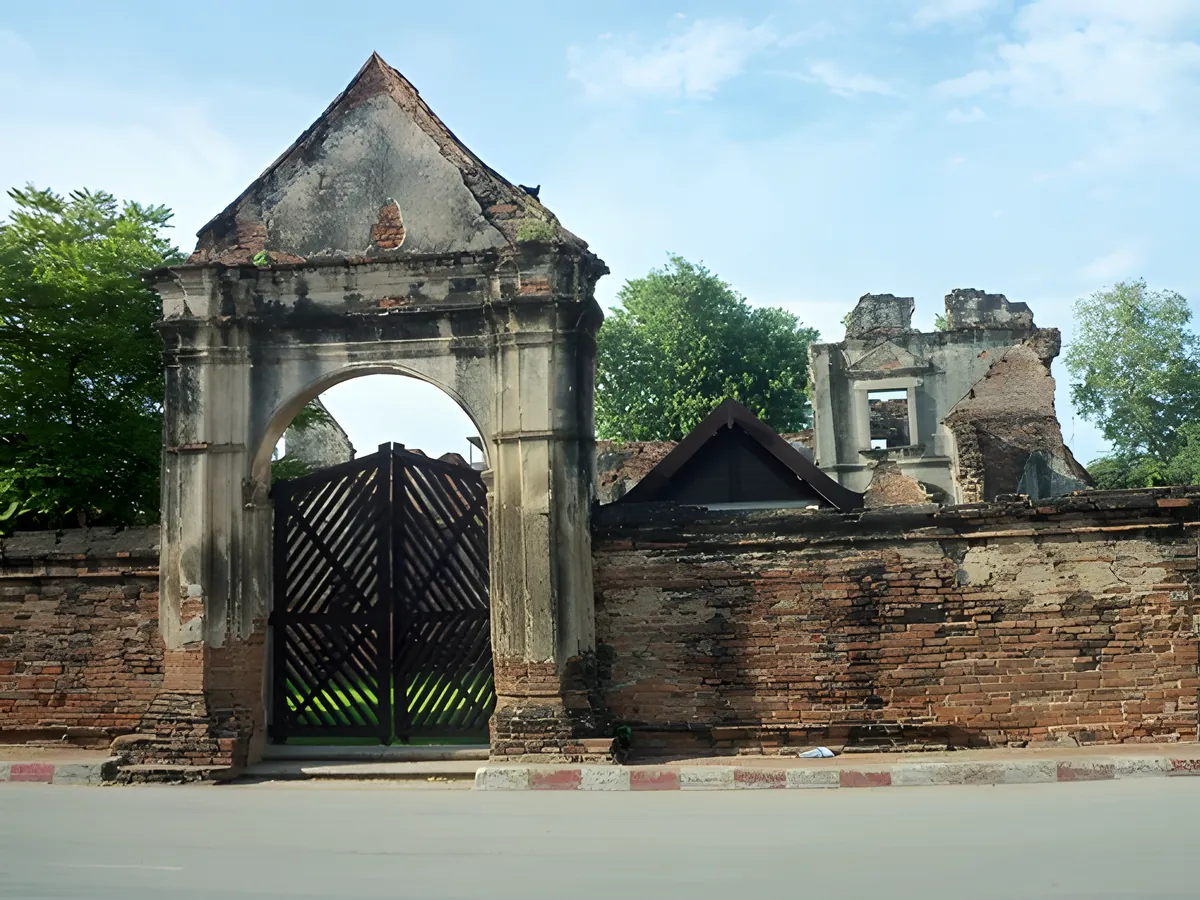
The shrine itself is modest: a small covered structure of about 12 square metres built directly over the stone, which sits in a shallow pool kept filled year-round. There’s no elaborate carving or gold leaf to see — the significance is entirely in the story and the ongoing local practice of tending the water level. Chinese-Thai residents use the shrine for religious ceremonies through the year, particularly around Lunar New Year, when incense and offerings are more visible than on an ordinary day.
Insider Tip: This is a five-minute stop, not a destination in itself — visit on the way to Phra Prang Sam Yot or San Phra Kan, both a short walk away in the same old-town cluster.
Atmosphere & Timing
Tha Hin market is a working commercial area, so the shrine sits among shopfronts rather than in a quiet temple compound — expect market noise and foot traffic rather than a meditative setting. There’s no crowd specific to the shrine itself; most passersby are headed to or from the market rather than visiting deliberately.
Watch out: Because it’s a small, unstaffed structure inside a market area, it’s easy to walk past without noticing — look for the low covered shelter over the water-filled stone rather than expecting a temple gate.
Practical
The shrine sits within Lop Buri’s compact old town, walkable from Wat Nakhon Kosa and the other central monuments. Dress is casual — this isn’t an active place of Buddhist worship requiring the usual temple dress code, though modest clothing is still sensible given it’s a religious site. There’s no shade at the shrine itself, so pair it with nearby covered sights if visiting at midday.
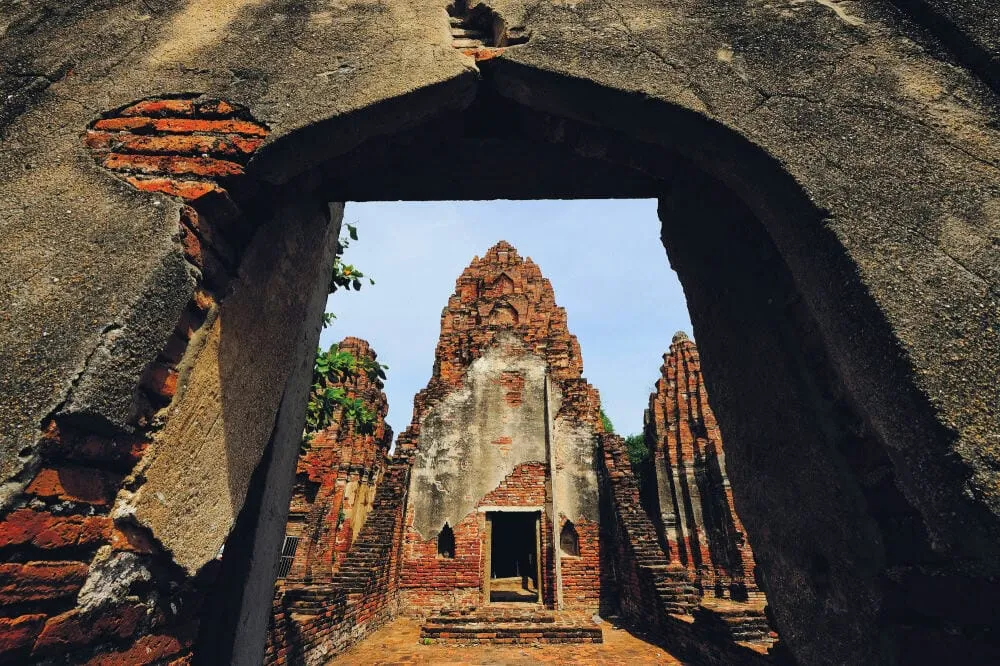
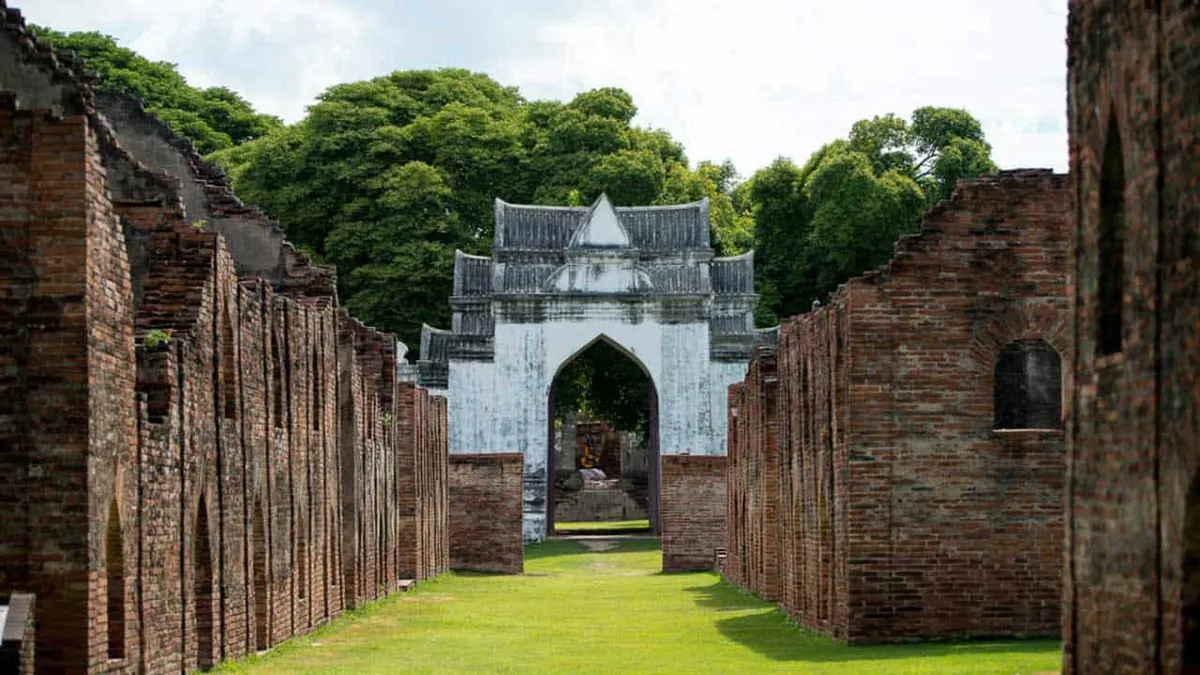
The shrine fits easily into a half-day walk around Lop Buri’s old town, alongside the more visually dramatic Khmer-era ruins nearby.
Location & Directions
Tha Hin market, Mueang Lop Buri, Lop Buri
Lop Buri, Thailand
Show your taxi or Grab driver
ศาลหลักเมือง หรือ ศาลลูกศร
Within Walking Distance




Frequently Asked Questions
Is the City Pillar Shrine (Lukson Shrine) free to visit?
Is this Lop Buri's official city pillar shrine?
Why is it also called Lukson Shrine?
How long does a visit take?
Is it officially protected?
Spotted something out of date or incorrect? Let us know
Stay Near The City Pillar Shrine (Lukson Shrine)
Compare places to stay in Lop Buri, or open the map for options closest to the attraction.