




Wat San Paolo
วัดสันเปาโล
Despite the name, Wat San Paolo isn’t a Buddhist temple. It’s the ruined church and astronomical observatory that King Narai built in Lop Buri for the French Jesuit mission between 1685 and 1687, one of the more unusual survivals from Siam’s brief, intense engagement with European science in the 1680s. Entry is free; the site is unfenced and can be seen at any time, though the nominal hours are 09:00-17:00.
Constantine Phaulkon, the Greek adventurer who rose to become King Narai’s most trusted minister, proposed the observatory in 1685. French Jesuits built it with a design said to echo the Paris Observatory: a two-storey rectangular building around a courtyard, with a four-storey tower at one end, plus a seminary, living quarters and a church. From here, Narai and the Jesuit fathers observed a total lunar eclipse on 10 December 1685 and a partial solar eclipse in April 1688, among the first scientific astronomical observations recorded in Siam.
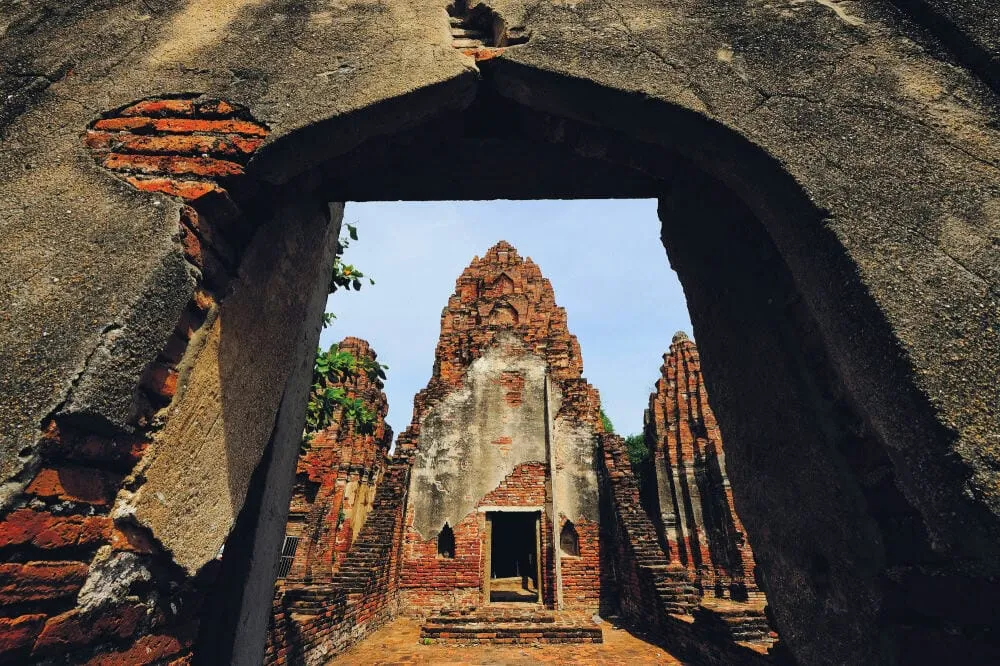
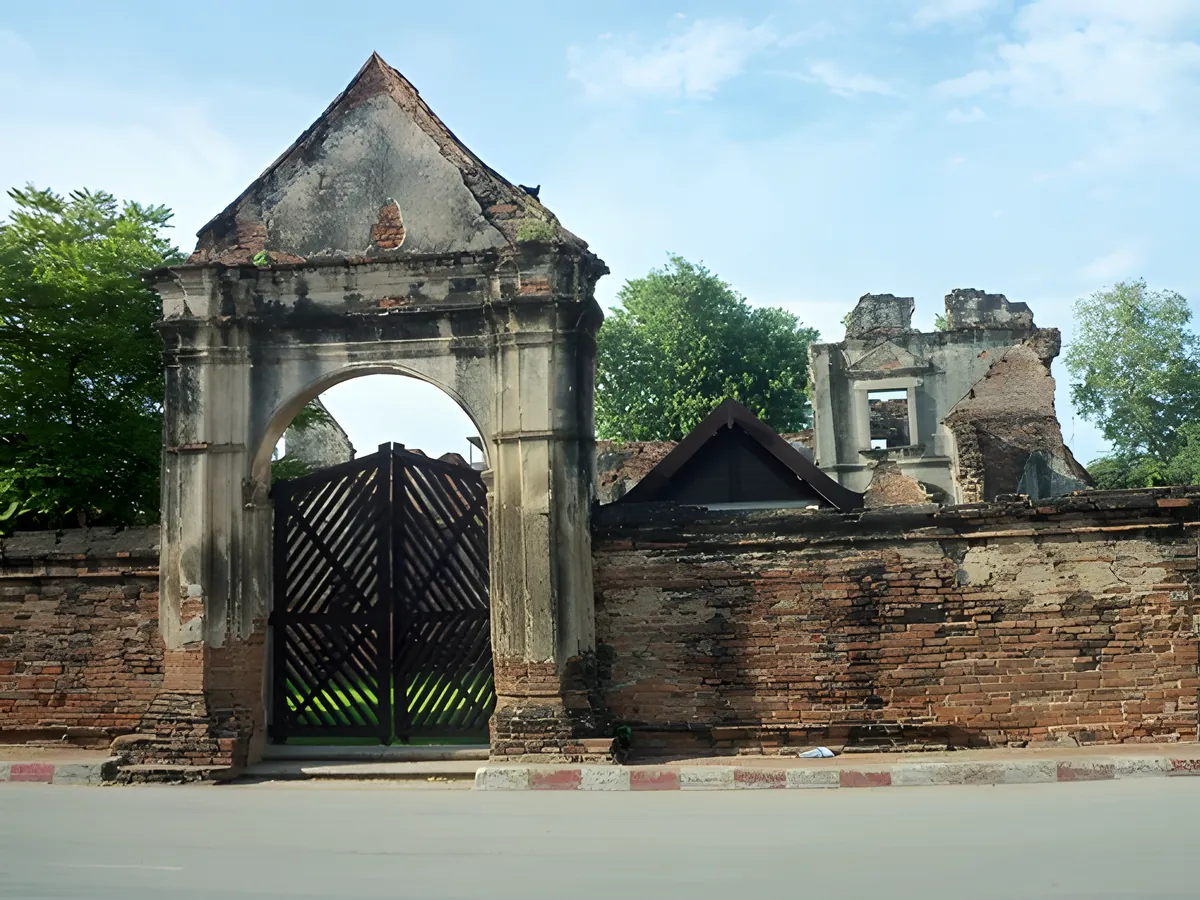
Little survives beyond brick foundations and the base of the tower, weathered down to a skeletal outline of what was once a genuinely ambitious building project. The mission ended abruptly: King Narai died in July 1688, the political tide turned against the French, and the Jesuits were expelled, scattering to China and India. What’s left today sits quietly on the edge of Lop Buri’s old town, largely bypassed by visitors heading straight for the more photogenic Khmer prangs elsewhere in the city.
Watch out: There’s very little shade on site and no facilities. Bring water if you’re visiting in the middle of the day, and expect a bare, sun-exposed ruin rather than a landscaped monument.
The ruins sit near Lop Buri’s railway station, an easy walk or short tuk-tuk ride from the old town. Pair the visit with Phra Narai Ratchaniwet, Narai’s palace, and Wichayen House, Phaulkon’s own residence and the site of Siam’s first diplomatic exchanges with Louis XIV’s France — both are essential context for why an observatory ended up here at all.
- What it is: Ruins of a Jesuit church and astronomical observatory, not a Buddhist temple
- Built: 1685-1687, commissioned by King Narai, proposed by Constantine Phaulkon
- Historic event: Site of some of Siam’s first recorded scientific eclipse observations, 1685-1688
- Entry: Free, nominal hours 09:00-17:00 but the unfenced site is viewable anytime
- Nearby: Phra Narai Ratchaniwet and Wichayen House, both Narai-era sites
Location & Directions
Ruam Mit Road
Lop Buri, Thailand
Show your taxi or Grab driver
วัดสันเปาโล
Frequently Asked Questions
Is Wat San Paolo a Buddhist temple
Why did King Narai build an observatory here
What happened to the observatory
Is Wat San Paolo free to visit
How do I get to Wat San Paolo from central Lop Buri
Spotted something out of date or incorrect? Let us know
Stay Near Wat San Paolo
Live prices for places closest to Wat San Paolo — tap a pin to compare.