



Thoed Thai Village
บ้านเทอดไทย
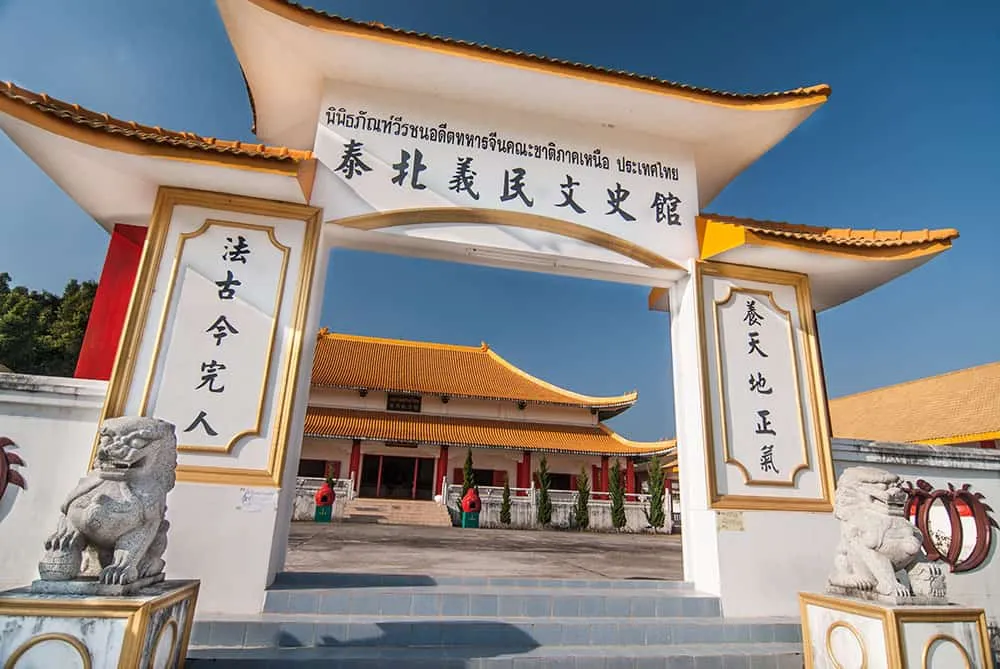
Thoed Thai’s real draw isn’t hill-tribe scenery — it’s the former headquarters of Khun Sa, the Shan warlord whose Shan United Army ran one of the Golden Triangle’s largest opium operations through the 1970s and early 1980s. Thai forces expelled his troops from the village in 1982; Khun Sa died in exile in Myanmar in 2007. His old camp compound is now open as a museum, and it’s the reason to make the drive out here rather than stopping in Mae Salong itself.
The museum splits across three buildings on the original camp grounds: one covering Khun Sa’s personal life and quarters, one on the mechanics of the drug-trafficking network he built, and one on the broader history of the Shan people who fought (and financed that fight partly through opium) for an independent Shan State across the border. A recreated mock village on the same site shows how the area’s hill tribes actually lived — thatched houses, cooking areas, tools — representing the Akha, Lahu, Palaung, Wa and other groups who settled around Thoed Thai. It’s a more pointed, less sanitized version of hill-tribe tourism than the staged “cultural villages” closer to Chiang Mai, because the history on display here is specific to this one place rather than a generic composite.
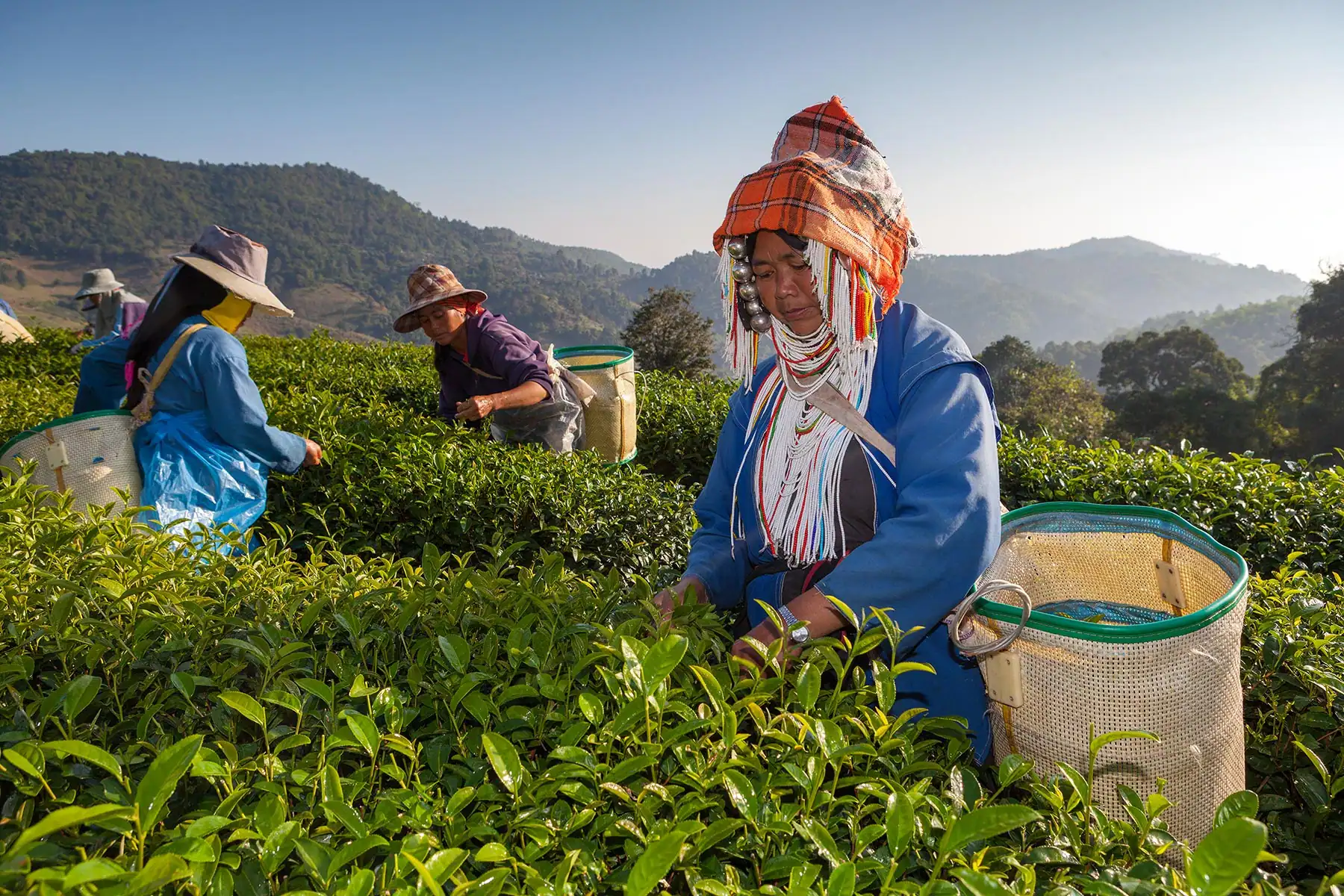
Watch out: Don’t expect Thoed Thai to be a single-ethnicity Akha showcase — that framing undersells it. Shan and Yunnanese Chinese families have lived here over a century (former Kuomintang soldiers who fled China after 1949 among them), and this is where anthropologists place the first Akha settlement in northern Thailand, dated to 1903. Lahu, Lisu, Hmong and Thai Lü communities round out what is one of the most ethnically layered villages in the district. Ask before photographing residents, and don’t treat the village as a photo backdrop — people live and work here.
Outside the museum, Thoed Thai (once known as Hin Taek, “broken stone,” after a stone found in the Mae Kham river when the village was first settled) is a working border community — tea and coffee smallholdings, small Yunnanese-style noodle shops, and a market that leans toward Chinese-Shan produce rather than the standard Thai fare found in Mae Salong proper. It’s quieter than Mae Salong’s tourist strip, with far fewer tour buses.
Insider Tip: Museum hours here aren’t as fixed as at a national-park visitor centre — call ahead through a Mae Salong guesthouse or the tambon office if the museum itself is the main reason for your trip, rather than turning up unannounced and hoping the buildings are staffed.
- Distance from Doi Mae Salong: About 24 km by paved mountain road, ~13 km from the Mae Moh border crossing
- Main draw: Khun Sa’s former camp, now a three-building museum plus a recreated hill-tribe village
- Communities: Shan, Yunnanese Chinese, Akha, Lahu, Lisu, Hmong and Thai Lü — not a single-tribe village
- Access: Self-drive by motorbike or car; roads are paved but winding
- Museum hours: Not consistently published — confirm locally before a dedicated trip
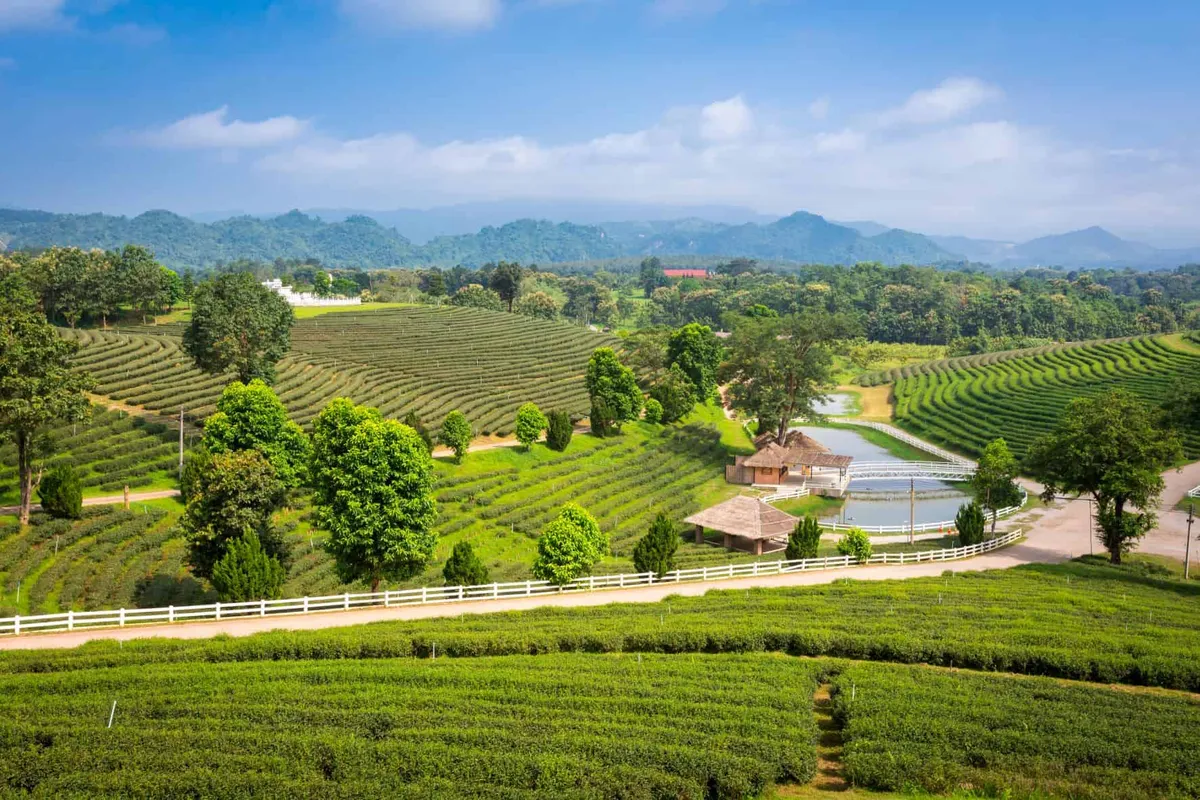
The drive out from Doi Mae Salong climbs through tea plantations similar to those around Choui Fong, so it pairs naturally with a morning at the plantation before continuing north. Go early if you want the village at its quietest, before the midday heat settles over the valley, and bring cash — there’s little in the way of card payment infrastructure this far from Mae Salong’s main strip.
Location & Directions
Mae Fa Luang, Chiang Rai
Doi Mae Salong, Thailand
Show your taxi or Grab driver
บ้านเทอดไทย
Frequently Asked Questions
Who was Khun Sa and why does his old camp matter here?
What can you actually see at the Khun Sa museum?
Is Thoed Thai an Akha village?
How far is Thoed Thai from Doi Mae Salong?
Do I need to arrange a visit in advance?
Spotted something out of date or incorrect? Let us know
Stay Near Thoed Thai Village
Live prices for places closest to Thoed Thai Village — tap a pin to compare.