




101 Tea Plantation, Doi Mae Salong
ไร่ชา 101
Hours from the venue's Google Maps listing, synced 1 Nov 2026
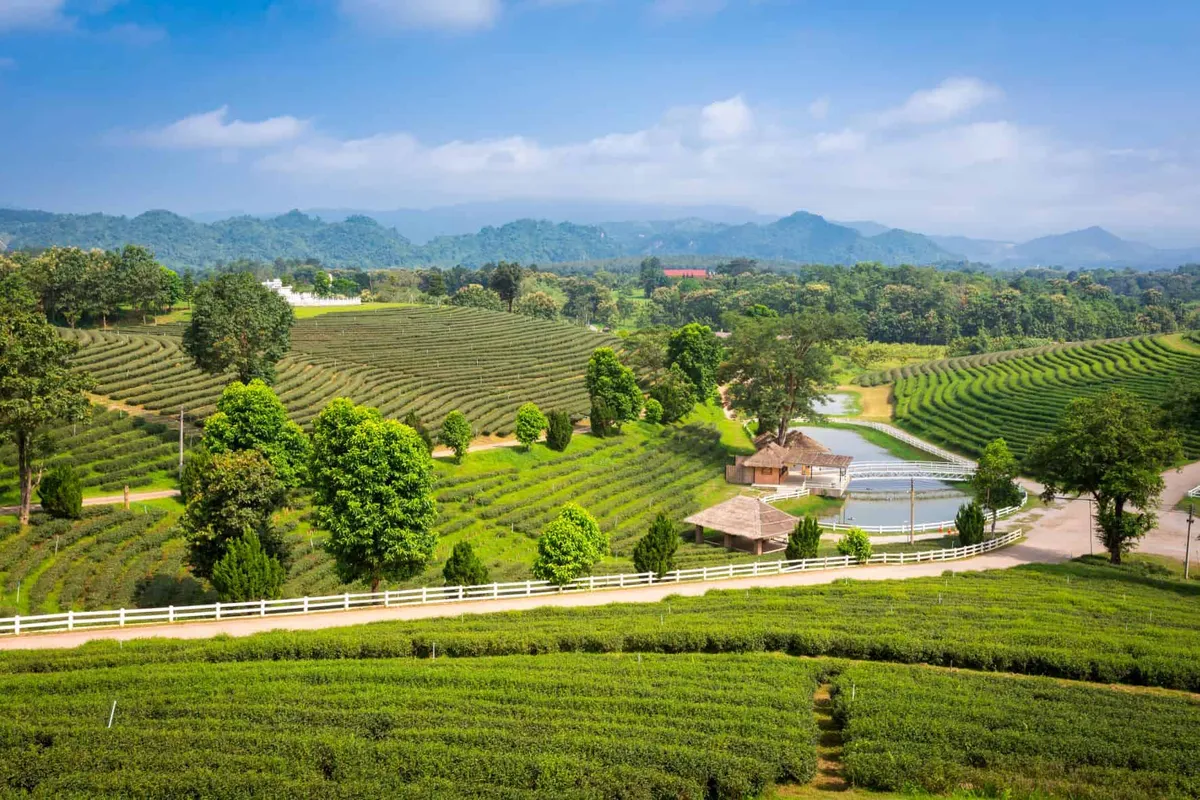
101 Tea Plantation sits high on Doi Mae Salong in Chiang Rai’s far north, a working oolong estate where you walk the terraces and taste the tea. Entry is free, the tasting lets you try up to six oolongs on a balcony over the fields, and it is open daily from about 08:00 to 17:00. It is roughly 64 km and 90 minutes to two hours from Chiang Rai city by winding mountain road. The village centre of Mae Salong sits above 1,100 metres, so the air is cooler than in town.
The tea and the tasting
The estate grows Chinese-style oolong. Signature teas include Oolong No. 17, Oolong No. 12, Osmanthus Oolong and a darker Red Oolong, and the plantation also serves Oriental Beauty, a variety said to have been brought from Taiwan by former 93rd Division soldiers in the 1980s as a replacement for opium poppy. Staff walk you through the varieties and the way the leaf is processed, and nobody presses you to buy. Mae Salong as a whole produces about 80% of the tea in Chiang Rai province.
Insider Tip: Go in the morning, when mist can still hang over the terraces and the light is soft, and taste the lighter oolongs first before the darker Red Oolong.
Why Chinese tea in northern Thailand
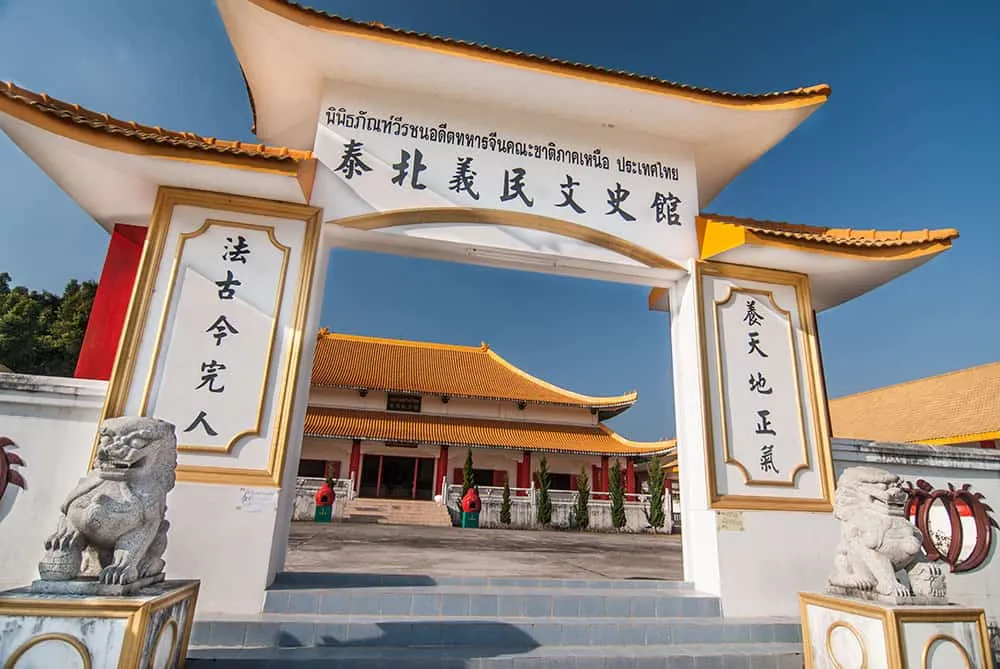
Doi Mae Salong was settled by former Chinese Nationalist (KMT) soldiers, including men of the 93rd Division, who moved here after the Chinese Civil War. The village food is still Yunnanese: noodle soups, steamed mantou, dumplings and braised pork, with simple noodle bowls under 40 THB. The central morning market is busiest from about 5:30 to 8:00. The Chinese War Veterans Memorial Museum in the village tells the KMT story.
Getting there
Drive or ride from Chiang Rai via Mae Chan; the road is paved and in good condition, though steep and full of bends, and the weather turns quickly at altitude. Without your own transport, take a local bus from Chiang Rai to Mae Chan, then a shared songthaew up the mountain for about 60 to 100 THB, noting that departures are limited. Some tours from Chiang Rai combine the village, the hilltop Wat Santikhiri and the plantation in one day, leaving at 08:00 and returning around 17:00.
Watch out: The roads are narrow and the climb is long, so start early and do not plan to descend in the dark. Bring a light jacket, because it can be chilly, and expect haze or cloud to cut the long views, especially in the wet.
Is it worth the drive?
Yes if you are already staying in Mae Salong or doing the full hills day. As a stand-alone trip from Chiang Rai city it is a long day for a tea tasting. Choui Fong is a separate plantation near Mae Chan, so Choui Fong works as a second stop rather than a neighbour.
- Free entry and tasting of up to six oolongs
- Open daily, about 08:00-17:00
- About 64 km from Chiang Rai, 90 minutes to 2 hours
- Mae Salong village sits above 1,100 m
- Morning is best for mist and soft light
Location & Directions
83 Mae Salong Nok, Mae Fa Luang District, Chiang Rai 57110
Doi Mae Salong, Thailand
Show your taxi or Grab driver
ไร่ชา 101
Frequently Asked Questions
Is there an entrance fee for 101 Tea Plantation?
What tea is 101 Tea Plantation known for?
How far is 101 Tea Plantation from Chiang Rai?
How do I get to 101 Tea Plantation without a car?
Why is there Chinese-style tea in northern Thailand?
When is the best time to visit 101 Tea Plantation?
Is 101 Tea Plantation near Choui Fong?
Spotted something out of date or incorrect? Let us know
Stay Near 101 Tea Plantation, Doi Mae Salong
Live prices for places closest to 101 Tea Plantation, Doi Mae Salong.