





Wat Bubpharam (Wat Plai Khlong)
วัดบุปผาราม (วัดปลายคลอง)
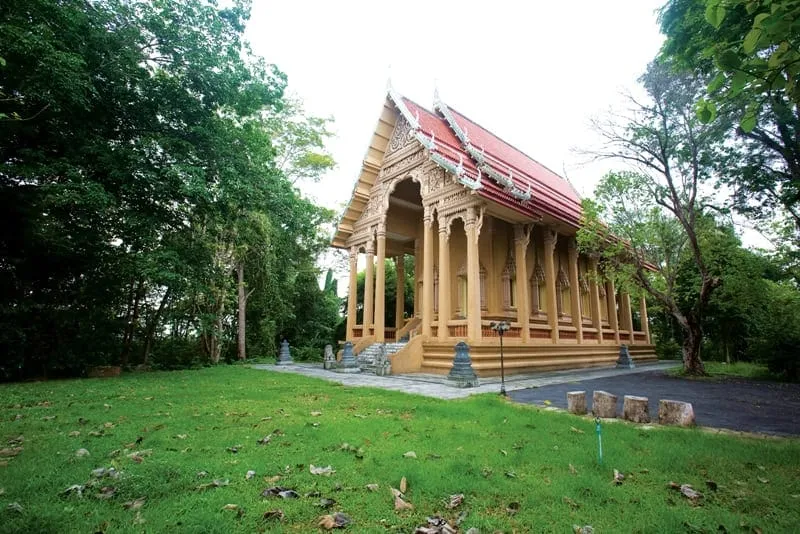
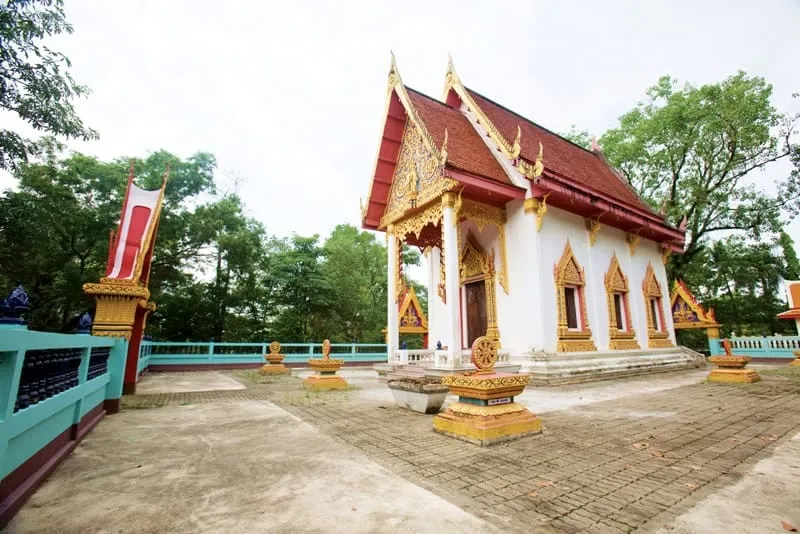
Wat Bubpharam is the oldest temple in Trat province, dating to around 1648 during King Prasat Thong’s reign in the Ayutthaya period — roughly 375 years old. Most people in Trat know it by its other name, Wat Plai Khlong, “temple at canal’s end,” after the waterway it sits beside in Ban Plai Khlong on the town’s mainland side. Entry is free, daily from 08:00 to 17:00.
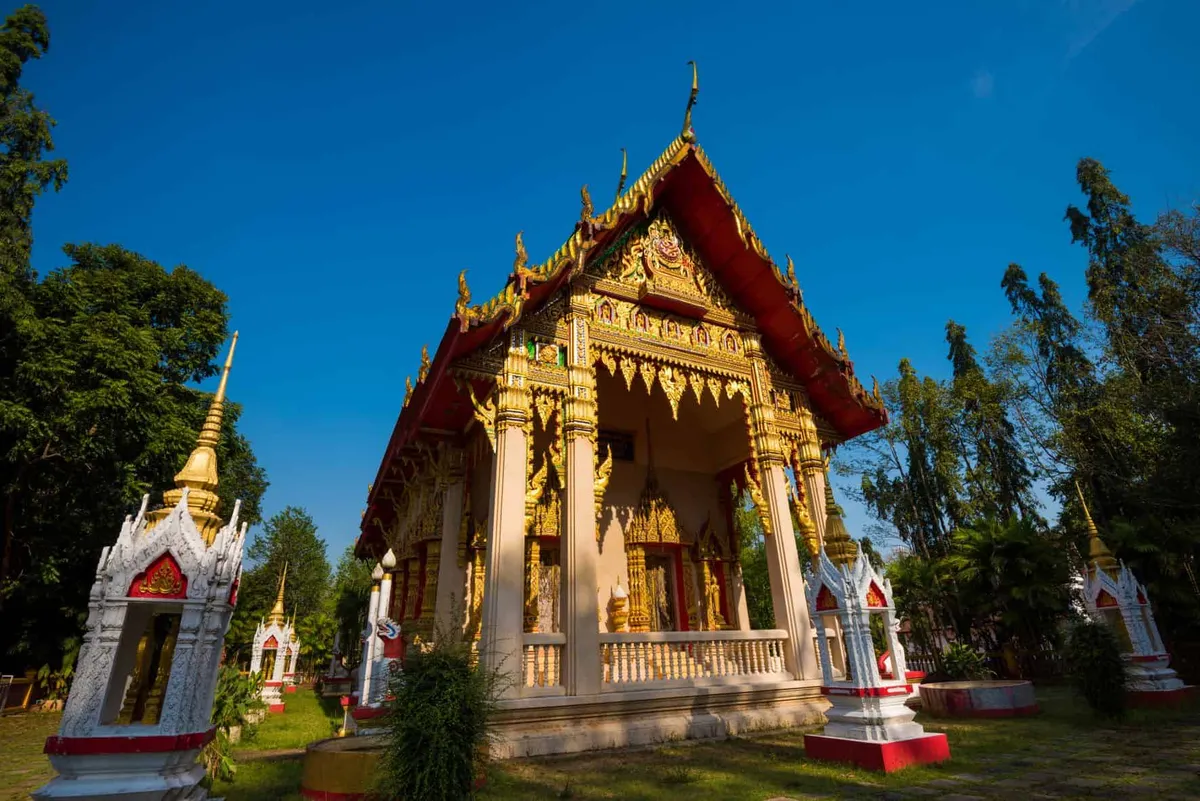
The ordination hall, monastery buildings, and a Buddha-footprint hall date mostly from the early Rattanakosin period and remain well preserved — preserved enough that the temple won the ASA Architectural Conservation Award in 2001. Inside the ordination hall, the murals mix Ayutthaya-style painting with Chinese motifs, a combination that traces back to Trat’s history as a trading port where Chinese merchants settled alongside Thai communities. The temple also keeps a small collection of old Buddha images, relics, and Chinese and European porcelain built up over its three and a half centuries.
The canal setting gives the temple a different rhythm from Trat’s town-centre wats. Morning and evening prayer sessions carry over the water, and the grounds stay quiet outside of merit-making visits from local families — this is a working neighbourhood temple, not a tour-bus stop, and there’s rarely another visitor around.
Insider Tip: Come between 08:00 and 10:00 if you want to see the ordination-hall murals in good light and catch the morning chanting — the hall isn’t always open later in the day.
Getting there from central Trat town takes a short drive by car or motorbike; signage thins out once you’re off the main road, so it’s worth confirming the Phatthanakan Plai Khlong Road turn with a map or a local before setting off. Dress modestly — covered shoulders and knees — and remove shoes before entering the ordination hall. A small donation toward upkeep is appreciated but not expected. For more of Trat’s canal-and-old-town history, the Trat City Museum and Wat Yotha Nimit are both a short trip closer to town.
- Entry: Free, daily 08:00–17:00
- Age: Built c. 1648 (Ayutthaya period, King Prasat Thong) — oldest temple in Trat
- Also known as: Wat Plai Khlong
- Notable feature: Ordination-hall murals blending Ayutthaya and Chinese styles
- Recognition: ASA Architectural Conservation Award, 2001
Location & Directions
Moo 3 Ban Plai Khlong, Phatthanakan Plai Khlong Road
Trat, Thailand
Show your taxi or Grab driver
วัดบุปผาราม (วัดปลายคลอง)
Within Walking Distance



Frequently Asked Questions
Why does this temple have two names?
Is this the same temple as Wat Buppharam in Chiang Mai?
How old is Wat Bubpharam?
Is there a fee to visit?
What is there to see beyond the temple buildings?
Spotted something out of date or incorrect? Let us know
Popular tours in Trat

Stay Near Wat Bubpharam (Wat Plai Khlong)
Compare places to stay in Trat, or open the map for options closest to the attraction.