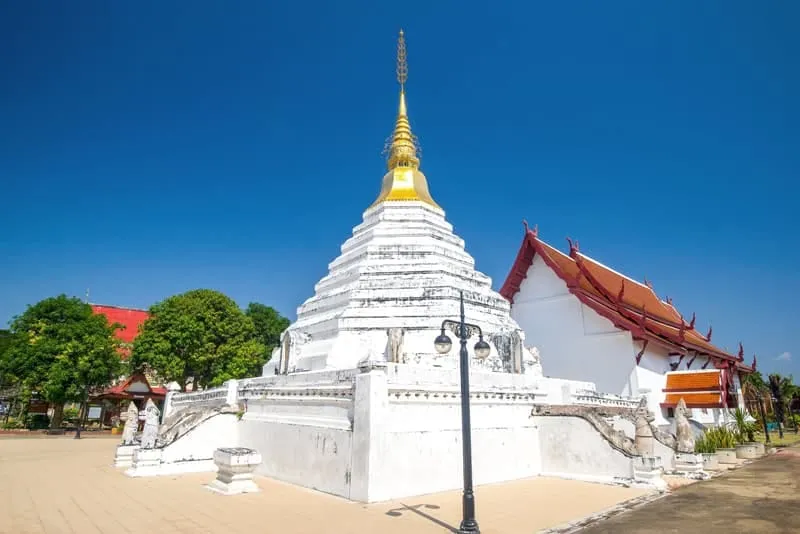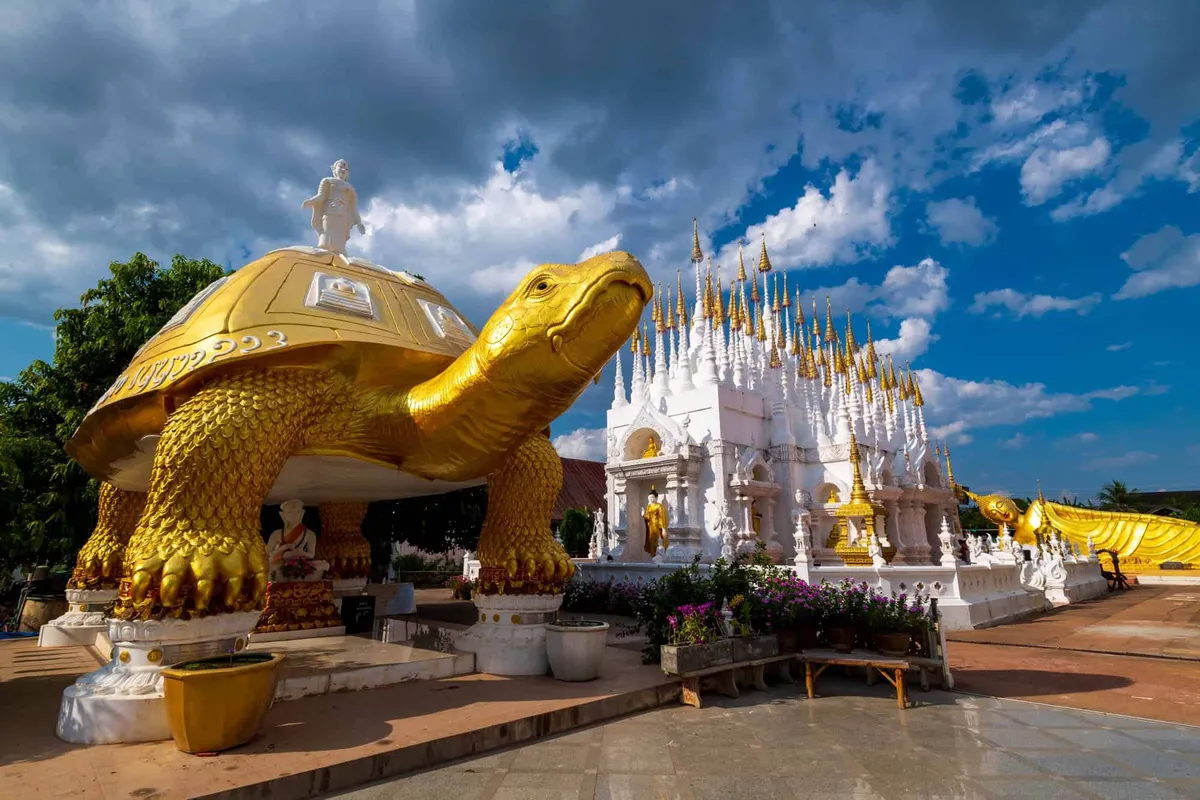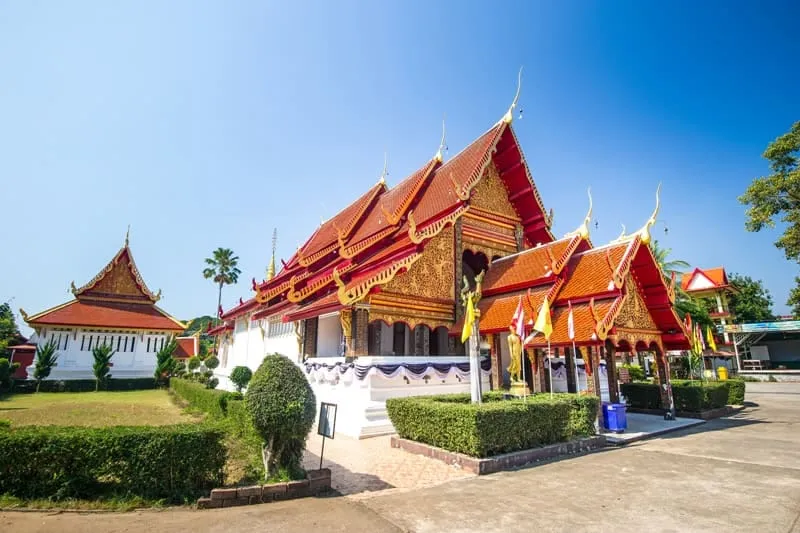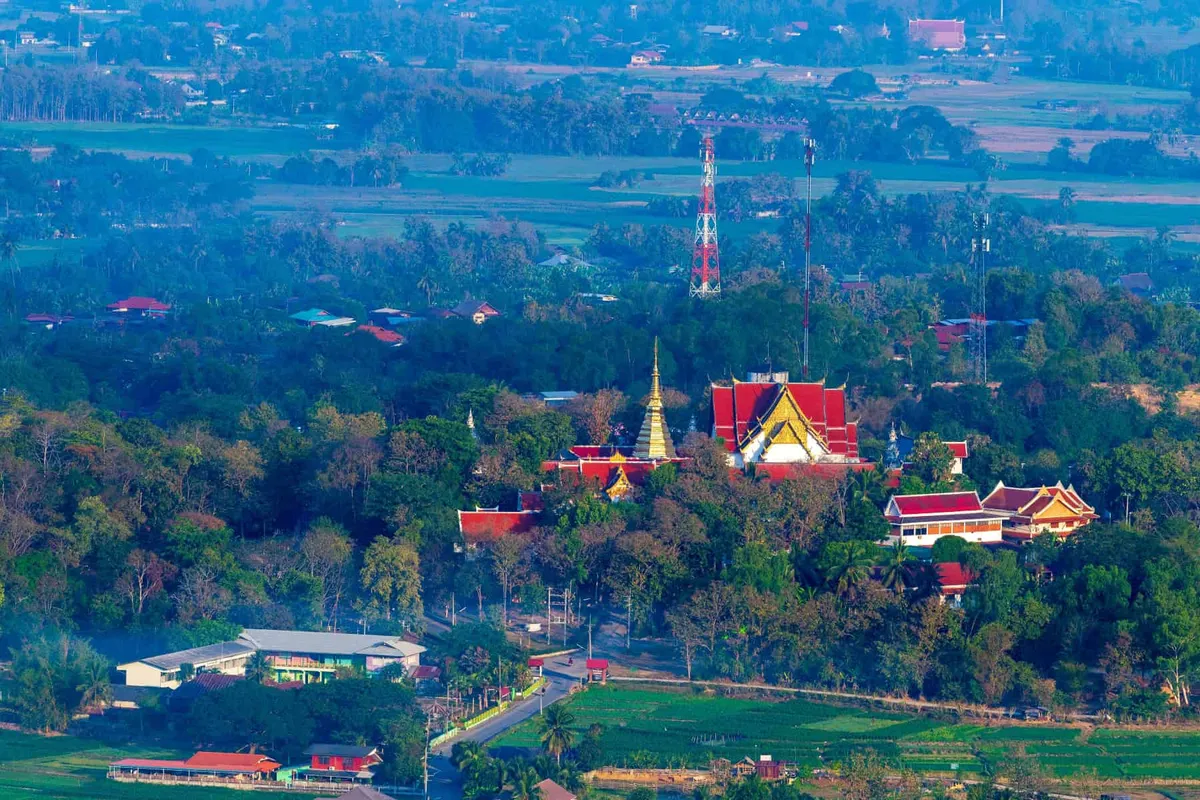





Wat Chom Sawan was built by Tai Yai (Shan) migrants who came to Phrae in the late 19th century to work the teak trade — many employed by the British Bombay Burmah Trading Corporation or the Danish East Asiatic Company, both major players in the region’s logging concessions. Construction ran sometime between 1894 and around 1912, during the reign of Rama V, and took about five years. It’s free to enter, daily from 08:00 to 16:30, and it’s been a registered national monument since 1990.
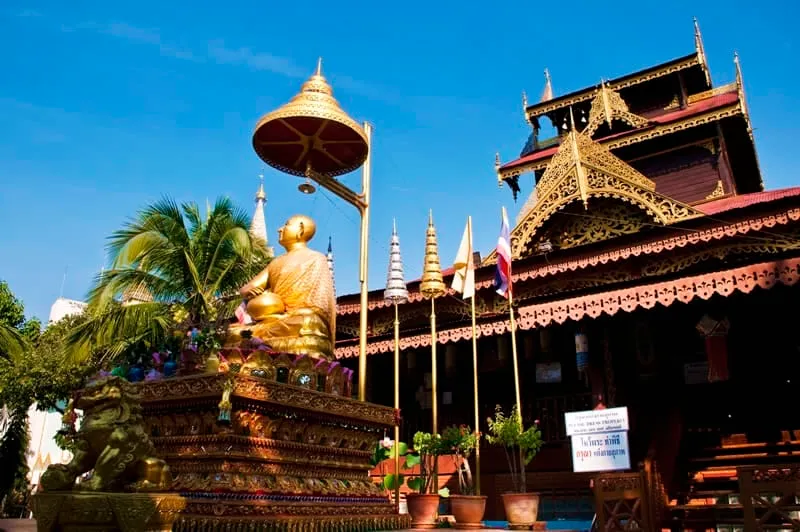
The temple is built almost entirely in teak, in the Shan architectural style with clear Burmese influence — the two traditions share design roots, since Shan State borders Burma. The main hall stands on stilts under a multi-tiered roof, and the adjoining sala is roofed in nine tiers, an unusually elaborate touch for a temple this size. Inside, the Buddha images are the real draw: figures carved from ivory and marble in Burmese style, one Buddha in black-lacquered woven bamboo finished with gold leaf, and a set of ivory scripture sheets inscribed with Burmese script in red lacquer. The principal image, known locally as Phra Chom Sawan, sits in a flower-banked niche where visitors light incense and pray.
Because the building material is teak rather than stone or stucco, the whole complex has a warmer, more intimate feel than Phrae’s brick-and-plaster temples — carved eaves, timber columns, and window frames that show the age of the wood up close. It remains an active monastery, so expect to share the grounds with monks and local families rather than tour groups.
Insider Tip: Look closely at the scripture cabinet and altar items rather than just the exterior roofline — the ivory Patimokkha sheets and the black-lacquered bamboo Buddha are easy to walk past if you’re only looking up at the tiered roofs.
Watch out: As an active place of worship, some interior areas close or restrict access during ceremonies — if the main hall looks occupied, wait outside rather than stepping through.
The temple sits inside Mueang Phrae on Yantarakit Koson Road, an easy walk or short songthaew ride from the old town’s city-wall temples. Dress modestly — covered shoulders and long trousers — and remove shoes before entering any building. For more of Phrae’s temple circuit, Wat Luang in the old city and the hilltop Wat Phra That Cho Hae are both worth pairing with a visit here.
- Entry: Free, daily 08:00–16:30
- Built: c. 1894–1912, by Tai Yai (Shan) teak traders — five years to build
- Style: Teak-built Shan architecture with Burmese influence
- Interior: Ivory and marble Buddha images, ivory scripture sheets in Burmese script
- Status: Registered national monument since 1990
Location & Directions
202 Yantarakit Koson Rd
Phrae, Thailand
Show your taxi or Grab driver
วัดจอมสวรรค์
Within Walking Distance




Frequently Asked Questions
Was Wat Chom Sawan built by Burmese or Tai Lue craftsmen?
How old is Wat Chom Sawan?
Is there a fee to enter?
What makes the interior worth seeing?
Is Wat Chom Sawan easy to reach in Phrae town?
Spotted something out of date or incorrect? Let us know
Stay Near Wat Chom Sawan
Compare places to stay in Phrae, or open the map for options closest to the attraction.