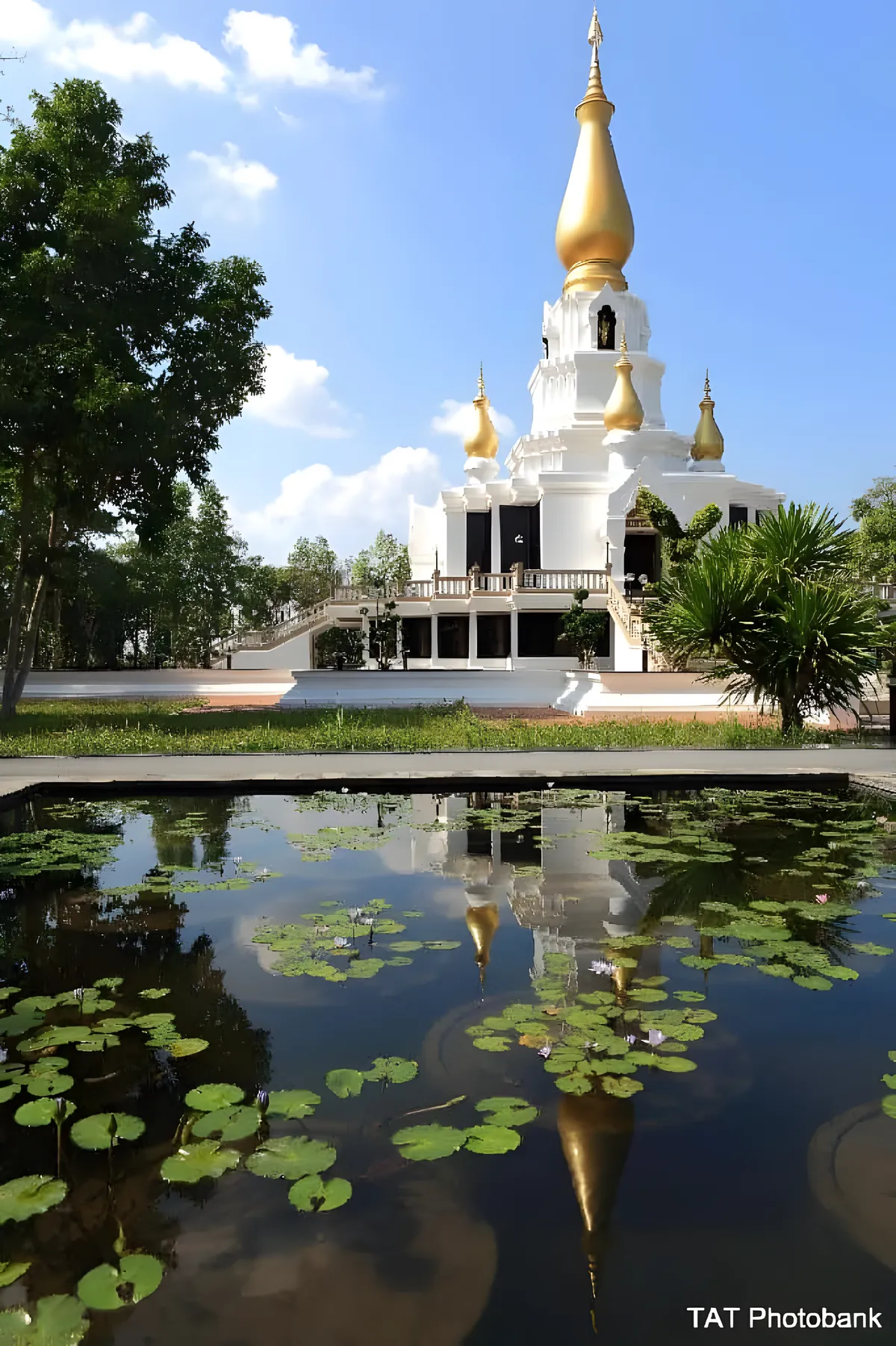





On a bluff of weathered boulders above the Mekong, Wat Hin Mak Peng is one of Nong Khai’s most revered forest monasteries — a wat pa (forest temple) in the Thai Forest Tradition, established by Ajahn Thate (Luang Pu Thet), a first-generation disciple of the meditation master Ajahn Mun Bhuridatto. The name comes from the rounded river stones (hin mak peng) scattered across the slope where it meets the river. Laos sits directly across the water, and the setting — forested, quiet, remote — is the whole point: this is a place built for practice, not display.
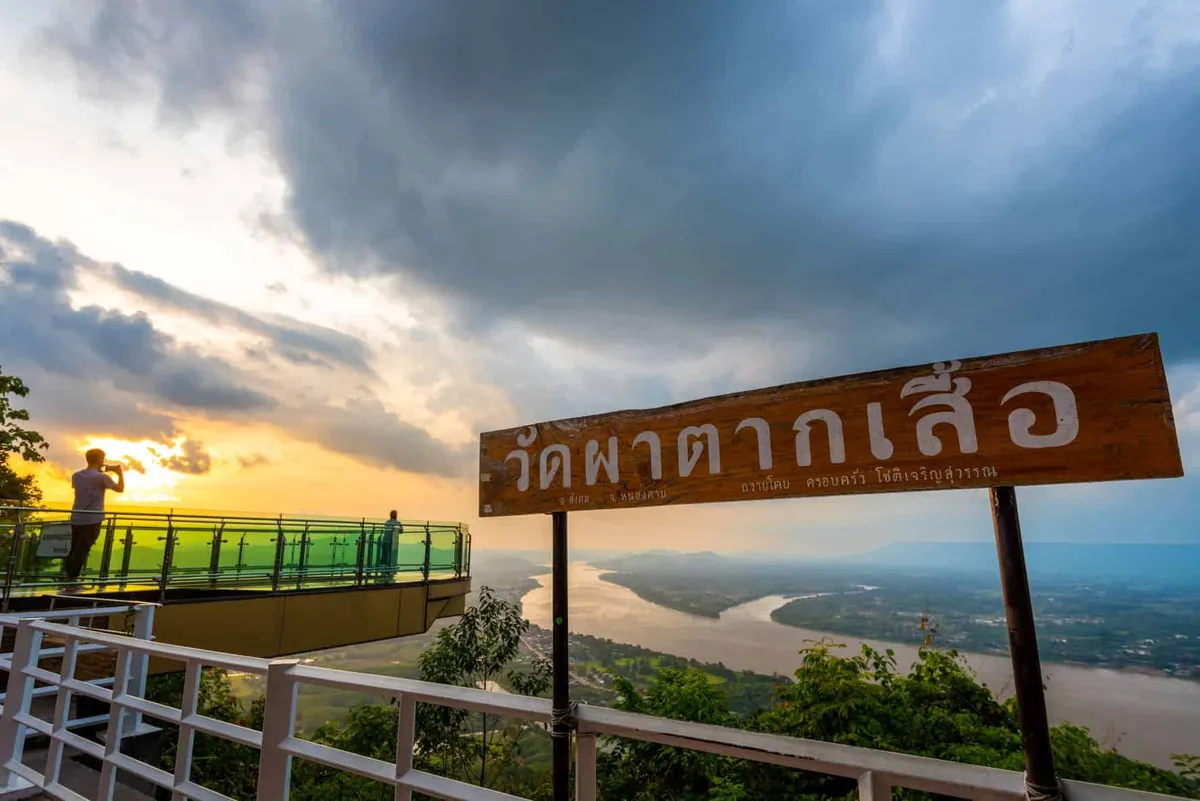
The grounds spread among boulders and shade trees, with simple kutis (monks’ huts) tucked into the rocks and paths leading down to the Mekong. Viewpoints along the bluff look out over the river and the Lao bank beyond. Visitors are asked to keep quiet and dress modestly, in keeping with the forest tradition’s emphasis on restraint — there are no souvenir stalls or spectacle here, just the boulders, the trees and the river.
On 26 May 1982, Thailand’s Supreme Patriarch officially declared Wat Hin Mak Peng a “Model Monastery,” formal recognition of both Ajahn Thate’s standing in the Forest Tradition and the discipline maintained on the grounds — the royal family reportedly visited several times through the 1970s and 80s. The monastery covers roughly two square kilometres, most of it forest, and generations of monks have practised Vipassana on this slope since; the sense of a working monastery, not a tourist temple, is still the strongest impression visitors take away.
The monastery sits in Si Chiang Mai district, roughly 60 km west of Nong Khai town along Route 211 (about 7 km before Si Chiang Mai itself). Early morning, with mist still rising off the Mekong, is the most atmospheric time to visit — and also when the resident monks are most active. The drive out along Route 211 runs close to the riverbank for long stretches, past smaller villages and rice fields, so it’s worth treating the journey itself as part of the trip rather than rushing straight there and back.
Insider Tip: Time a visit for sunrise if you can manage the drive that early; by mid-morning the light flattens and the mist is long gone.
Watch out: This remains an active place of practice, not a photo stop — keep your voice down, dress with shoulders and knees covered, and don’t wander into areas set aside for the monks. Sit quietly rather than exploring uninvited.
- Entry fee: Free
- Hours: Daily 06:00-18:00
- Getting there: ~60 km west of Nong Khai town via Route 211, ~7 km before Si Chiang Mai
- Dress code: Shoulders and knees covered; keep your voice low
- Best time: Early morning, before the mist clears
Location & Directions
Mu 5
Nong Khai, Thailand
Show your taxi or Grab driver
วัดหินหมากเป้ง
Frequently Asked Questions
Is Wat Hin Mak Peng open to visitors?
What does "Hin Mak Peng" mean?
Can I see Laos from the monastery?
How far is it from Nong Khai town?
Who founded the monastery?
Spotted something out of date or incorrect? Let us know
Stay Near Wat Hin Mak Peng
Compare places to stay in Nong Khai, or open the map for options closest to the attraction.