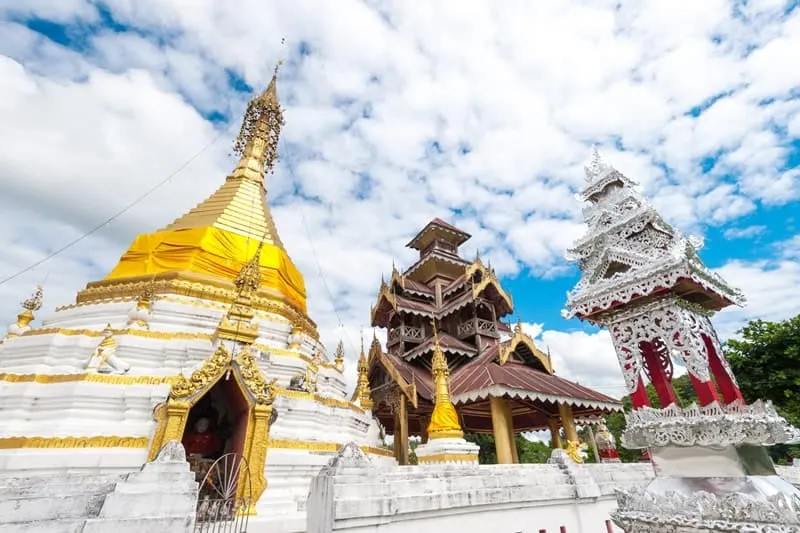


Wat Hua Wiang sits on Singhanat Bamrung Road near Mae Hong Son town’s morning market, an easy walk from the centre. Built in 1863, it’s the second-oldest temple in town, and its Shan (Tai Yai) architecture (teak pillars, a tiered roof trimmed in worked metal sheeting) sets it apart from the central-Thai temple style found further south. Entry is free, daily 08:00-16:30.
The temple’s centrepiece is Phra Chao Paralakhaeng, a bronze Buddha image also spelled Phra Chao Pha Ra La Khaeng, and a direct replica of the Phra Mahamuni image revered in Mandalay, Myanmar. It was cast in Mandalay in 1930, then shipped across the border in nine separate sections and reassembled inside Wat Hua Wiang’s viharn in 1937, a project that took local devotees and craftsmen years to complete. The statue draws Buddhist pilgrims specifically for this connection to Mandalay, not just as a generic temple visit.
Insider Tip: Ask about the statue’s assembly history before you look closely at it. Knowing it arrived in nine pieces changes how you read the seams and proportions of the bronze up close, something easy to miss if you just walk past.
The complex also includes a white-and-gold chedi and two smaller buildings, set within a modest walled compound rather than sprawling grounds. Because it sits within walking distance of Wat Chong Kham and Wat Chong Klang on the lake at the south end of town, most visitors combine the three in a single loop rather than treating Wat Hua Wiang as a standalone stop.
Mae Hong Son’s Shan heritage is easy to overlook if you only see the lake temples, which get most of the foot traffic. Wat Hua Wiang is quieter and rewards visitors who take the time to understand what’s in front of them: a border town’s Buddhist history, cast in bronze and shipped over the mountains piece by piece.
Dress modestly (covered shoulders and knees) and remove your shoes before entering the viharn. Since it’s open only until 16:30, pair a morning visit here with the nearby market before continuing on to the lake temples in the afternoon.
- Entry: Free, daily 08:00-16:30
- Built: 1863, second-oldest temple in Mae Hong Son town
- Centrepiece: Phra Chao Paralakhaeng, a 1930 Mandalay-cast bronze Buddha, assembled on site in 1937
- Architecture: Shan (Tai Yai)/Burmese style: teak pillars, tiered metal-trimmed roof
- Nearby: Wat Chong Kham and Wat Chong Klang, Wat Phrathat Doi Kong Mu
Location & Directions
Singhanat Bamrung Road
Mae Hong Son, Thailand
Show your taxi or Grab driver
วัดหัวเวียง
Frequently Asked Questions
What is the significance of the Buddha image at Wat Hua Wiang?
How old is Wat Hua Wiang?
Is Wat Hua Wiang free to visit?
Why is the temple built in Shan style rather than typical central-Thai style?
Where is Wat Hua Wiang located?
Spotted something out of date or incorrect? Let us know
Stay Near Wat Hua Wiang
Live prices for places closest to Wat Hua Wiang: tap a pin to compare.