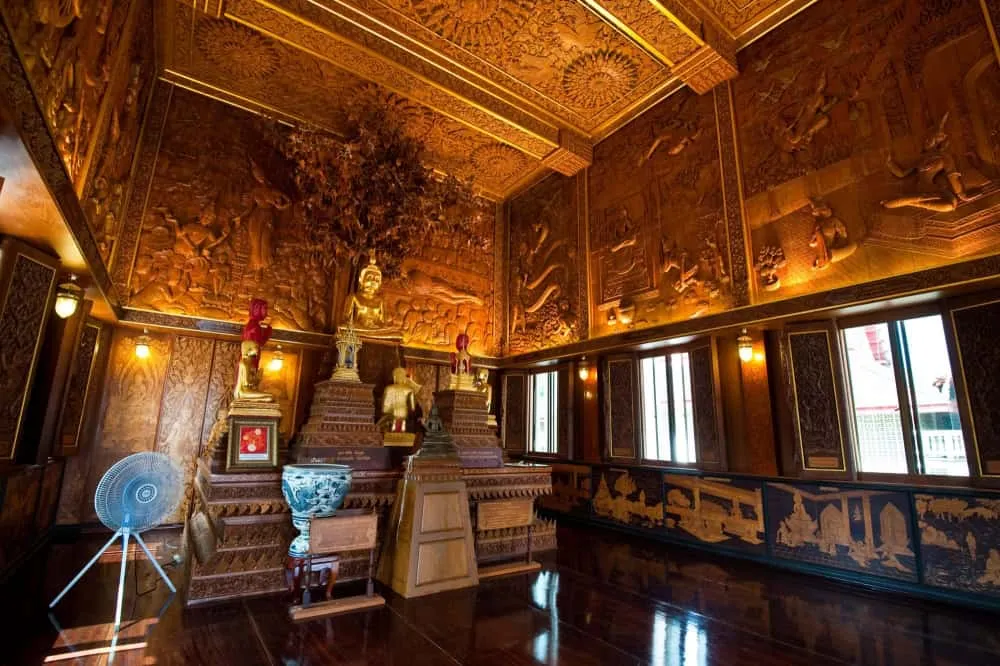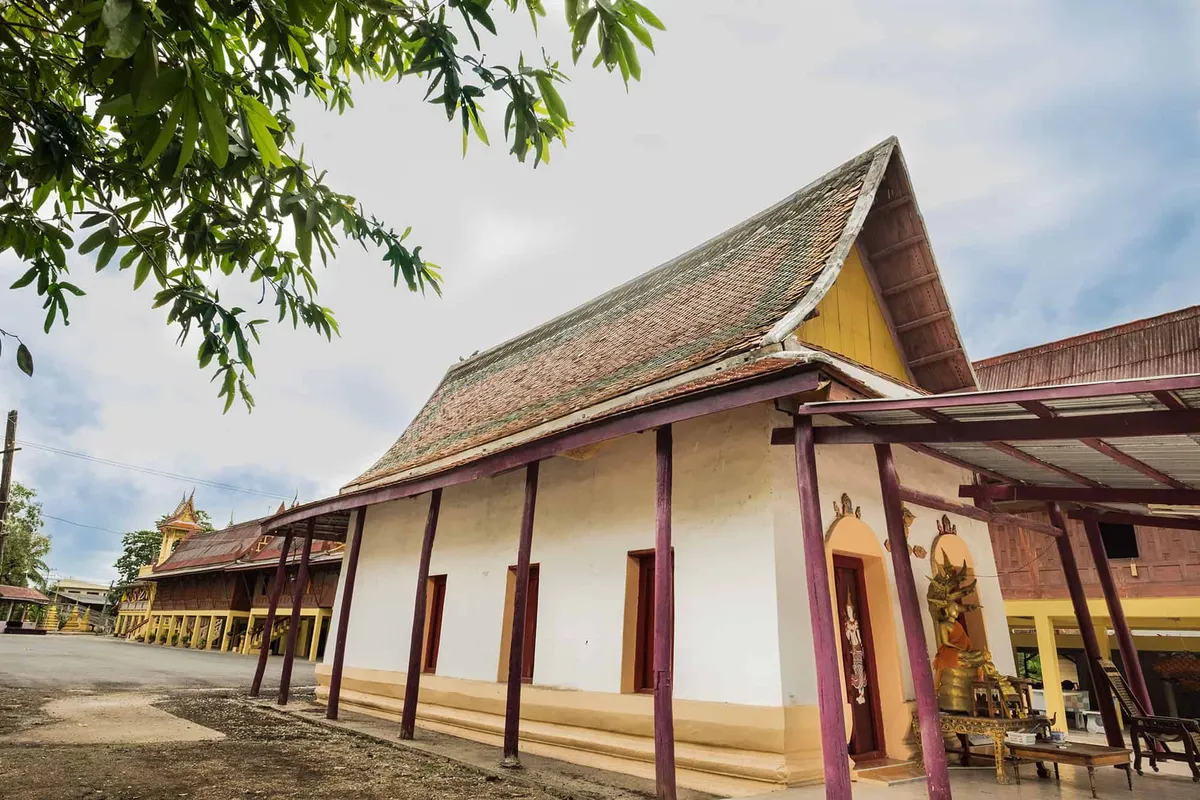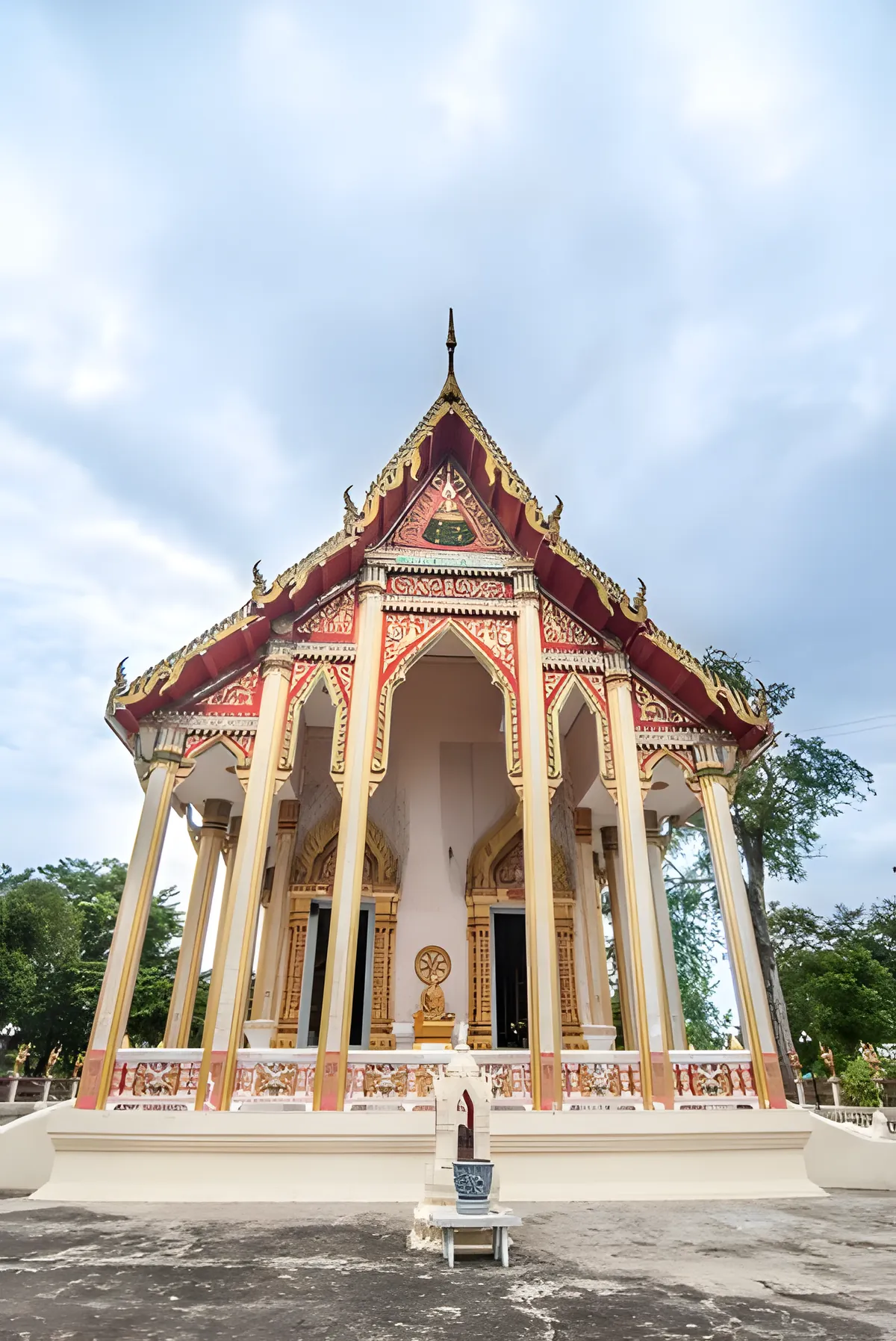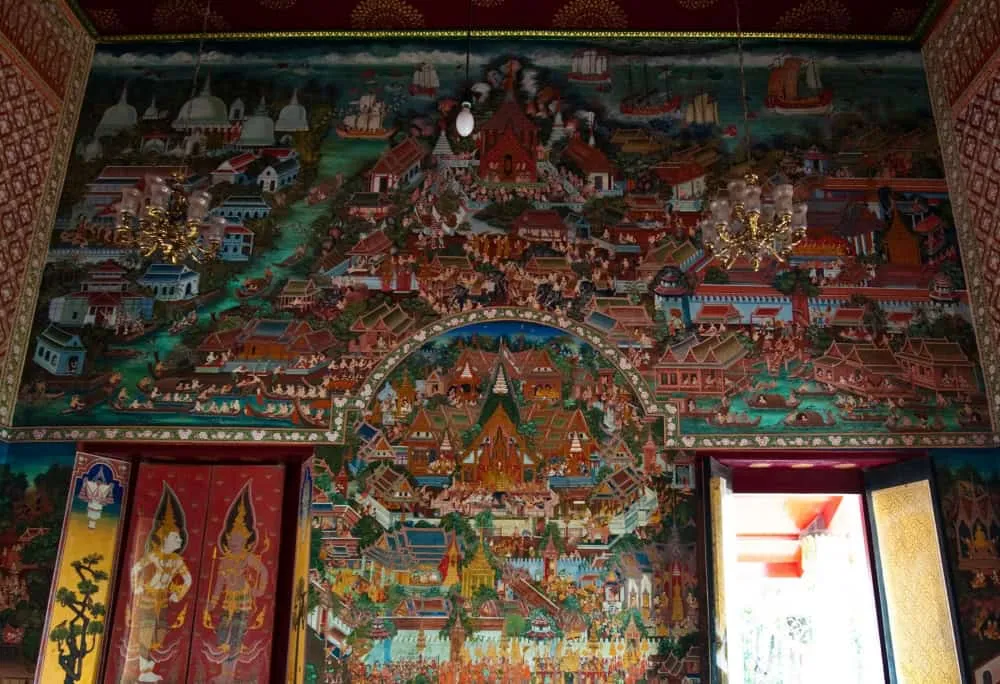


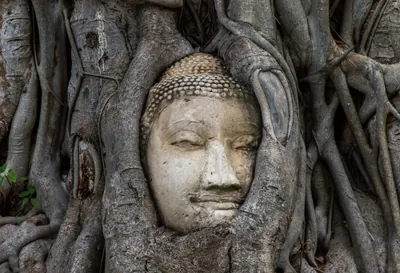
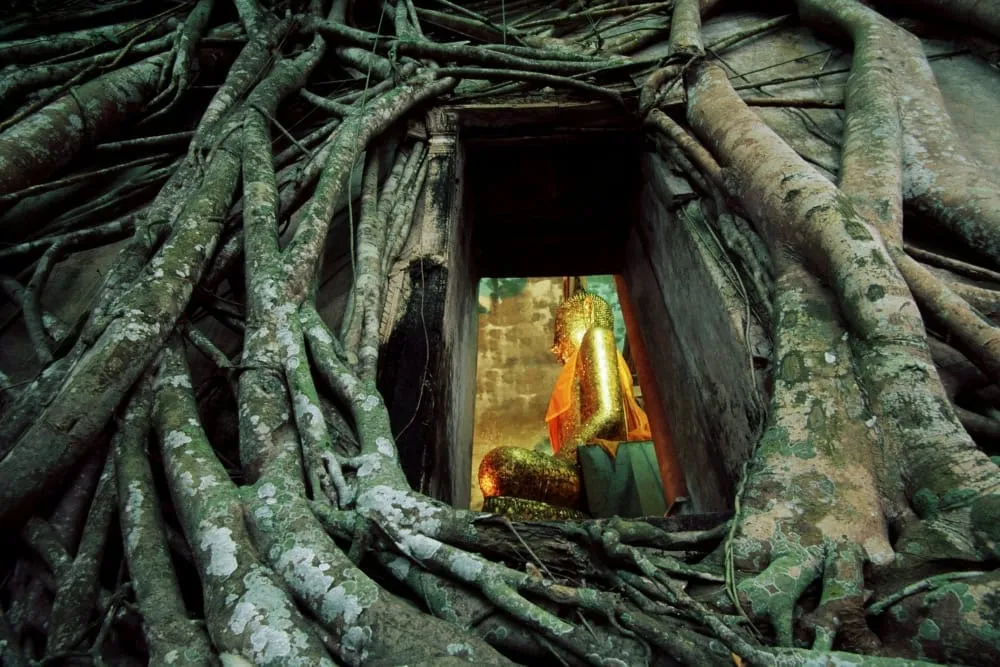
Wat Intaram, in Amphawa district, Samut Songkhram, dates to around 1757 — the final years of the Ayutthaya kingdom, just before the capital fell in 1767 — and was restored during King Rama III’s reign in the early 19th century. Its main draw is Luang Pho To, also known locally as Phra Sam Poh Kong, a Buddha image in the Maravijaya pose (subduing Mara) carved in late-Ayutthaya style and estimated at more than 300 years old.
The dual name — a Thai honorific and a Chinese-Thai one — reflects the temple’s setting among the riverside communities of Samut Songkhram, where Chinese-Thai merchant families have long been part of the local devotional life around the Mae Klong basin. Luang Pho To sits in the temple’s older ordination hall, which locals describe as one of the temple’s most weathered original structures, distinct from the newer buildings added during later restorations. It functions as something close to a guardian image for the surrounding area, drawing regular merit-makers rather than only passing tourists.
Insider Tip: Visit early, before the Amphawa floating market crowds build up a few kilometres away — Wat Intaram gets a fraction of the market’s foot traffic even in high season, so mornings here are genuinely quiet.
Watch out: No published entrance fee or fixed hours exist for this temple — it’s an active place of worship, not a ticketed sight, so time a visit for daylight hours and step back respectfully if a ceremony is underway.
The temple works well as a stop before or after Amphawa’s markets and canals, alongside Wat Bang Kung further along the district’s temple trail — Samut Songkhram has an unusually dense cluster of centuries-old riverside wats within a short drive of each other.
- Founded: c. 1757 (late Ayutthaya); restored under Rama III
- Main image: Luang Pho To / Phra Sam Poh Kong, 300+ years old
- Entry: Free
- Address: Mueang Mai subdistrict, Amphawa, Samut Songkhram
- Nearby: Amphawa floating market, Wat Bang Kung
For visitors touring Samut Songkhram beyond the floating markets, Wat Intaram is one of the province’s more substantial historic temples — a genuine Ayutthaya-era survivor rather than a modern rebuild dressed up as one.
Location & Directions
Mueang Mai, Amphawa, Samut Songkhram
Samut Songkhram, Thailand
Show your taxi or Grab driver
วัดอินทาราม
Within Walking Distance

Frequently Asked Questions
Is this the same Wat Intharam known for King Taksin's memorial in Bangkok?
What's the main Buddha image here called?
How old is the temple?
Is it close to Amphawa floating market?
Is entry free?
Spotted something out of date or incorrect? Let us know
Stay Near Wat Intaram
Compare places to stay in Samut Songkhram, or open the map for options closest to the attraction.