


Wat Bang Kung
วัดบางกุ้ง
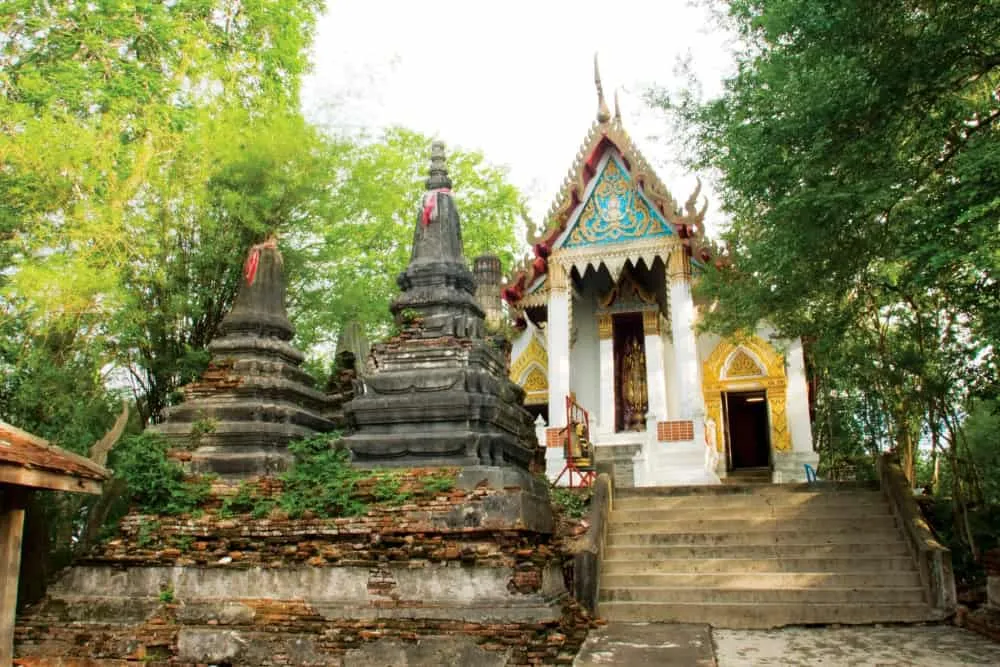
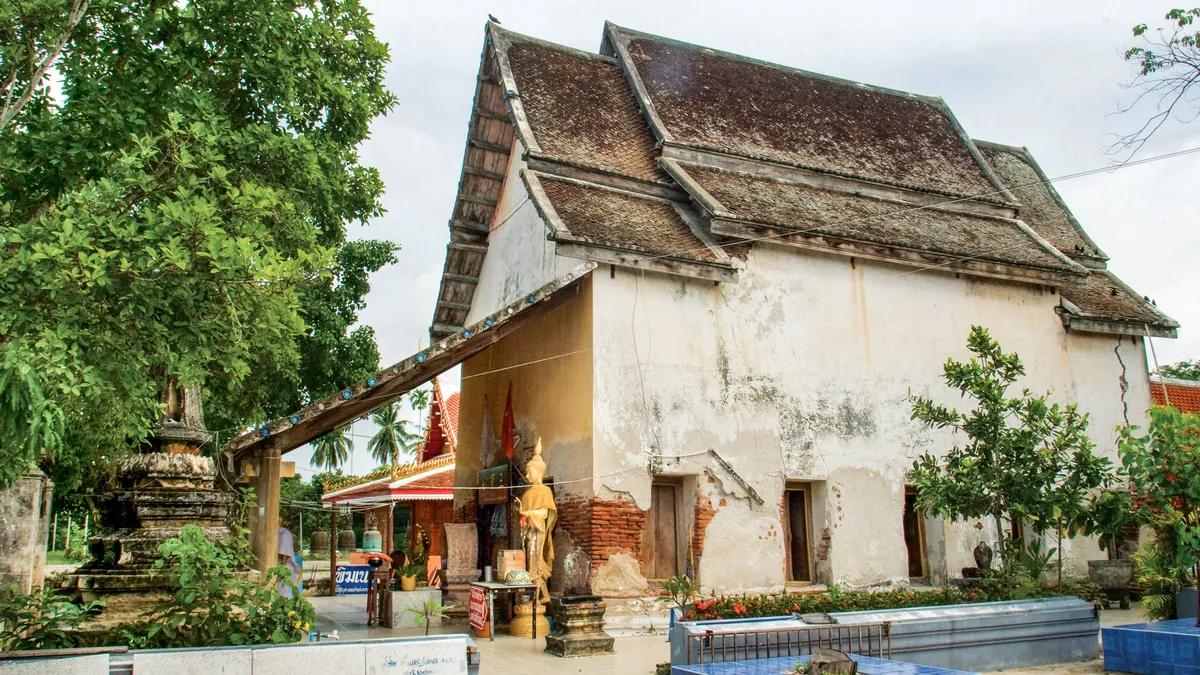
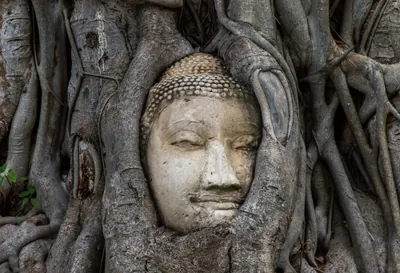
Wat Bang Kung is an Ayutthaya-period temple in Samut Songkhram where the ordination hall has been almost entirely absorbed by the roots of a banyan tree — the result of a fortified military camp, a pitched battle against Burmese forces, and two centuries of neglect that let the trees take over.
After Ayutthaya fell to the Burmese in 1767, King Taksin fortified this site as a camp, recruiting Chinese fighters from Rayong, Chonburi, Ratchaburi, and Kanchanaburi to defend it — it became known as the Bang Kung Chinese Camp. The following year, a Burmese army laid siege to the camp, and the defenders were on the point of being overrun when Taksin and his general Chao Phraya Maha Sura Singhanat arrived and broke the siege. It was one of the young Thonburi kingdom’s first real military wins after Ayutthaya’s fall, and it’s part of why the site still carries Taksin’s name in local memory.
Once the fighting was over, the camp was abandoned and the temple grounds grew wild. Four tree species — bodhi (pho), banyan (sai), krai, and krang — sent roots around the old ordination hall, and over roughly two centuries the roots grew through and over the structure until the building itself all but disappeared inside the tree. Locals call the hall Bot Prok Pho for the effect. Inside, still visible through gaps in the roots, sits Luang Pho Nin Mani — also known as Luang Pho Dam, “the black Buddha” — a large late-Ayutthaya Buddha image in the Mara-subduing pose. The site was restored in 1967, on the bicentennial of Taksin’s original camp, and a memorial statue of him now stands nearby.
Insider Tip: Go in the early morning or late afternoon — not just for softer light, but because the root-wrapped hall is compact and can feel cramped once a tour bus group arrives. A quiet half-hour here beats a rushed one shared with a crowd.
Watch out: This is an active place of worship, not a photo backdrop. Cover your shoulders and knees, remove your shoes before entering any hall, and skip the flash near the Buddha image out of respect for anyone praying.
- Entry: Free
- Hours: Daily 08:00-16:30
- History: Ayutthaya-era temple, fortified as Taksin’s camp in 1767, besieged by Burmese forces in 1768
- The hall: Bot Prok Pho, encased by four tree species (bodhi, banyan, krai, krang)
- Buddha image: Luang Pho Nin Mani (“Luang Pho Dam”)
Wat Bang Kung sits about 6 km from Amphawa, close enough to fold into the same afternoon as the floating market. Inland the other way, Tao Thai Doem 2, a family-run coconut sugar house, is around 4 km off — a quieter contrast to the temple’s crowds. Both make sense as a loop out of Samut Songkhram.
Location & Directions
Moo 4
Samut Songkhram, Thailand
Show your taxi or Grab driver
วัดบางกุ้ง
Within Walking Distance




Frequently Asked Questions
What is the Buddha image inside the root-wrapped hall called?
What actually happened at Bang Kung in the 1760s?
Why are tree roots growing over the temple building?
Is Wat Bang Kung free to visit, and what are the hours?
How far is Wat Bang Kung from Amphawa?
Spotted something out of date or incorrect? Let us know
Tours visiting Wat Bang Kung



Stay Near Wat Bang Kung
Compare places to stay in Samut Songkhram, or open the map for options closest to the attraction.