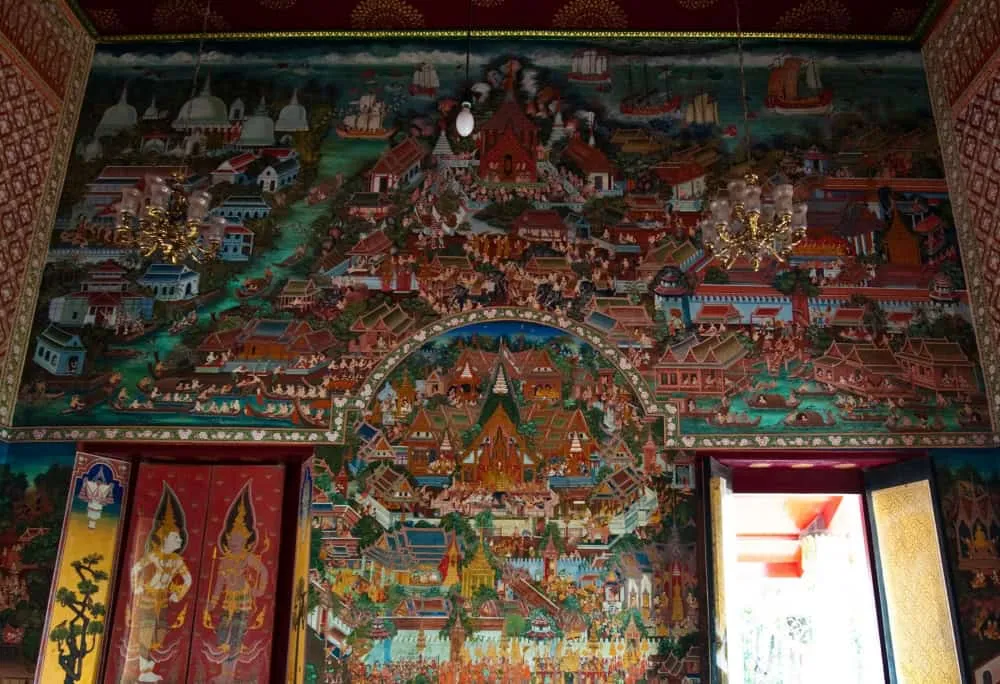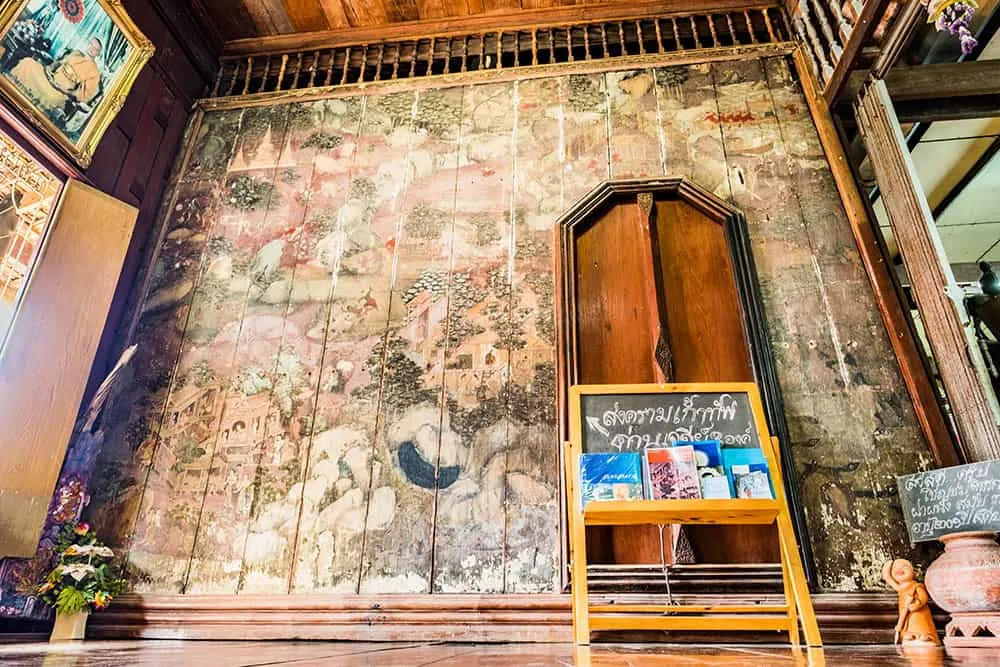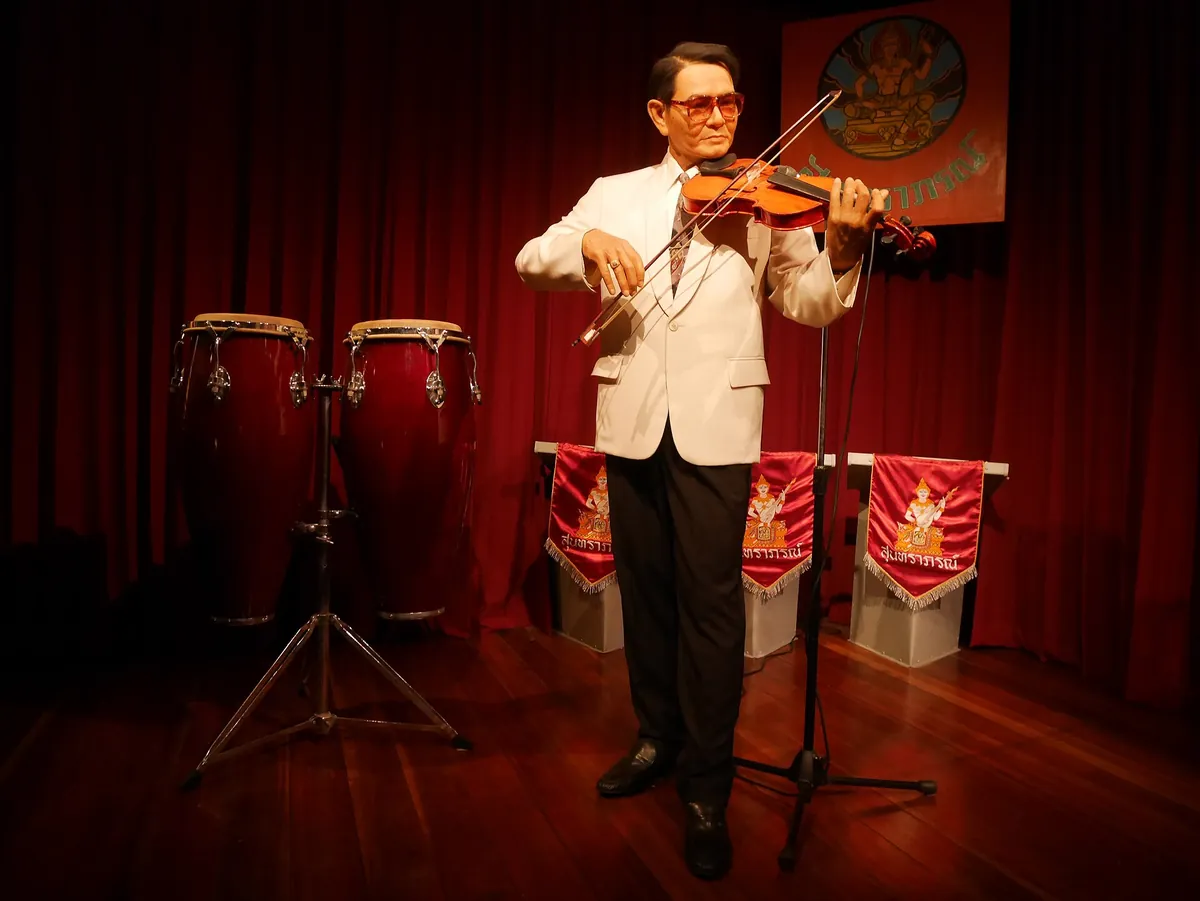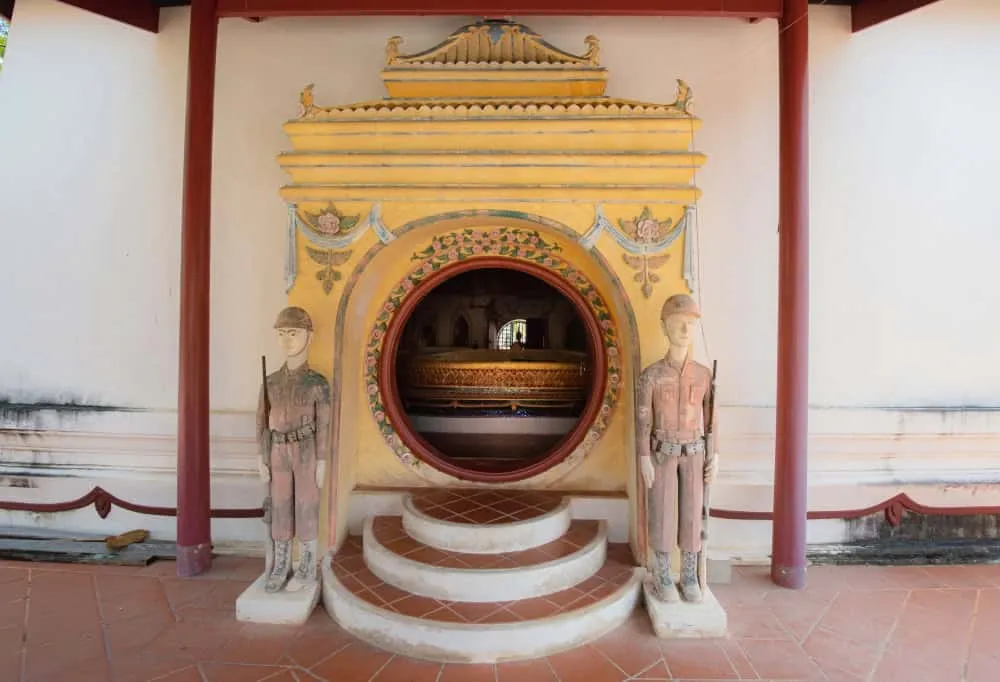




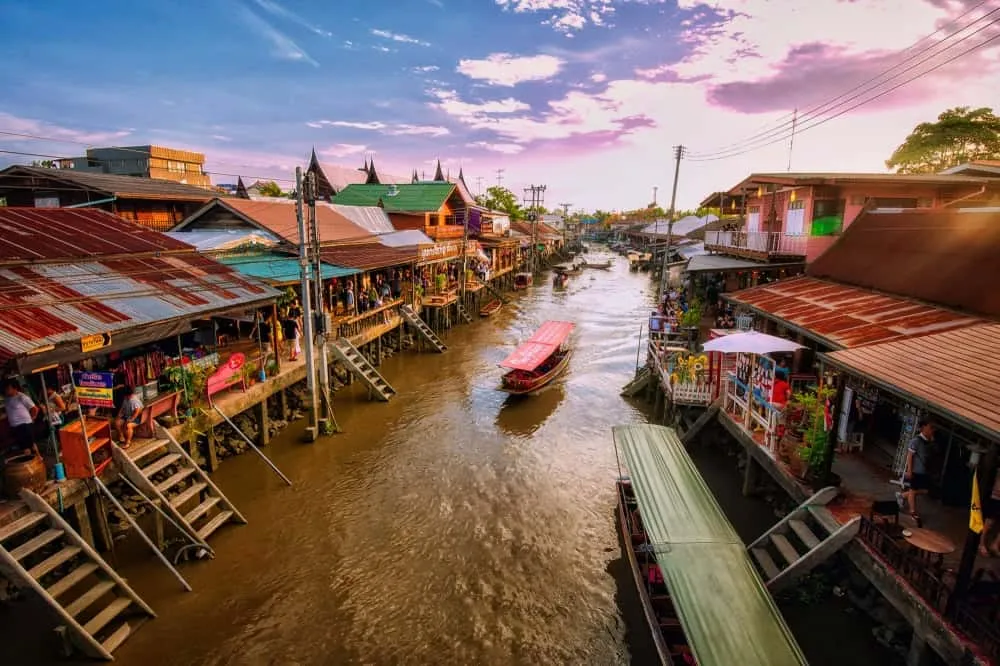
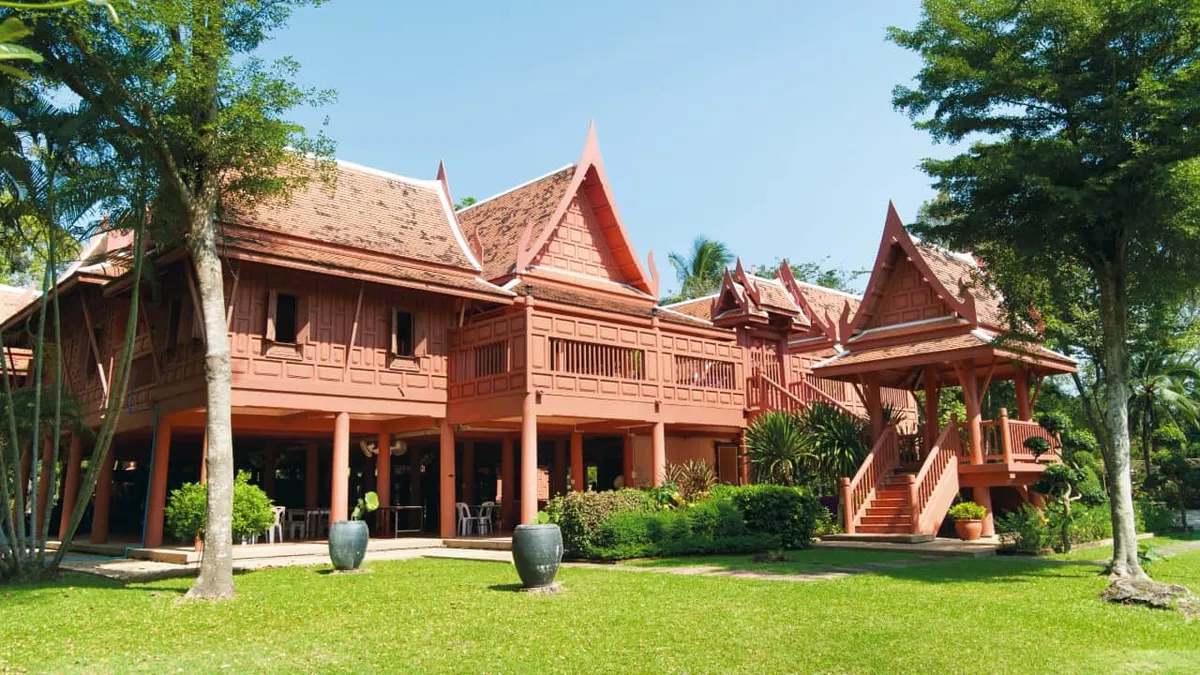
Wat Phummarin Kudi Thong sits on the Mae Klong River at the mouth of Khlong Pracha Chom Chuen, in Tambon Suan Luang, Amphawa district — close enough to Amphawa’s floating market to combine both in an afternoon. Religious Affairs Department records date the temple to around 1787, and its name comes from its most distinctive structure: a Kudi Thong, or golden teak monk’s residence.
The Kudi Thong story is local legend rather than official history, but it’s well told locally: a wealthy man had his daughter’s fortune read by the abbot of nearby Wat Bang Li, who predicted she would become queen. He promised to build the abbot a golden teak kuti if the prediction came true — and it did. His daughter, Khun Nak, became Queen Amarindra, consort of King Rama I. When erosion later damaged the original temple site, the Kudi Thong was dismantled and rebuilt here, and the temple was renamed Wat Phummarin Kudi Thong in its honour.
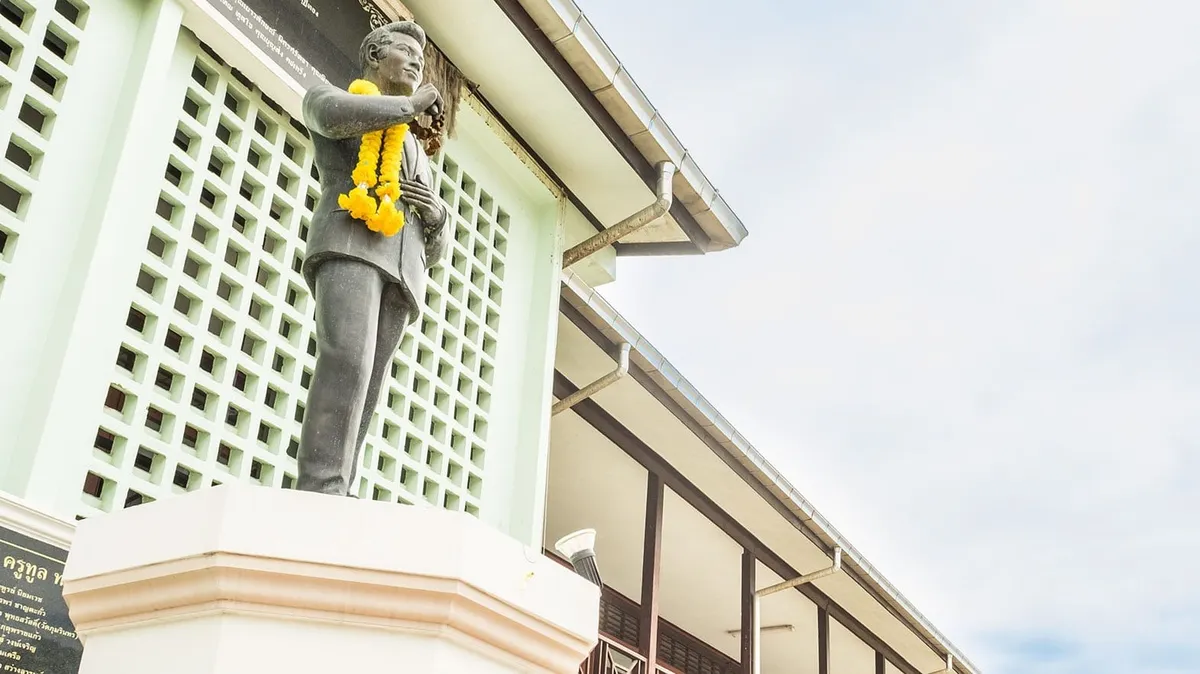
Insider Tip: The temple’s small in-house museum is easy to miss if you only stop for the main shrine hall — ask where the Wat Phummarin Museum entrance is, since it isn’t always obvious from the main courtyard.
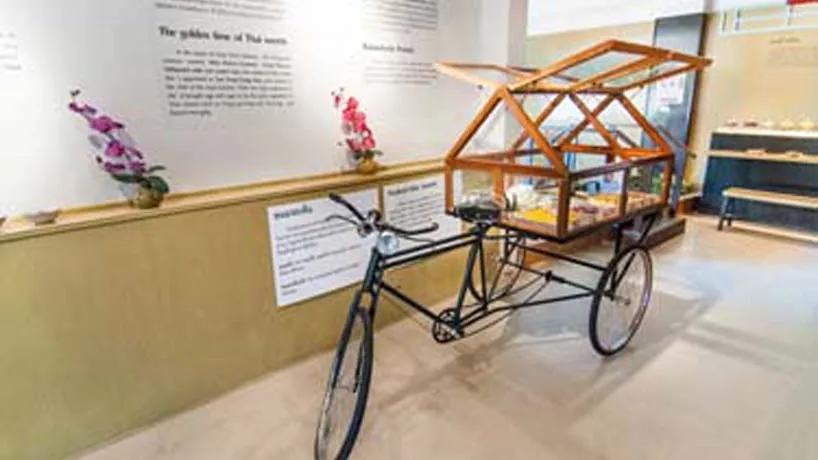
The museum holds a modest but genuine collection: a Buddha image nearly 300 years old, blue-and-white porcelain, brassware, old Thai manuscripts, and a monument to King Rama II. It’s not a large or formally curated space, so don’t expect the depth of a provincial museum — treat it as a bonus alongside the temple rather than the main event. As a working monastery, the grounds function normally day to day, with monks going about ordinary duties rather than performing for visitors.
- Entry fee: Free
- Founded: Around 1787 (Religious Affairs Department records)
- Namesake feature: The Kudi Thong — a golden teak monk’s residence tied to Queen Amarindra’s fortune-telling legend
- On site: Wat Phummarin Museum — Buddha image, porcelain, brassware, Rama II monument
- Location: Mae Klong riverside, Amphawa district, close to the floating market
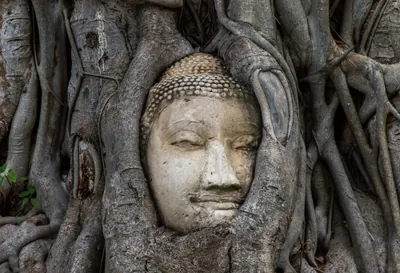
Combine the visit with Amphawa Floating Market for the area’s main draw, or Wat Bang Kung for Samut Songkhram’s other well-known temple, the one built inside a strangler-fig tree.
Location & Directions
Amphawa, Samut Songkhram
Samut Songkhram, Thailand
Show your taxi or Grab driver
วัดภุมรินทร์กุฎีทอง
Within Walking Distance




Frequently Asked Questions
What is the Kudi Thong at Wat Phummarin?
How old is the temple?
Is there an entry fee?
What's in the Wat Phummarin Museum?
Is it close to Amphawa's floating market?
Spotted something out of date or incorrect? Let us know
Stay Near Wat Phummarin Kudi Thong
Compare places to stay in Samut Songkhram, or open the map for options closest to the attraction.