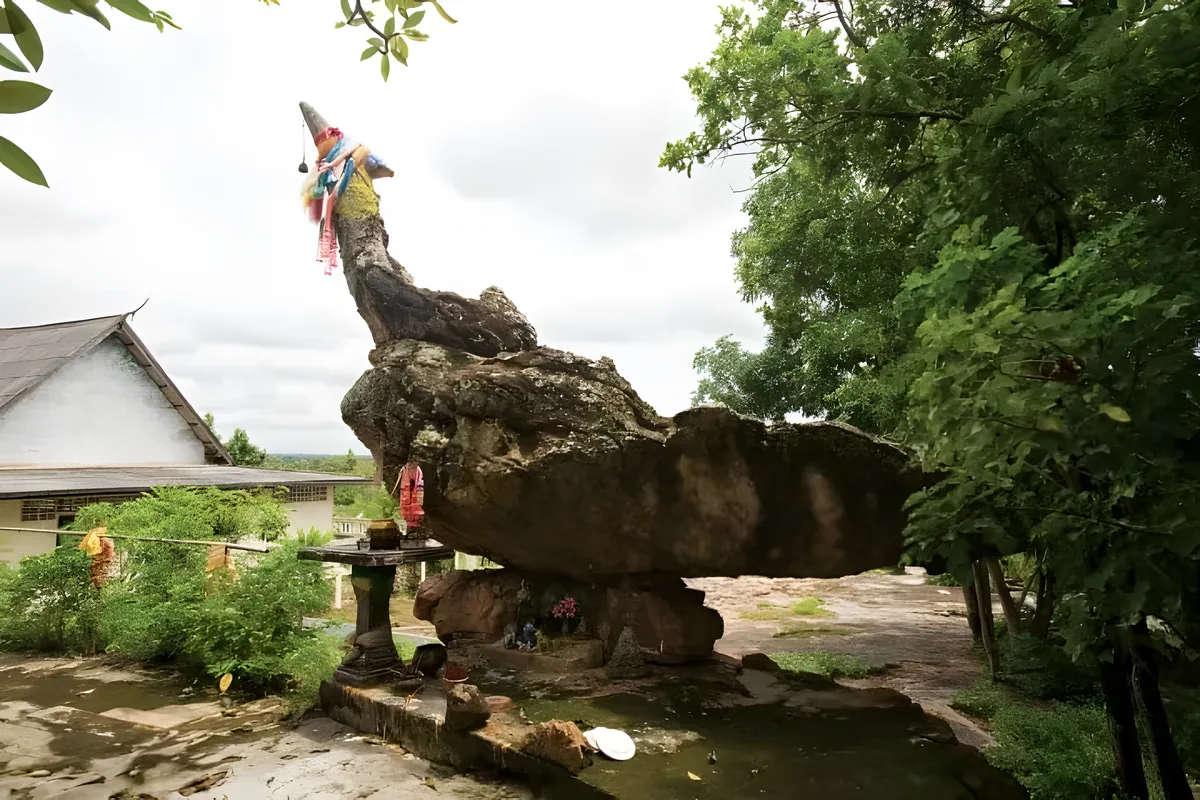
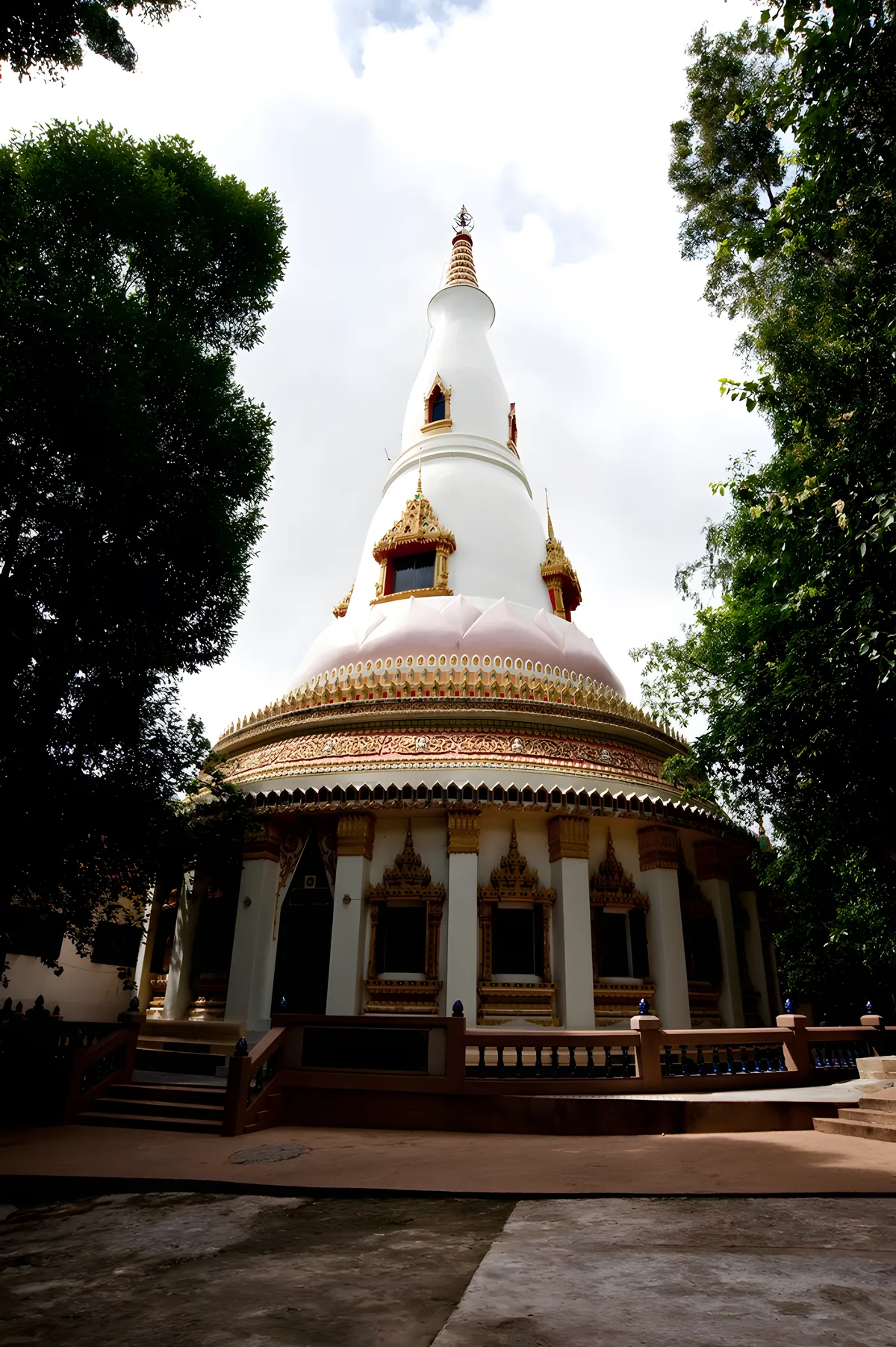
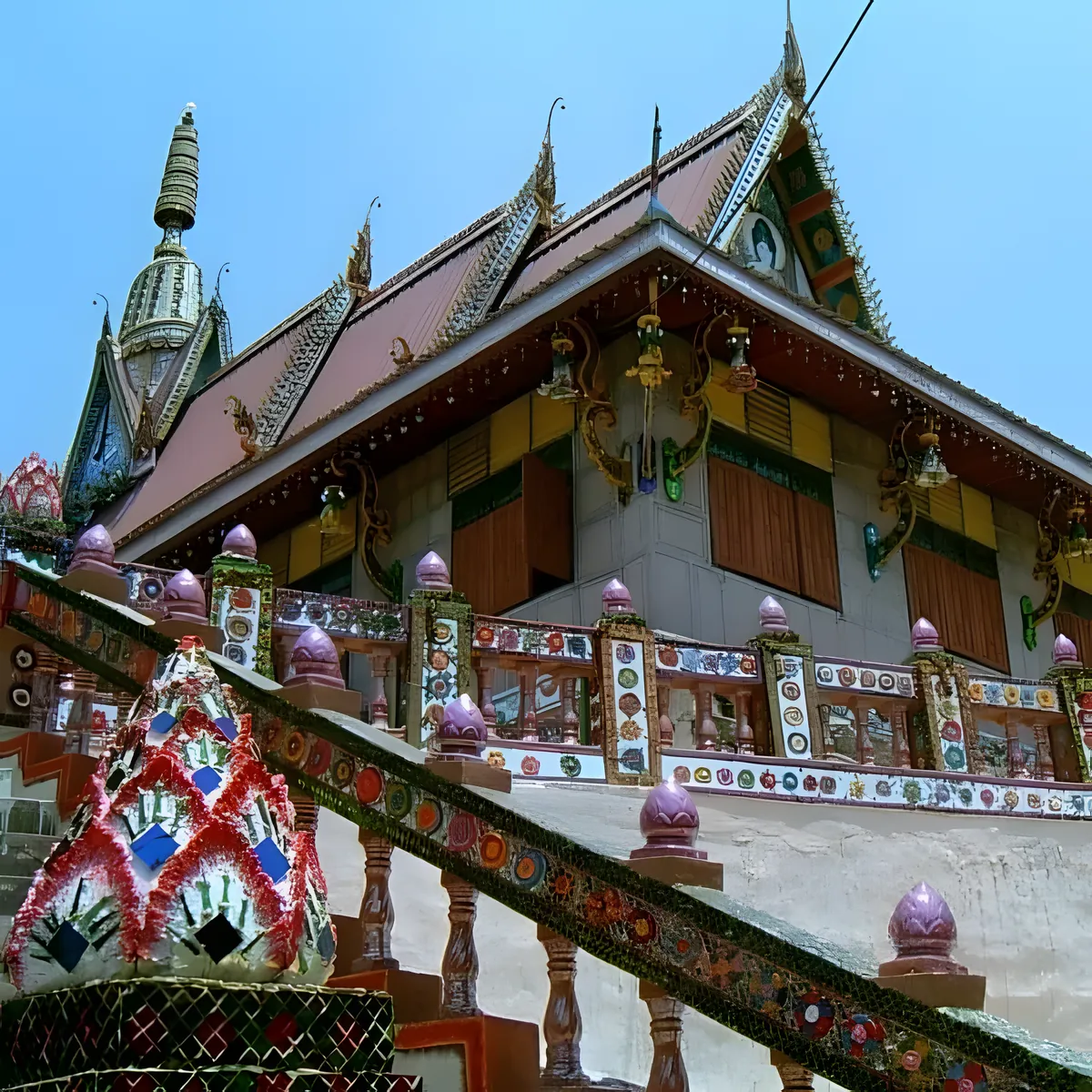
Wat Khao Pratu Chumphon sits on the Phang Hoei mountain range in Ban Rai subdistrict, Thep Sathit district — a forest meditation temple built around a natural sandstone arch rather than any historic ruin. The arch, “Pratu Chumphon” (Chumphon Gate), formed the same way the site’s wider rock garden did: water working along cracks in the sandstone over a very long time, leaving a hollowed-out gap wide enough to walk through. Locals believe passing beneath it after paying respects inside the temple brings good fortune, and it’s the reason most people make the detour up here at all.
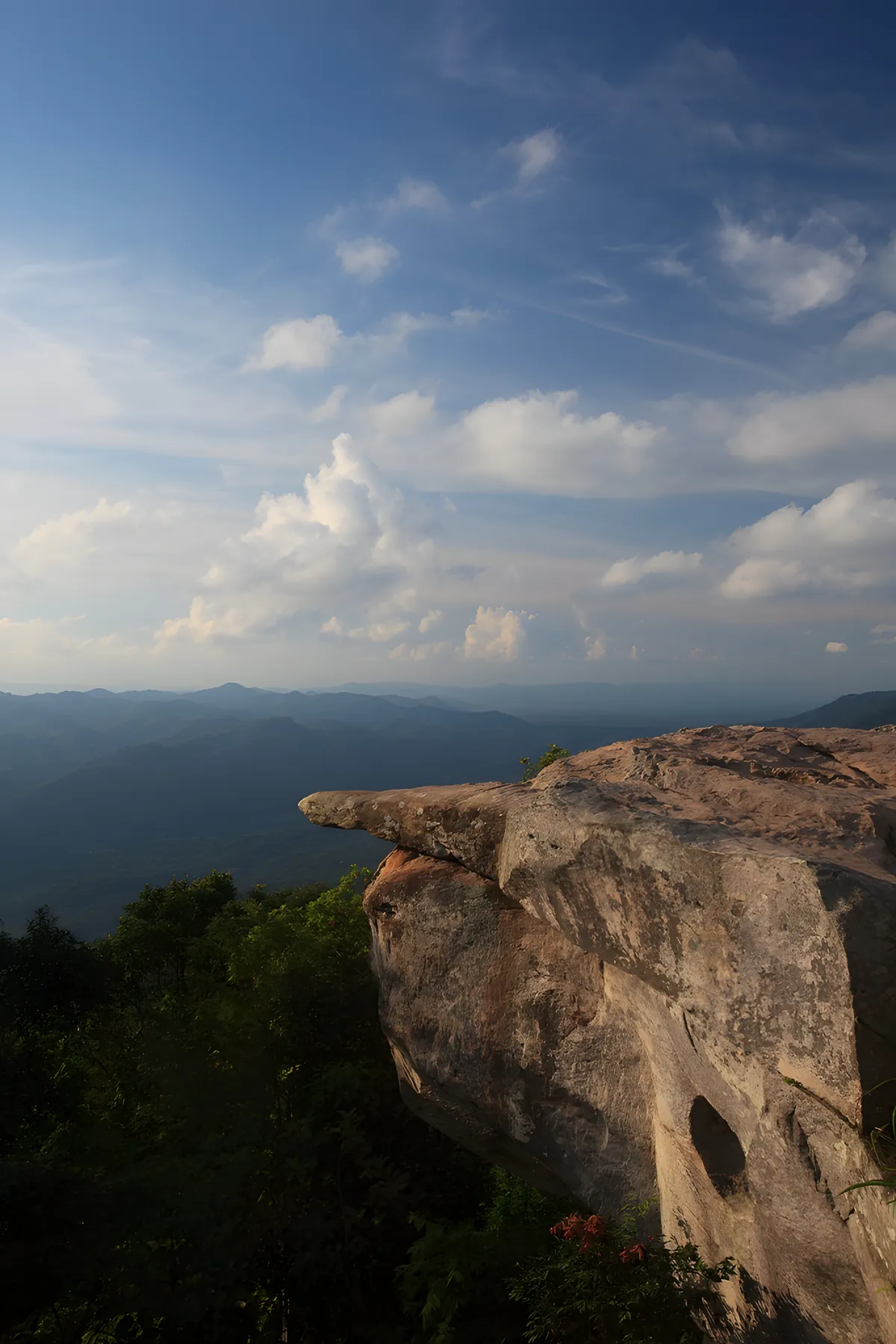
Beyond the arch, the grounds spread across a “stone garden” (suan hin) of weathered sandstone pillars and slabs, some showing cross-bedding and ripple-mark patterns left by ancient water flow — geology rather than the carved reliefs some listings claim. A multi-storey viewing building on site has open rooftop access, and it’s worth the climb: from the top you get a 360-degree sweep across the Phang Hoei range, with the wind turbine farms of Thep Sathit and neighbouring Sap Yai district turning slowly on the ridgelines beyond. The temple sits about 500 metres to a kilometre before the entrance to Pa Hin Ngam National Park, which shares the same sandstone geology on a larger scale.
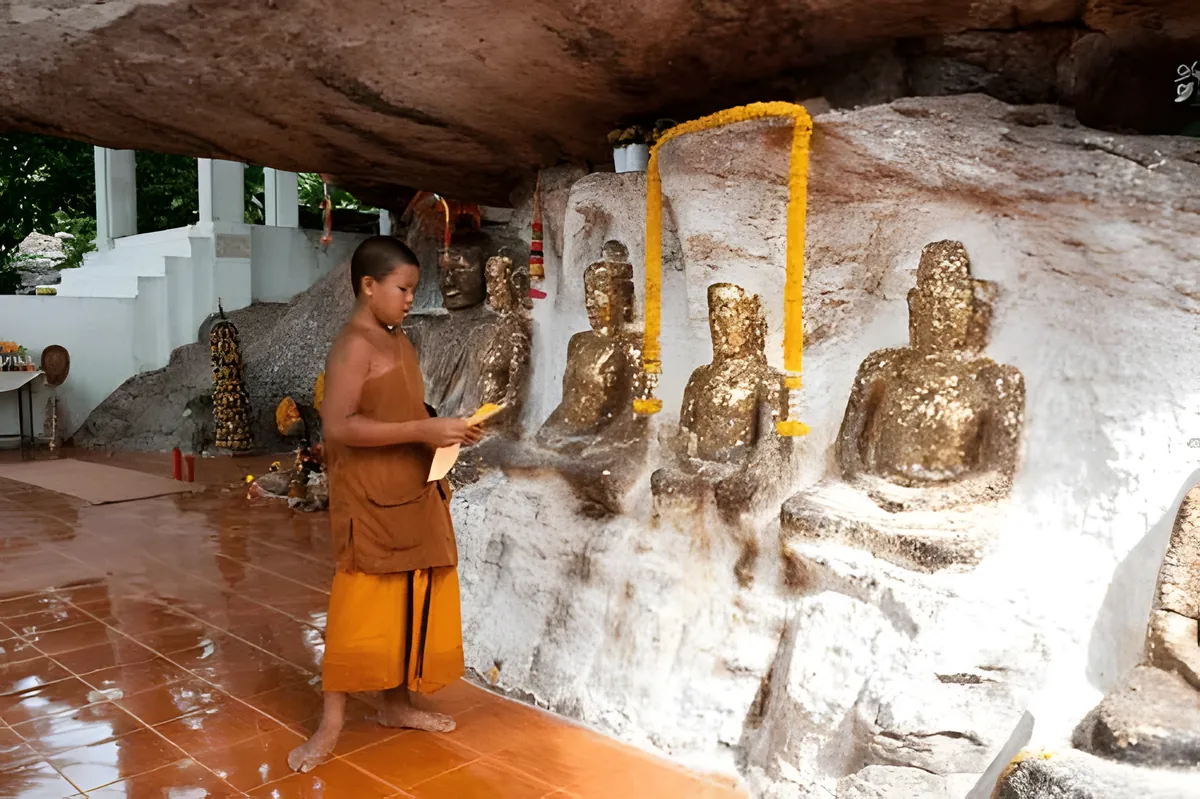
This is an active forest temple first — monks here keep to a quiet dharma-practice routine, and the mood is closer to a meditation retreat than a sightseeing stop. Visitor numbers stay low outside Thai holiday weekends, which suits the setting: mixed forest, birdsong, and long views rather than crowds.
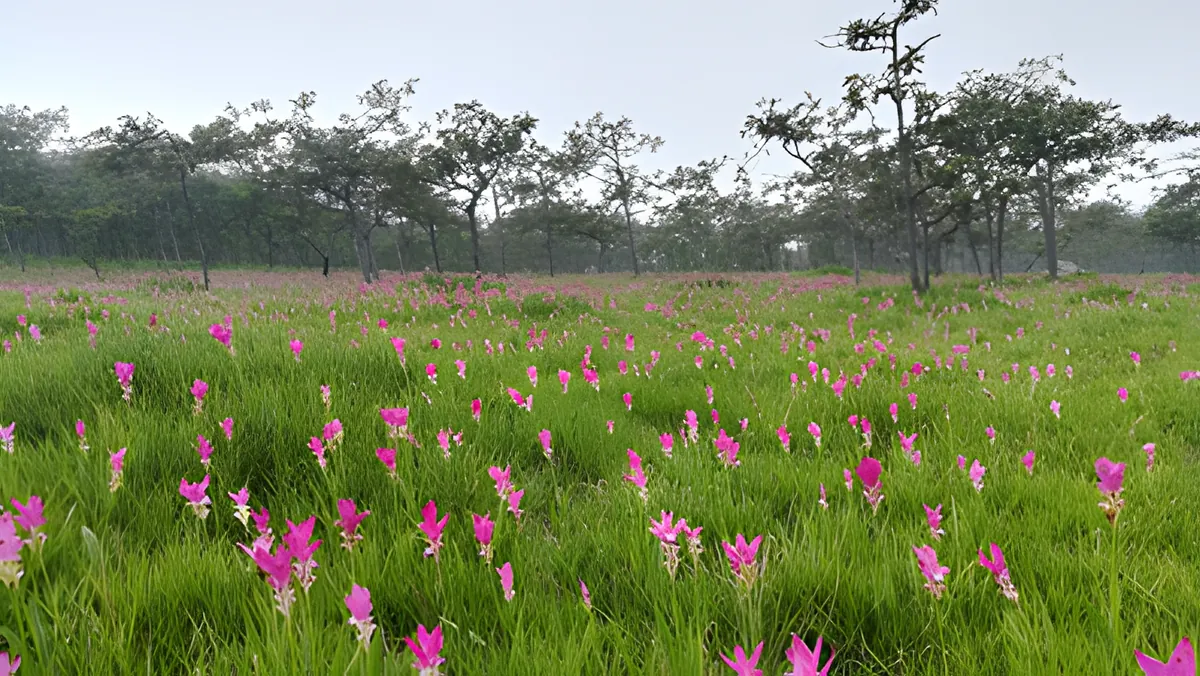
Insider Tip: Time your visit for the rainy season (August–October) if you can — wildflowers push up through the stone garden’s cracks and crevices, and the cooler, cloud-brushed air up on the ridge is a relief after the Chaiyaphum lowlands.
Watch out: The final approach is a narrow hill road with limited signage in English. Plug the coordinates into a map app rather than relying on road signs, and allow extra time if you’re on a rented scooter — the gradient picks up in the last stretch before the temple.
Dress modestly (shoulders and knees covered) and keep voices down near the meditation halls — this isn’t a temple set up for tour groups, and the resident monks value the quiet. Photography outdoors is fine; ask before shooting inside any hall. Combine the visit with Pa Hin Ngam National Park next door, or make it a day trip from Chaiyaphum town, roughly an hour and a half’s drive southeast.
- Entry fee: Free
- Hours: Daily, approximately 08:30-16:30
- Main feature: Pratu Chumphon, a natural sandstone arch, plus a rooftop viewpoint over the Phang Hoei range and Thep Sathit’s wind turbine farms
- Location: Ban Rai subdistrict, Thep Sathit district, Chaiyaphum — about 500m-1km before Pa Hin Ngam National Park
- Best time to visit: August-October for wildflowers and cooler temperatures
Location & Directions
Thep Sathit, Chaiyaphum
Chaiyaphum, Thailand
Show your taxi or Grab driver
วัดเขาประตูชุมพล
Within Walking Distance


Frequently Asked Questions
What does the name Pratu Chumphon actually refer to here?
Is Wat Khao Pratu Chumphon free to visit?
How far is it from Pa Hin Ngam National Park?
Can you really see wind turbines from the temple?
When is the best time to visit?
Spotted something out of date or incorrect? Let us know
Stay Near Wat Khao Pratu Chumphon
Compare places to stay in Chaiyaphum, or open the map for options closest to the attraction.