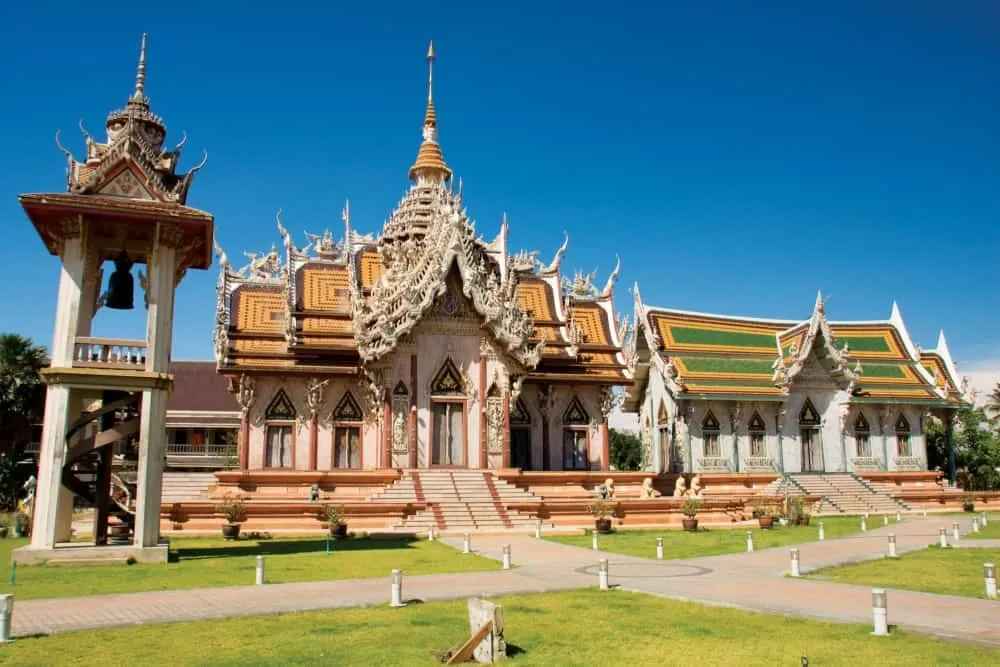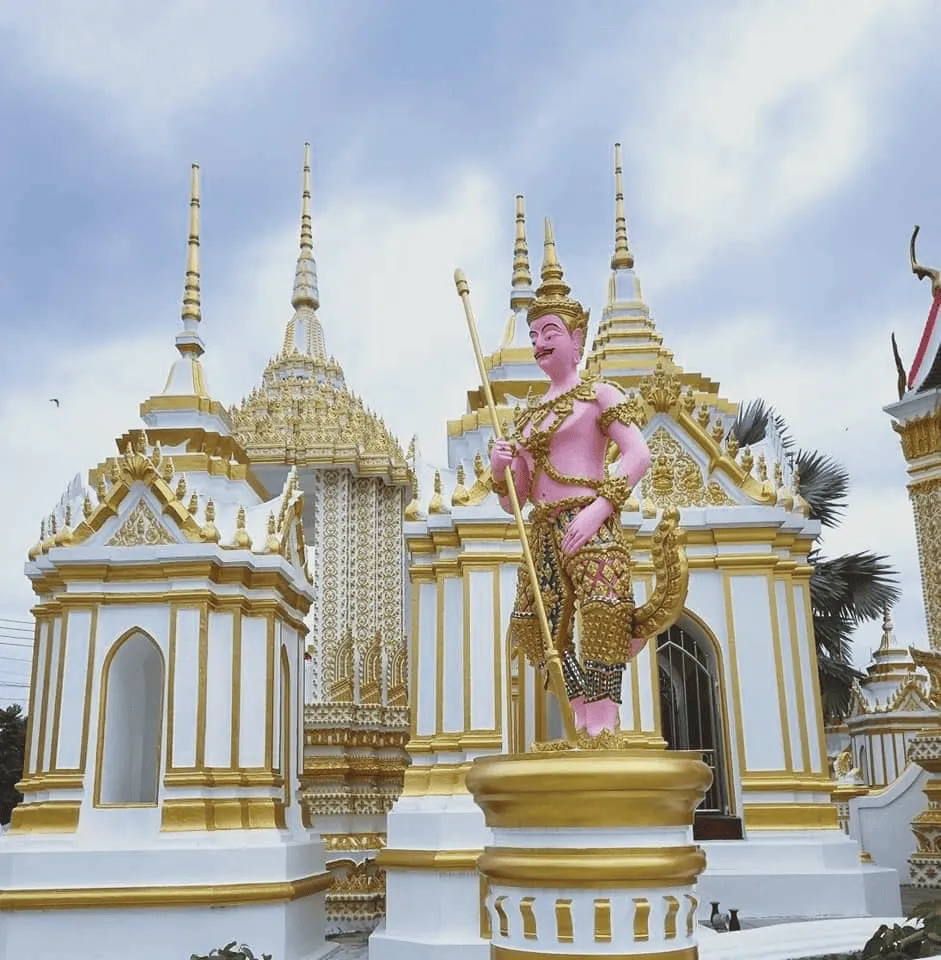


Wat Klang Bang Phra is not the temple most people are thinking of when they picture Nakhon Pathom’s famous sacred tattoos. That reputation belongs to its near-neighbor, Wat Bang Phra, about a kilometre away. This temple’s own draw is Luang Pho Somwang, a Buddha image locals travel to for luck rather than ink. Entry is free.
The name itself is a geography lesson: “Klang” means middle, and the temple sits between two older neighbors, Wat Bang Phra and Wat Sri Maha Pho. Local history ties all three together through a shared legend: during the chaos surrounding Ayutthaya’s fall to Burmese forces, a sacred Buddha image and a Bodhi tree were being evacuated by boat when a storm struck near the Bang Phra canal. The boat capsized: the Buddha image sank at what’s now this temple’s site, while the Bodhi tree drifted downstream and took root at what became Wat Sri Maha Pho. Wat Klang Bang Phra was built where the statue went down, with records placing its founding around 1783 and its official ecclesiastical boundary granted in 1795.
Watch out: don’t confuse this temple with Wat Bang Phra down the road: same “Bang Phra” name, completely different reputation. If sak yant tattooing is what you’re after, that’s the other temple.
The temple’s real centerpiece, Luang Pho Somwang, was built in 1981 by Phra Khru Sunthorn Wutthikun: brick, mortar, and mosaic tile, seated in the Maravijaya posture with 99 small Buddha images set inside the statue itself. It’s become one of the region’s most visited wish-granting images: Thai visitors come specifically to pray for success in love, career, business deals, and finances, and the phrase associated with the temple (roughly “may your wishes come true”) has become recognizable well beyond Nakhon Pathom.
Insider Tip: Most visitors here are Thai pilgrims rather than foreign tourists, and weekends bring noticeably more people making offerings. A weekday visit gets you a much quieter look at the temple grounds.
The temple sits on the Tha Chin River in Bang Phra subdistrict, Nakhon Chai Si district, roughly 19 km from central Nakhon Pathom. There’s no direct public transport to the gate; a taxi, private car, or ride-hail from Nakhon Pathom or western Bangkok is the practical way in. Dress modestly (covered shoulders and knees) and remove shoes before entering any hall.
- Entry: Free
- Founded: Circa 1783, consecrated 1795
- Highlight: Luang Pho Somwang wish-granting Buddha image (built 1981)
- Location: Bang Phra subdistrict, Nakhon Chai Si district, ~19 km from central Nakhon Pathom
- Not to be confused with: Wat Bang Phra, the sak yant tattoo temple, about 1 km away
The genuinely famous sak yant temple, Wat Bang Phra, is worth the short trip if that’s what drew you to the area, and Wat Klang Bang Kaeo, with its own Buddhist museum, sits a little further along the same river. The Nakhon Pathom visit guide has more on the district’s cluster of riverside temples.
Location & Directions
Nakhon Chai Si, Nakhon Pathom
Nakhon Pathom, Thailand
Show your taxi or Grab driver
วัดกลางบางพระ
Frequently Asked Questions
Is Wat Klang Bang Phra the famous sak yant tattoo temple?
Who is Luang Pho Somwang?
How old is the temple?
Why is it called "Klang" (middle) Bang Phra?
Is entry free?
Spotted something out of date or incorrect? Let us know
Stay Near Wat Klang Bang Phra
Live prices for places closest to Wat Klang Bang Phra: tap a pin to compare.